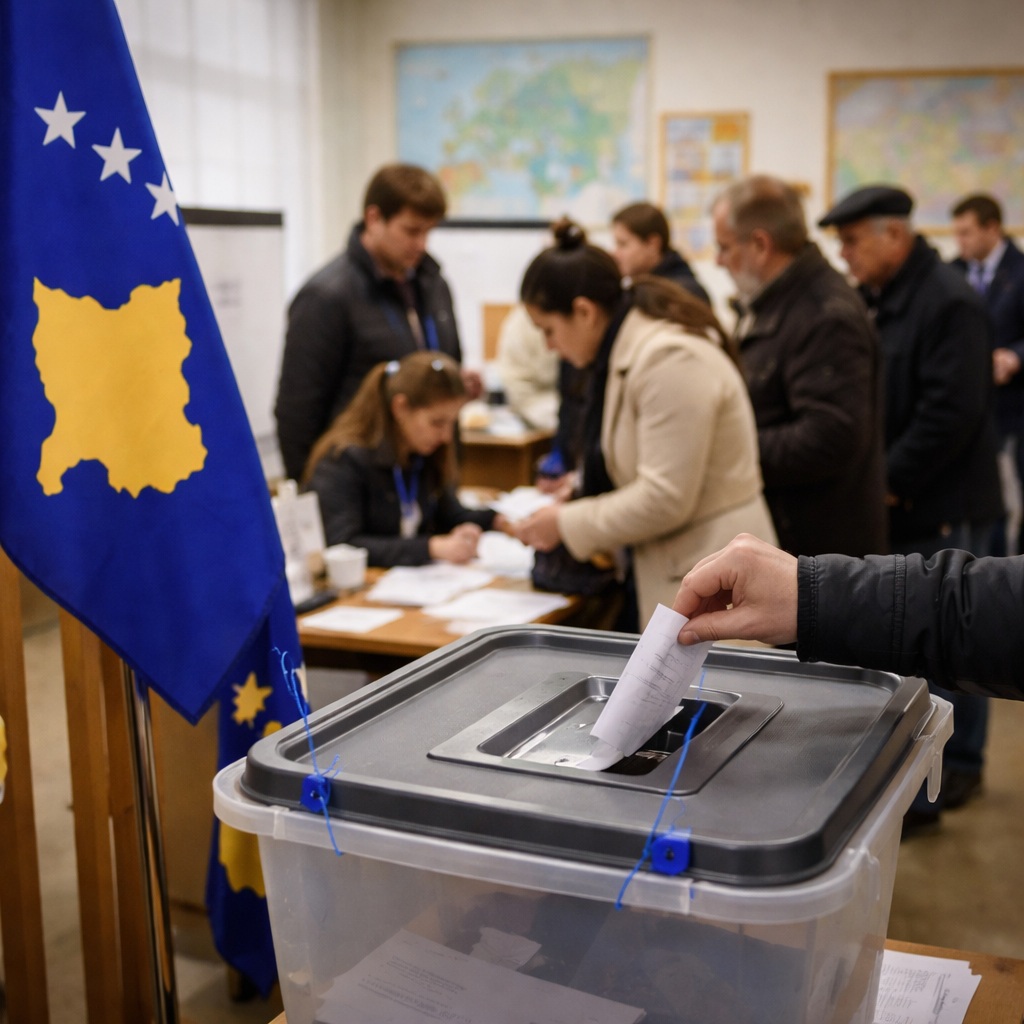
A snap election seeks to unlock frozen finances and restore credibility as uncertainty weighs on the Western Balkans
Pristina — After months of political paralysis, Kosovo is heading to the polls in an election framed by urgency and uncertainty. The vote comes after a prolonged deadlock dissolved parliament, stalled decision-making, and opened a gaping hole in the public finances. At stake is not only who governs next, but whether the country can regain access to crucial international support and reassure partners in a region where stability remains fragile.
The collapse of parliamentary cooperation followed weeks of failed attempts to form a durable majority. With lawmakers unable to pass key legislation or approve a revised budget, the institutional impasse eventually forced early elections. The resulting vacuum left ministries operating on temporary allocations and delayed payments across sectors ranging from infrastructure to social assistance.
Officials estimate the paralysis has effectively frozen close to a billion euros in planned spending. While the figure is contested, the political signal is unmistakable: Kosovo’s fiscal credibility has been weakened at a time when public debt servicing costs are rising and donor scrutiny is intensifying.
International partners have watched the stalemate with growing concern. The European Union, the International Monetary Fund, and several bilateral donors have linked disbursements to governance benchmarks that require a functioning parliament. Without legislative approval for reforms tied to public procurement, energy policy, and judicial independence, funds remain out of reach.
“This is not just a technical delay,” said a senior European diplomat in Pristina. “It is about trust. Investors and institutions need to see that the political system can deliver decisions.”
The timing of the election, set deep into the winter period, has added another layer of risk. Voter turnout has historically dipped when weather and holiday travel interfere with campaigning and polling day logistics. Analysts warn that a low-participation vote could produce a fragmented result, prolonging uncertainty rather than resolving it.
Yet political leaders across the spectrum insist the election is unavoidable. The caretaker government argues that only a renewed mandate can break the deadlock and allow negotiations on a comprehensive budget. Opposition parties, while critical of the process that led here, say the vote offers a chance to reset institutions and hold leaders accountable.
Economic pressures are sharpening the debate. Inflation has eased from earlier peaks but household costs remain high, especially for energy and food. Businesses complain of delayed public tenders and frozen investment decisions. Municipalities report difficulty planning services without clarity on central government transfers.
The stakes extend beyond Kosovo’s borders. The Western Balkans have been marked by uneven growth and persistent political tensions, and Brussels has repeatedly stressed that instability in one country reverberates across the region. A prolonged fiscal crisis in Pristina could complicate cross-border infrastructure projects and weaken regional cooperation frameworks.
Security analysts also note that political vacuums can create openings for disinformation and external influence. While there are no immediate signs of unrest, trust in institutions has eroded after months of televised arguments and failed votes. Restoring confidence, they argue, will require not only an election but swift coalition-building afterward.
Campaign messages reflect these pressures. Ruling parties emphasize continuity and experience, warning that experimentation could delay funding even further. Challengers focus on accountability, accusing incumbents of mismanaging negotiations and isolating Kosovo from partners. Across rallies and debates, the budget gap has become a central talking point.
Civil society groups have called for a peaceful and transparent process. Election observers are expected to deploy widely, monitoring both campaigning and the count. Their presence is intended to reinforce confidence in the outcome, particularly if the margin between parties is narrow.
For voters, the choice is framed less around ideology than functionality. Many express frustration with political infighting and a desire for a government capable of passing laws, approving budgets, and engaging constructively with international institutions.
The morning after the vote, attention will shift quickly to coalition talks. Kosovo’s proportional system makes outright majorities rare, and negotiations can be lengthy. Markets and donors will be watching for early signals of compromise and reform commitments.
If a government emerges swiftly, officials believe frozen funds could begin to flow again, easing pressure on public services and investment. If not, the country risks entering another cycle of stopgap financing and political bargaining.
As Kosovo approaches polling day, the message from partners and citizens alike is clear: the election is not an endpoint, but a test. Whether it restores governance and fiscal credibility will shape the country’s trajectory well into the new year.
 The Tower Post