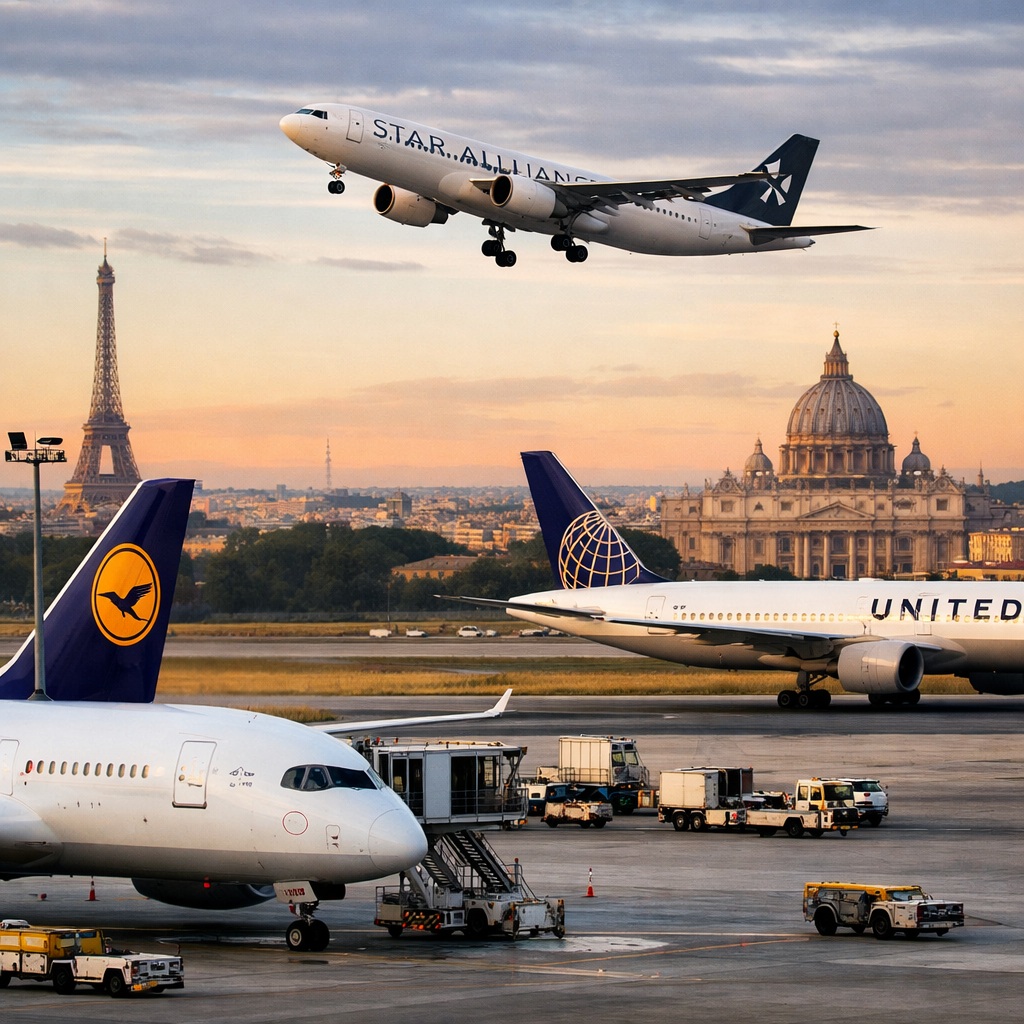
Strategic alliances and expanded long-haul connectivity turn European hubs into the beating heart of international travel.

Europe has reclaimed its place at the center of global tourism, propelled skyward by airlines that have spent the past year stitching continents together with unprecedented efficiency. In 2025, travelers have returned in force, and the revival has not been accidental. It has been engineered—route by route, hub by hub—by major airline alliances and carriers betting that demand for international travel would not only rebound, but accelerate.
At the forefront of this resurgence stands the Star Alliance, whose network strategy has quietly reshaped travel flows between Europe, North America, and fast-growing long-haul markets. By synchronizing schedules, streamlining transfers, and expanding code-share agreements, alliance members have made complex intercontinental journeys feel routine again. For passengers, Europe has once more become the natural gateway between hemispheres.
Few airlines embody this shift more clearly than Lufthansa. From its German hubs, the carrier has doubled down on its role as a connector airline, linking secondary European cities with destinations across the Americas, Asia, and Africa. The approach has paid off. Airports that once served primarily regional traffic are now bustling with international travelers, fueling hotel bookings, cultural tourism, and business travel across the continent.
Across the Atlantic, United Airlines has mirrored that ambition. By deepening its cooperation with European partners and expanding nonstop services into major European hubs, the airline has helped normalize transatlantic travel at a time when travelers are prioritizing reliability and seamless connections. The result has been a steady flow of passengers moving beyond traditional city-pair routes and into broader multi-country itineraries.
Tourism officials across Europe say the effects are visible on the ground. Historic city centers, coastal resorts, and lesser-known regional destinations are all reporting renewed interest from long-haul visitors. Many of these travelers are arriving not on isolated point-to-point flights, but as part of carefully choreographed airline networks that make Europe an easy stop—or starting point—for global journeys.
Industry analysts point out that the boom is not simply about volume, but about confidence. Airlines have signaled long-term commitment by deploying modern aircraft, improving onboard products, and restoring frequencies that were once considered risky. This has reassured travelers and tour operators alike, encouraging longer stays and more complex travel plans.
Sustainability remains an undercurrent in this expansion. European carriers, under pressure from regulators and passengers, have emphasized fleet renewal and more efficient operations. While challenges remain, airlines argue that newer aircraft and optimized routes are helping to balance growth with environmental responsibility.
As the year draws to a close, the picture is clear: global tourism is no longer just recovering—it is evolving. Europe’s resurgence has been fueled by airlines willing to think beyond borders, leveraging alliances and partnerships to rebuild trust in international travel. For destinations, travelers, and the aviation industry alike, the skies over Europe have once again become a symbol of connection, opportunity, and movement.