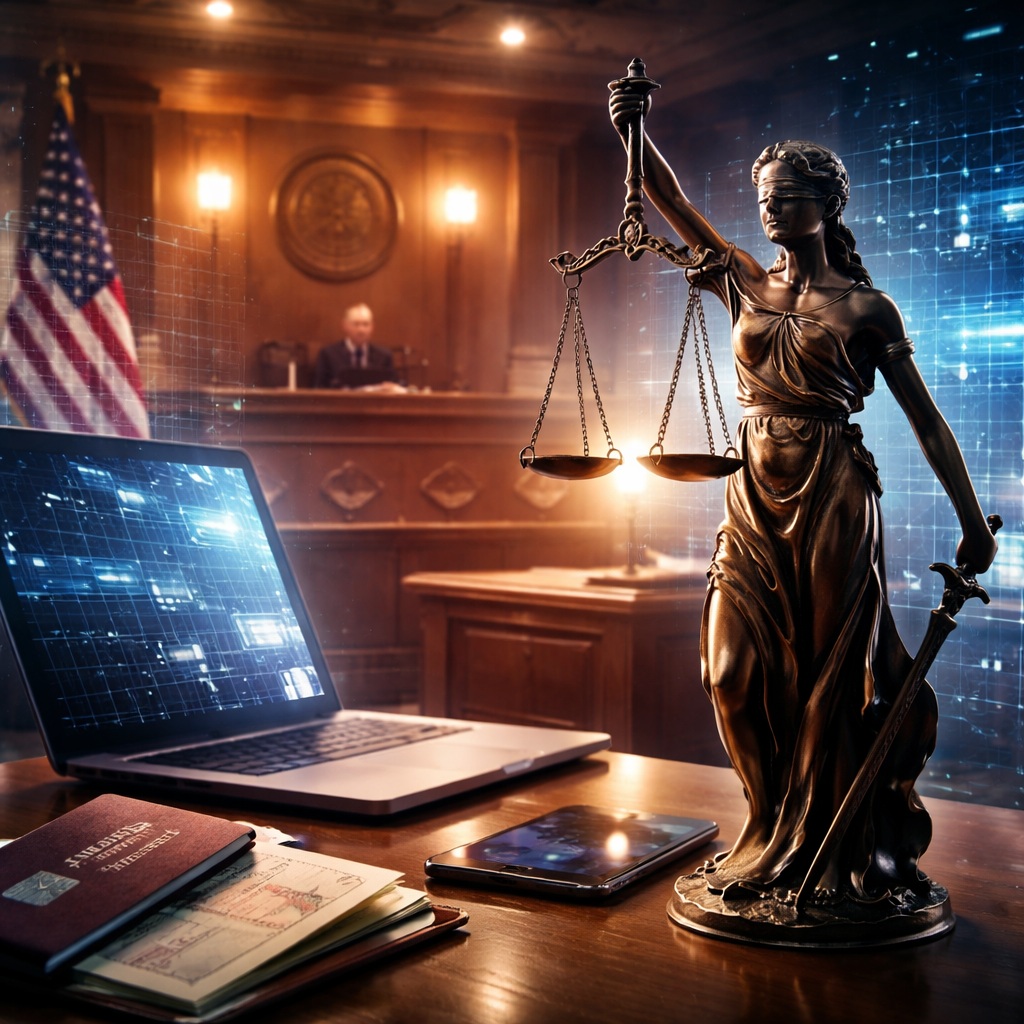
Emergency injunction exposes growing rift between immigration enforcement and the global fight against online disinformation
A federal courtroom fell unusually quiet this week as a judge delivered a ruling that may resonate far beyond immigration law. In a sharply worded injunction, the court blocked the detention of a British anti disinformation activist who had been targeted under a controversial visa restriction policy, halting what civil liberties groups described as a test case for a broader campaign against foreign tech critics.
The decision arrives in the final days of December, a moment when Washington is typically consumed by legislative deadlines and political transition. Instead, the ruling has reignited debate over how far the executive branch can go in using immigration powers to police digital speech, especially when that speech challenges online narratives and platforms linked to American political life.
At the center of the case is a London based researcher known internationally for exposing coordinated misinformation networks. According to court filings, immigration authorities moved to detain the activist shortly after his arrival in the United States, citing a visa provision expanded under the current administration that allows denial or revocation of entry on national interest grounds tied to information security.
Government lawyers argued that the policy gives broad discretion to bar individuals whose activities may undermine public trust or destabilize democratic discourse. They framed the activist’s work as politically sensitive and potentially disruptive, insisting that detention was lawful while his immigration status was reviewed.
The judge disagreed. In granting the injunction, the court found that the government failed to demonstrate an immediate security threat and raised serious concerns about viewpoint discrimination. The ruling emphasized that immigration authority, while expansive, is not unlimited when it intersects with constitutional protections and international commitments to free expression.
Legal experts say the injunction does not settle the underlying dispute but sends a clear signal. By preventing detention, the court preserved the activist’s ability to continue his work and to challenge the policy in full hearings ahead. For now, it also prevents the administration from using custody as leverage in a case that critics say was designed to intimidate.
“This is a firewall moment,” said one civil rights attorney involved in similar litigation, noting that visa law has historically been a tempting tool for administrations seeking fast action with limited oversight. “Once courts allow detention based on ideas rather than actions, the boundary between border control and censorship collapses.”
The administration has defended the visa policy as a necessary update for an era of digital warfare, where misinformation campaigns can be orchestrated across borders in seconds. Officials argue that foreign actors, even those presenting themselves as watchdogs, can shape political outcomes and must therefore be subject to heightened scrutiny.
Yet the activist’s supporters counter that his work focuses on transparency rather than influence. His research has been cited by journalists, academic institutions, and technology companies seeking to curb coordinated falsehoods online. Detaining such a figure, they argue, sends a chilling message to international experts who collaborate with American partners.
The tech sector is watching closely. Several advocacy groups warn that the case illustrates a growing clash between immigration enforcement and the global nature of digital research. Disinformation does not respect borders, they say, and efforts to combat it rely on cross border cooperation. Restricting visas for researchers risks isolating the United States at a time when shared standards are urgently needed.
Diplomatically, the ruling has already drawn attention in London and Brussels, where officials privately expressed concern over the implications for academic exchange and joint security initiatives. While the injunction avoids an immediate diplomatic incident, it underscores the fragility of trust when domestic policies affect international collaboration.
For the activist, the decision brings temporary relief but continued uncertainty. He remains in the country under court protection, his future dependent on further legal review. In public statements, he has described the case as bigger than his own situation, framing it as a test of whether governments can quietly redefine dissent as a security risk.
As the year closes, the injunction stands as a reminder that courts remain a key counterweight in moments of executive overreach. Whether the administration revises its approach or presses ahead toward appeal will shape not only this case, but the broader balance between national security, immigration power, and the open exchange of ideas in a networked world.
 The Tower Post