Trade union leaders argue that closer ties with the EU could steady the economy and reset post-Brexit politics as Labour looks toward the next election

As the year draws to a close, Britain’s trade union movement is pushing the Labour Party to confront one of the most sensitive legacies of the past decade: the country’s relationship with Europe. Senior union figures argue that economic uncertainty, fragile supply chains, and stagnant wages have made a compelling case for rebuilding stronger ties with the European Union, even if the political debate remains fraught.
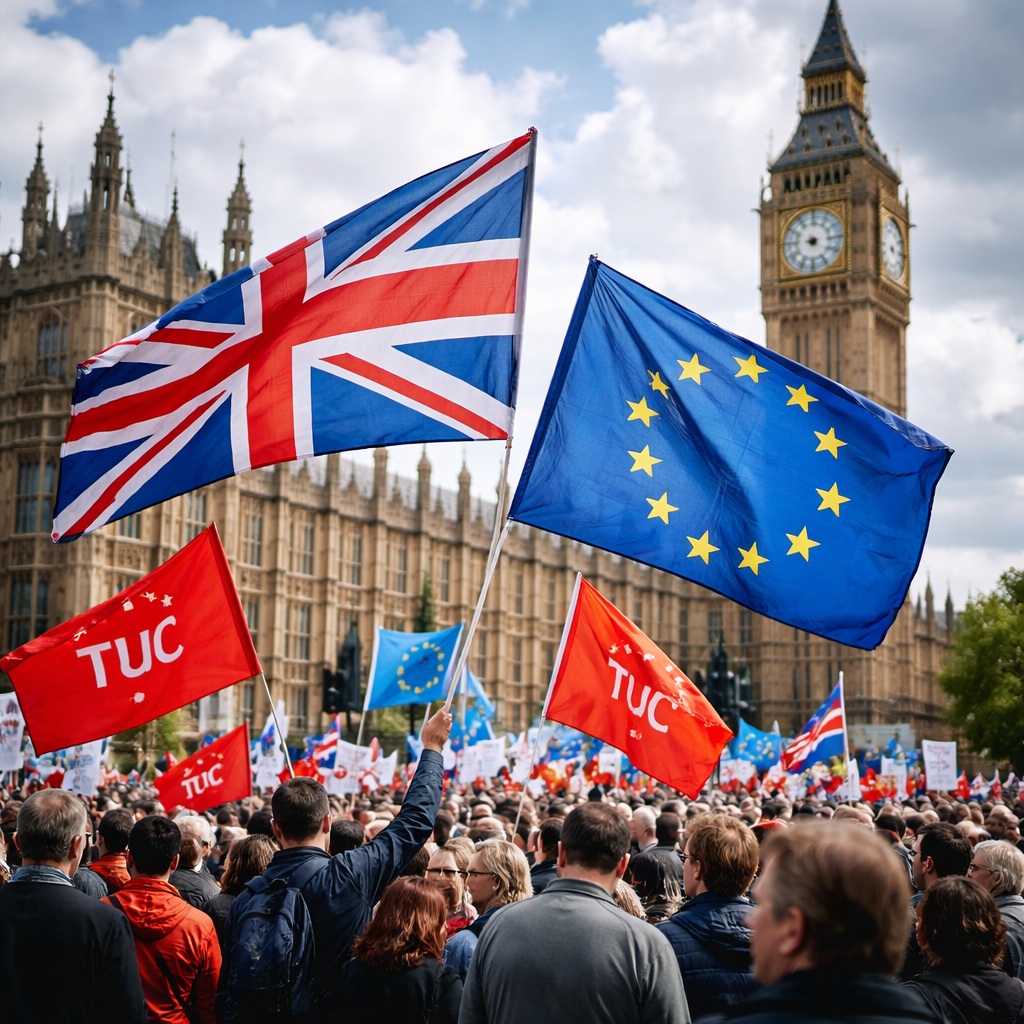
At the center of this renewed pressure is the Trades Union Congress (TUC), whose General Secretary, Paul Nowak, has urged Labour leader Keir Starmer to be bolder in redefining Britain’s post-Brexit settlement. Speaking in recent interventions aimed squarely at Labour’s leadership, Nowak has called for closer economic and political cooperation with Brussels, including a willingness to reopen discussions around a customs union.
For unions, the argument is less about ideology and more about pragmatism. They point to persistent uncertainty for manufacturers, exporters, and workers whose livelihoods depend on frictionless trade with Europe. While Brexit is formally “done,” they argue that its consequences are still unfolding in workplaces across the country, from factories facing higher costs to logistics firms navigating complex new rules.
Nowak’s message reflects a broader frustration within the labour movement that the political debate has narrowed. Labour’s leadership, keen to avoid reopening cultural divides, has repeatedly ruled out rejoining the EU or the single market. Yet unions say this caution risks ignoring the material concerns of workers who are still grappling with the economic aftershocks of Brexit.
A customs union, in the TUC’s view, represents a realistic middle ground. It would not reverse Brexit, but it could reduce trade barriers, stabilize investment, and provide a clearer framework for long-term planning. For industries such as automotive manufacturing, food processing, and chemicals, unions argue that such stability is essential to protect jobs and encourage growth.
Beyond trade, union leaders are also calling for closer political cooperation with Europe on standards, workers’ rights, and industrial strategy. They see the EU not as a distant bureaucracy, but as a regulatory partner whose policies continue to shape the British economy, whether the UK has a seat at the table or not.
At the same time, Nowak has been openly critical of what he sees as an excessive focus within Labour on migration rhetoric. While acknowledging public concern over immigration, he has warned against language that risks echoing Conservative talking points or sidelining the contribution of migrant workers. For many unions, migration is inseparable from the functioning of key sectors such as health, social care, hospitality, and agriculture.
The labour movement’s intervention also has a strategic dimension. With future elections in mind, unions want a stronger voice in shaping Labour’s economic and social agenda. They argue that reconnecting with Europe could form part of a wider narrative about rebuilding public services, raising standards at work, and delivering sustainable growth.
This push comes at a delicate moment for Labour. The party is balancing the desire to appear economically credible and electorally cautious with pressure from its traditional allies to offer a more transformative vision. Union leaders insist that avoiding the European question altogether is no longer viable, particularly as businesses and workers continue to feel the strain of a looser relationship with the EU.
For Starmer, the challenge lies in navigating these demands without reopening old wounds. Yet the unions’ message is clear: post-Brexit uncertainty has not faded, and silence is not a strategy. As Britain looks ahead, the labour movement wants Labour to lead a more honest conversation about how closer cooperation with Europe could support jobs, rights, and long-term prosperity.
Whether Labour heeds that call remains to be seen. But as the year closes, trade unions are signaling that Europe is not a closed chapter. Instead, it is an unresolved question—one they believe will shape the country’s economic and political future long after the slogans of the Brexit era have faded.