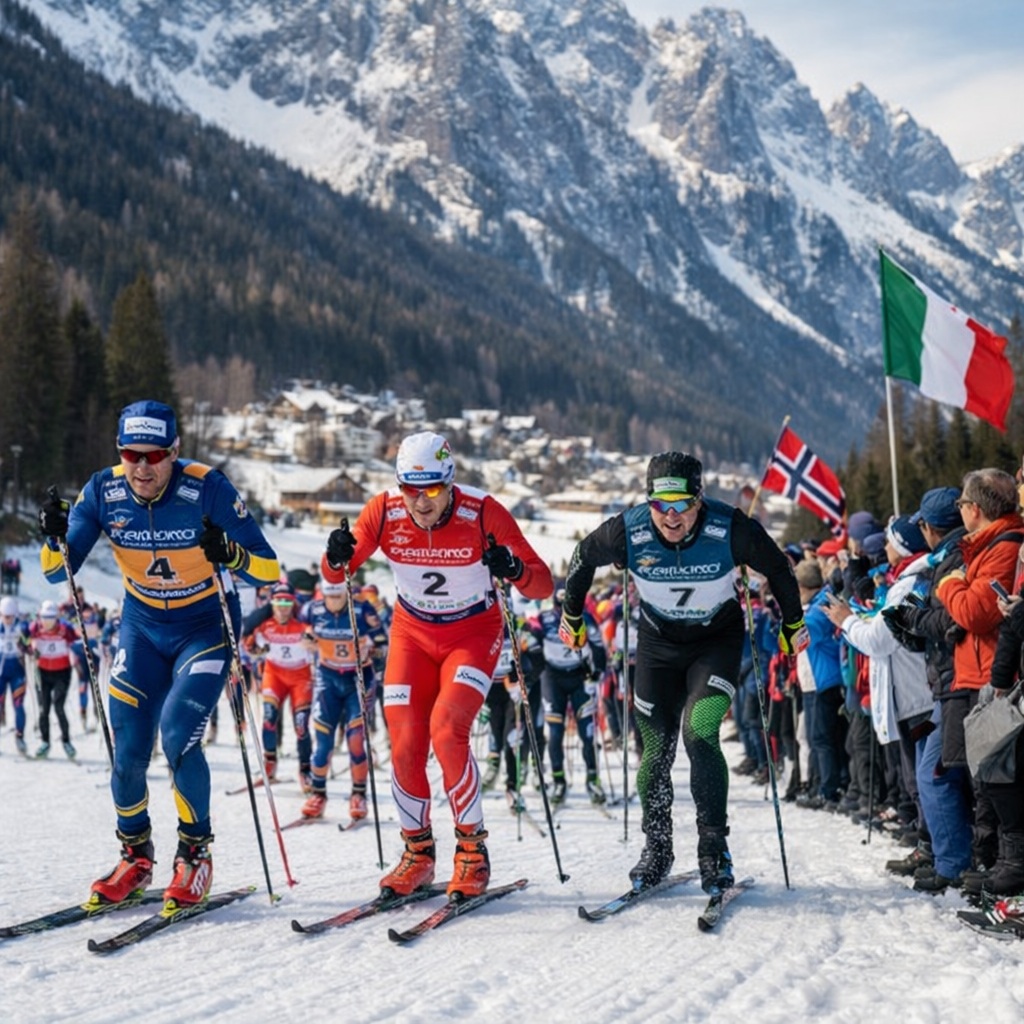
Toblach hosts the opening stages as the world’s best cross-country skiers begin a demanding journey toward the iconic Val di Fiemme finale.
The winter endurance season has shifted into high gear as the Tour de Ski 2025–26 gets underway in the Italian Alps. With snow-laden forests, packed grandstands, and a field stacked with elite competitors, Toblach has once again become the gateway to one of cross-country skiing’s most prestigious and physically demanding events.
The Tour de Ski occupies a unique place on the FIS World Cup calendar. Neither a single race nor a traditional championship, it is a multi-stage contest that rewards consistency, tactical intelligence, and sheer resilience. Athletes compete across a variety of formats and terrains, carrying accumulated times from stage to stage, knowing that every second gained or lost can echo through the entire tour.
Toblach, situated near the Austrian border, offers a fitting opening act. Its high-altitude tracks are known for their technical balance—fast enough to encourage aggressive skiing, yet punishing enough to expose any early-season weaknesses. For many athletes, the opening races are as much about measuring form as they are about avoiding mistakes. A stumble here can force skiers into a defensive posture for the rest of the tour.
This year’s start in Italy has drawn a strong international contingent, with Nordic powerhouses from Scandinavia, Central Europe, and beyond converging on South Tyrol. The Tour de Ski has long been dominated by athletes from countries with deep cross-country traditions, but recent seasons have seen a broader mix of contenders challenging for stage wins and overall podium positions. That trend appears set to continue, adding an extra layer of intrigue as the competition unfolds.
Beyond the athletes, the Tour de Ski is also a showcase for the regions that host it. Italian organizers have leaned into the event’s blend of sport and spectacle, with Toblach offering not only pristine race conditions but also an atmosphere that reflects the area’s deep-rooted skiing culture. For local fans, the opening stages are a celebration; for visiting teams, they are the first test in a marathon that demands careful energy management.
As the tour progresses, attention will gradually shift southward toward Val di Fiemme, home of the now-famous final climb. The uphill finish has become synonymous with the Tour de Ski itself—a brutal ascent that often reshuffles the overall standings and provides some of the most dramatic images of the winter sports season. Skiers arrive there carrying the physical toll of multiple races, aware that the final challenge can erase days of work or crown a perfectly executed campaign.
The timing of the Tour de Ski, bridging the end of one year and the beginning of the next, adds to its symbolic weight. For many athletes, it represents a defining moment of the winter, a chance to assert dominance or salvage momentum before the remainder of the World Cup season unfolds. Coaches and support staff, meanwhile, treat it as a complex logistical puzzle, balancing recovery, equipment choices, and mental focus.
As the early stages play out in Toblach, the familiar narrative threads are already emerging: seasoned champions seeking control, rising talents testing their limits, and specialists targeting individual stages while keeping an eye on the overall classification. In a sport often decided by fractions of a second, the Tour de Ski magnifies every effort and every decision.
With Italy once again setting the scene, the 2025–26 Tour de Ski has begun its relentless march through snow and altitude. The road to Val di Fiemme is long, steep, and unforgiving—but for the athletes gliding out of Toblach, it is also the stage on which winter legends are made.




 The Tower Post