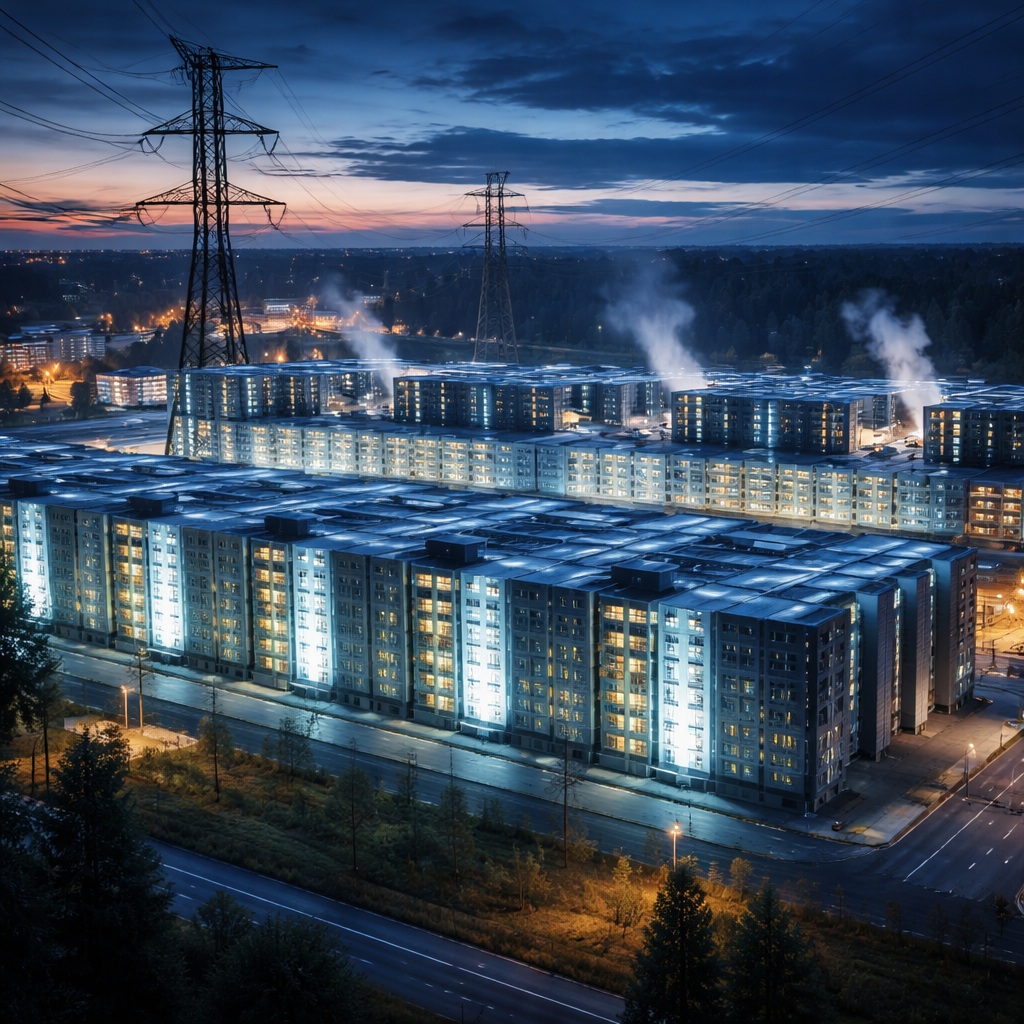
Lawmakers say booming artificial intelligence infrastructure is straining local power grids while shifting costs onto everyday consumers.
In the final days of the year, a new front has opened in Washington’s long-running debate over the power of Big Tech. Three senior U.S. Senators — Elizabeth Warren of Massachusetts, Chris Van Hollen of Maryland, and Richard Blumenthal of Connecticut — have launched a coordinated inquiry into whether the rapid expansion of artificial intelligence and cloud computing data centers is quietly driving up electricity bills for households and small businesses.
The lawmakers are pressing some of the world’s largest technology companies to explain how their massive energy needs are affecting local utility grids, and whether special electricity pricing deals are leaving ordinary ratepayers to absorb the costs of new infrastructure. Their questions reflect mounting concern that the AI boom, often framed as a triumph of innovation, may be producing hidden economic consequences far beyond Silicon Valley.
At the center of the inquiry is the explosive growth of data centers built to train and operate advanced AI models. These facilities, packed with power-hungry servers and cooling systems, can consume as much electricity as small cities. As utilities race to keep up, they are investing billions in new transmission lines, substations, and generation capacity — investments that are typically recovered through higher rates charged to consumers.
In letters sent to major AI and cloud providers, the senators argue that technology firms may be benefiting from preferential utility contracts that shield them from these rising costs. Meanwhile, residents living near data center clusters report higher bills and increased strain on local grids, even if they never use the AI products driving the demand.
“Families should not be forced to subsidize the energy appetite of trillion‑dollar tech companies,” Senator Warren said in a statement accompanying the inquiry. “If utilities are upgrading their systems to serve data centers, then those costs should be paid by the companies creating the demand — not by people struggling to pay their monthly bills.”
The concern is not purely theoretical. Across several regions of the United States, utilities have warned regulators that large data center projects are altering long‑term demand forecasts. In some cases, a single new facility can double expected electricity growth in a service area that previously saw little change for decades. Consumer advocates say this sudden shift gives utilities a justification to raise rates broadly, even when the benefits flow primarily to corporate customers.
Senator Van Hollen, whose state has become a major hub for data center development, emphasized the local impact. “Communities are being told they must accept higher power costs and new transmission projects, while the companies driving this growth negotiate behind closed doors for discounted rates,” he said. “That raises serious questions about fairness and transparency.”
The senators’ inquiry also touches on climate implications. Many utilities are still reliant on fossil fuels to meet surging demand, complicating state and federal clean‑energy goals. While tech companies frequently tout commitments to renewable energy, critics argue that these pledges do not always align with real‑time electricity consumption on local grids.
Senator Blumenthal framed the issue as both an economic and consumer‑protection challenge. “AI promises efficiency and progress, but it cannot come at the expense of basic fairness,” he said. “Consumers deserve to know whether their higher bills are the result of private deals that benefit powerful corporations.”
Industry representatives counter that data centers bring jobs, tax revenue, and long‑term investment to host communities. They also argue that large customers often help stabilize utilities by providing predictable demand. Several companies have pointed to investments in on‑site renewable generation and grid‑support technologies as evidence that they are part of the solution rather than the problem.
Still, regulators in multiple states have begun to question whether existing utility rules are equipped for an AI‑driven economy. Traditional rate‑making models were designed for gradual growth, not the sudden arrival of facilities that can draw hundreds of megawatts around the clock. Some experts warn that without reform, utilities will continue to socialize costs while privatizing benefits.
The Senate inquiry does not propose specific legislation, but it signals growing appetite for oversight. Lawmakers are asking companies to disclose details of their power contracts, projected energy use, and contributions to grid upgrades. Depending on the responses, the effort could pave the way for hearings or new rules governing how utilities allocate costs among customers.
As the year closes, the dispute underscores a broader reckoning over the real price of artificial intelligence. The technology’s benefits are increasingly visible, but so are its demands on physical infrastructure. Whether Congress can ensure that the AI revolution proceeds without quietly inflating household utility bills remains an open question — one likely to carry into the year ahead.




 The Tower Post