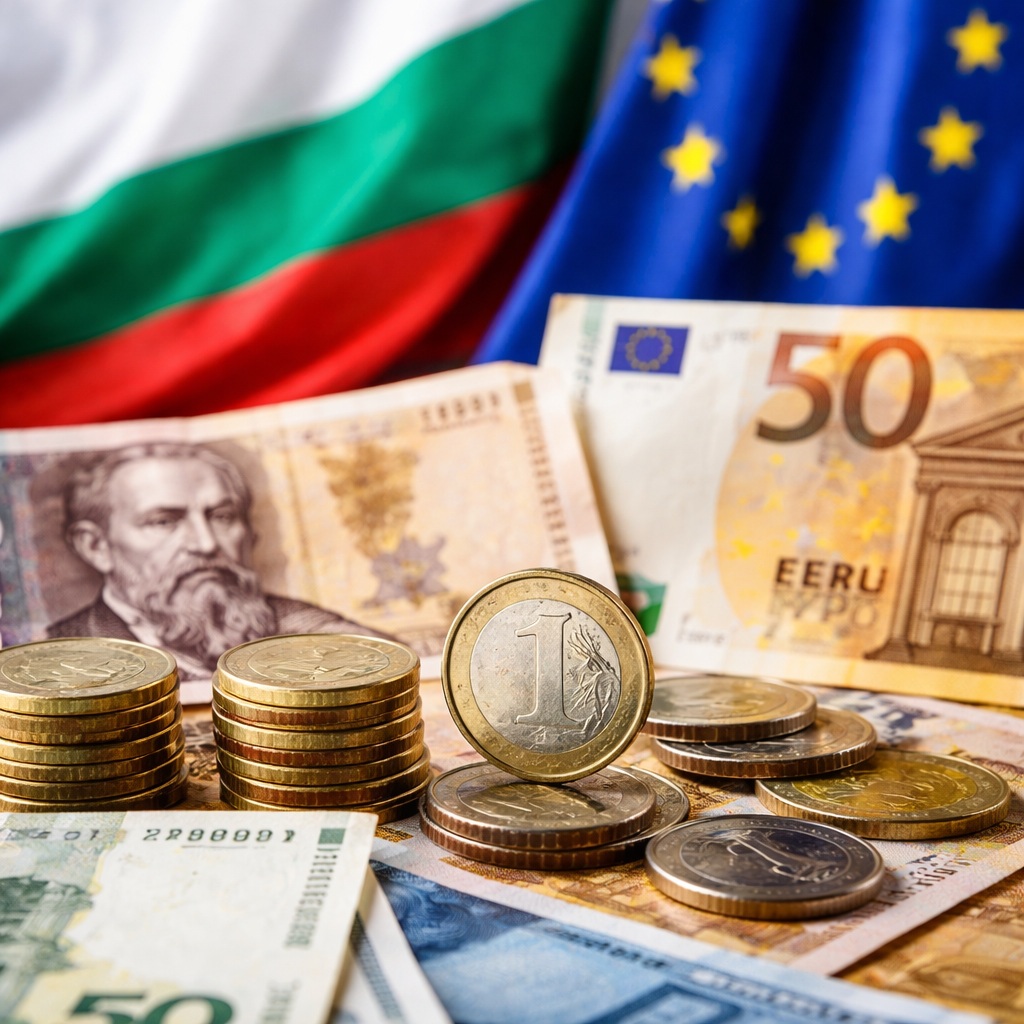
Banks, businesses, and citizens brace for a historic currency change as the country turns the page on the lev
As the year draws to a close, Bulgaria stands on the threshold of one of the most consequential economic transitions in its modern history. The country is preparing to replace its national currency, the lev, with the euro, a move that promises deeper integration with the European economy while stirring a complex mix of hope, caution, and debate at home.
In Sofia’s financial district, the mood is brisk and technical. Commercial banks have spent months updating systems, recalibrating ATMs, and training staff to handle accounts, loans, and payments in the new currency. Dual pricing has become a familiar sight in branches and on receipts, intended to help customers navigate the conversion and prevent confusion. Bank executives say the sector is ready, stressing that the changeover is largely an operational challenge rather than a strategic one. Still, they acknowledge that the first weeks will test customer confidence and patience.
Businesses across the country are also racing against the calendar. Large retailers and international firms, already accustomed to operating in euros, see advantages in lower transaction costs and easier cross-border trade. For small and medium-sized enterprises, however, the shift is more demanding. Shop owners must update cash registers, accounting software, and price labels, all while reassuring customers that the transition will not be used to quietly raise prices. Business associations have welcomed government guidance but warn that the real measure of success will be public trust.
That trust remains fragile. In open-air markets and neighborhood cafés, conversations about the euro reveal a divided public. Some Bulgarians express excitement, viewing the new currency as a symbol of stability and belonging within Europe’s core economies. They point to the convenience of traveling, studying, or working abroad without exchanging money, and to the psychological comfort of using one of the world’s most recognized currencies.
Others are more sceptical. Memories of past price shocks linger, and many fear that everyday goods will become more expensive once prices are rounded up in euros. Pensioners and low-income households are particularly wary, concerned that fixed incomes may not stretch as far. “The numbers may change, but my worries stay the same,” says one retiree in Plovdiv, echoing a sentiment heard frequently in public forums.
The government has sought to address these concerns with a broad information campaign. Officials emphasize that the conversion rate is fixed and that safeguards are in place to monitor unjustified price increases. Consumer protection agencies have promised heightened inspections, while hotlines and online tools aim to answer practical questions from the public. The message is one of continuity: savings, salaries, and pensions will carry over seamlessly, only expressed in a different unit.
Economists note that Bulgaria’s long-standing currency board, which has pegged the lev to the euro for years, has already limited monetary independence. In that sense, they argue, the formal adoption of the euro is less a leap into the unknown than the completion of a long process. Supporters highlight potential benefits such as improved investor confidence and a stronger voice within European decision-making circles.
Yet symbolism matters as much as economics. The lev has been part of Bulgaria’s national identity for generations, surviving political upheavals and economic reforms. Letting it go is an emotional step, one that underscores the tension between national tradition and European integration. Flags and coins may change, but the debate over what the euro represents is far from settled.
As midnight approaches and the country prepares to welcome a new chapter, anticipation mingles with unease. Banks will open their doors ready, businesses will flip their price tags, and citizens will reach into their wallets to find unfamiliar notes and coins. Whether the euro quickly becomes an accepted part of daily life or remains a subject of contention will depend on the weeks ahead.
For now, Bulgaria waits, poised between currencies, carrying both the weight of its past and the promise of a more closely linked European future.

 The Tower Post