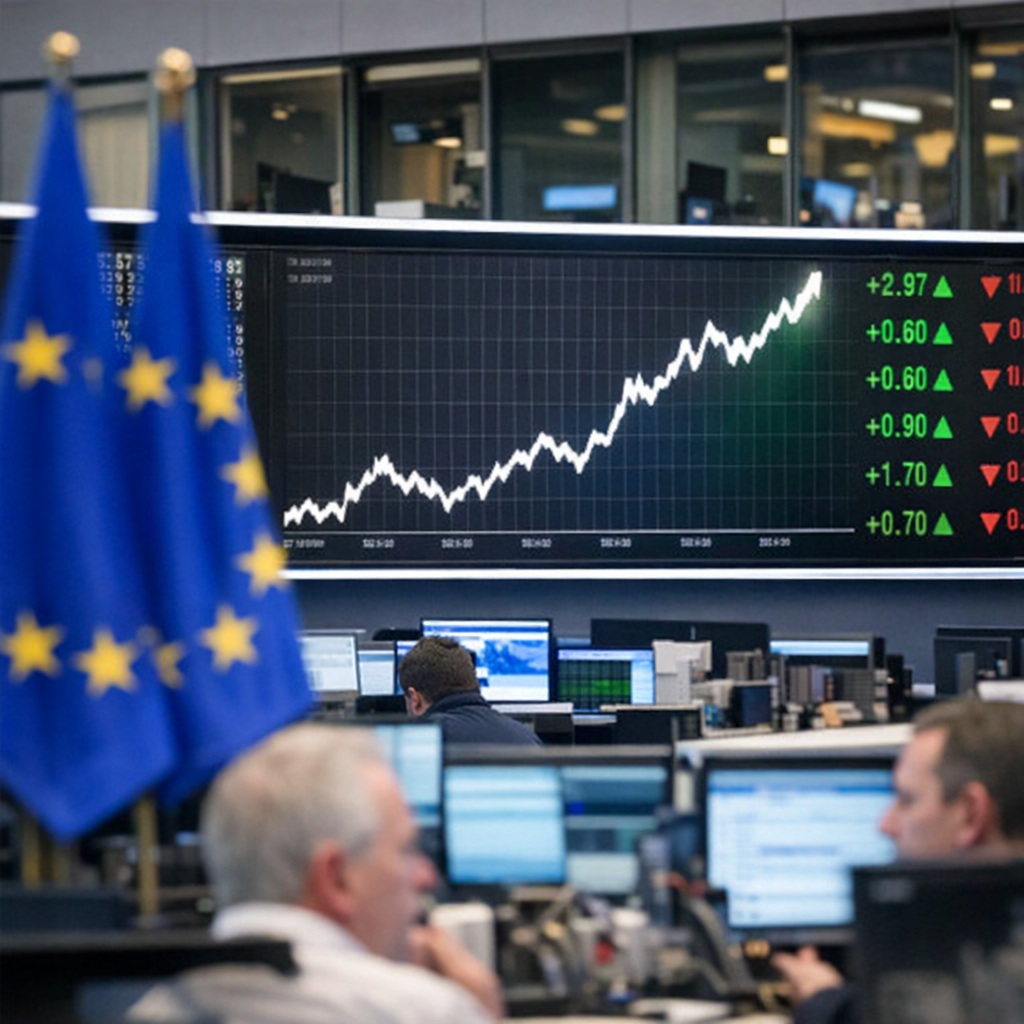
Post-holiday momentum lifts continental equities to fresh highs, even as sector splits reveal a market growing more selective
European shares closed the year on a confident note, touching fresh record highs as investors returned from the holiday lull and repositioned portfolios ahead of the new trading year. The rally, which gathered pace after thin seasonal volumes faded, reflected renewed appetite for risk assets and a growing conviction that Europe’s equity story remains intact despite a complex global backdrop.
From Paris to Frankfurt and Milan, broad indices edged higher, with the pan-European benchmark leading the advance. The move marked another milestone in a year defined by resilience, as markets repeatedly shrugged off geopolitical tensions, uneven growth signals, and shifting expectations around monetary policy. For many participants, the post-holiday surge carried symbolic weight, reinforcing the sense that European equities are entering the new year with momentum rather than fatigue.
The return of institutional investors after the festive pause was key. With desks fully staffed again, trading volumes normalized and buyers re-emerged, particularly in large-cap names that anchor regional indices. Asset managers described a “catch-up” effect, as investors who stayed on the sidelines late in the year sought exposure before calendar resets and portfolio rebalancing windows closed.
Yet beneath the headline records, the picture was more nuanced. While the overall market advanced, sector performance diverged sharply, highlighting a shift from broad-based rallies toward more selective positioning. Cyclical industries tied to economic recovery showed renewed strength, while defensives and some interest-rate-sensitive segments lagged behind.
Industrial and technology shares featured prominently among the gainers. Companies linked to infrastructure, automation, and digital transformation benefited from expectations that investment spending will remain robust, even if headline growth slows. Technology stocks, which had already staged a strong comeback earlier in the year, found additional support from optimism around artificial intelligence applications and enterprise software demand.
In contrast, parts of the healthcare and utilities sectors struggled to keep pace. Investors appeared less inclined to seek shelter in defensive names, favoring instead areas with clearer earnings momentum. Energy shares were mixed, reflecting ongoing uncertainty around commodity prices and the balance between supply discipline and global demand.
Banks and financials offered another example of the market’s internal contrasts. While some lenders gained on hopes of stable margins and improving credit conditions, others were weighed down by concerns over regulatory pressure and competition for deposits. The result was a patchwork of performances that underscored how stock selection, rather than simple index exposure, is increasingly driving returns.
Market strategists noted that the rally’s character differed from earlier phases of the year, when rising sentiment tended to lift most sectors in unison. The current environment, they argued, rewards companies with clear pricing power, strong balance sheets, and credible growth narratives. This selectivity suggests a market that is maturing rather than overheating.
Macro factors continued to shape investor thinking. Inflation across the euro area has shown signs of cooling, easing fears of further aggressive tightening by central banks. While policymakers remain cautious, expectations that interest rates are near their peak have helped underpin equity valuations. At the same time, economic data has pointed to a slowdown rather than a sharp downturn, supporting the view of a soft landing.
Currency movements also played a role. A relatively stable euro reduced pressure on exporters and improved visibility for multinational earnings. For global investors, this stability added to Europe’s appeal as a destination for diversified exposure, particularly compared with regions facing sharper policy uncertainty.
Political risks, though far from absent, receded into the background during the year-end rally. Budget debates, trade frictions, and elections remain on the horizon, but markets appeared willing to look past near-term noise. Instead, attention turned toward corporate earnings outlooks and guidance for the year ahead.
Analysts cautioned against reading too much into short-term moves, especially around the end of the calendar year, when positioning effects can amplify trends. Even so, the fact that European shares managed to reach new highs after such a strong run was seen as a vote of confidence in the asset class.
For retail investors, the record levels prompted mixed reactions. Some welcomed confirmation that staying invested had paid off, while others worried about buying at the top. Advisors emphasized the importance of diversification and long-term horizons, noting that valuations, while higher, remain supported by earnings growth and relative attractiveness compared with other asset classes.
As the final sessions of the year drew to a close, the mood on European trading floors was cautiously optimistic. There was little sign of the exuberance that often precedes sharp corrections, but neither was there evidence of widespread fear. Instead, the prevailing sentiment was one of measured confidence, tempered by awareness of the challenges that lie ahead.
Looking forward, investors will be watching for signals on monetary policy, corporate profitability, and geopolitical developments. Any shift in these factors could test the market’s resolve. For now, however, European shares appear to have carried their momentum through the holiday season, setting the stage for a new year that begins not with hesitation, but with record-setting confidence.



 The Tower Post