A deadly strike on the frontline city underscores the grinding nature of the conflict in Donetsk, as civilians endure another winter under fire.

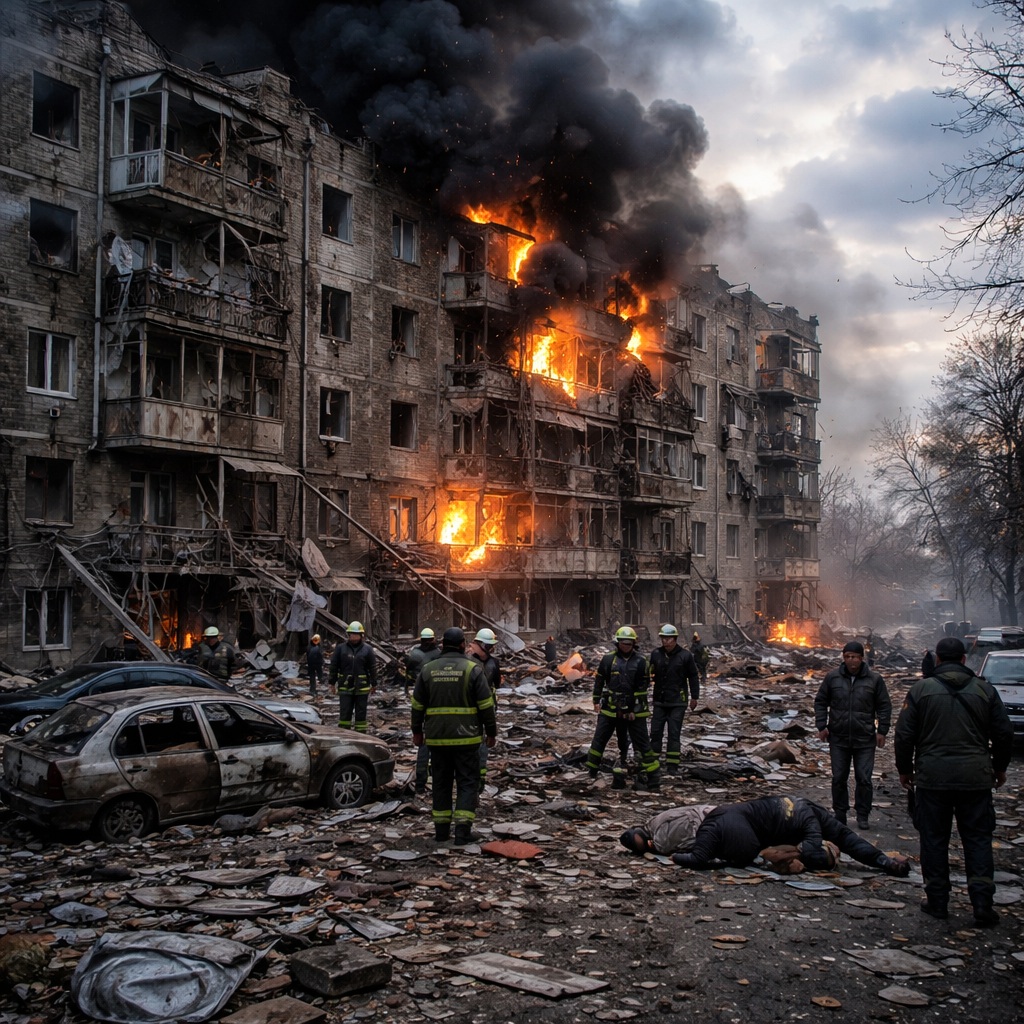
Sloviansk woke once again to the echo of explosions, a sound that has become grimly familiar in this eastern Ukrainian city. Russian artillery fire struck residential areas on the outskirts, killing at least one civilian and wounding several others, according to local authorities. The attack damaged homes, shattered windows, and left streets littered with debris, a stark reminder that the war remains an everyday reality for those living near the front.
Emergency crews worked quickly to pull survivors from damaged buildings while medics treated the wounded. Residents described the shelling as sudden and intense, arriving in the early hours when many were still at home. “You hear the whistle, then the blast,” said one local man, standing near a crater where a shell had landed. “After all this time, you never really get used to it.”
Sloviansk sits in the northern part of the Donetsk region, an area that has seen sustained fighting since the earliest phases of the conflict. Though front lines have shifted back and forth over the years, the city has remained within range of Russian artillery and rockets. The latest strike reflects a pattern of persistent, lower-intensity violence that has come to define this stage of the war: fewer sweeping offensives, but constant pressure on frontline communities.
Military analysts say such attacks are intended to wear down Ukrainian defenses and sap civilian morale. Russian forces continue to rely heavily on artillery to probe positions and disrupt supply routes, while Ukrainian units respond with counter-battery fire and air defense systems where available. The result is a grinding stalemate in many sectors, punctuated by deadly strikes like the one on Sloviansk.
Local officials reported that infrastructure was also affected, with power lines and water facilities temporarily disrupted. Repair crews moved in once the shelling subsided, racing against time as winter conditions make restoration work more difficult. For residents, each outage brings fresh anxiety, not only about comfort but about survival during cold nights.
The human cost remains high. Civilians who have chosen—or been unable—to leave speak of living in a constant state of alert. Basements and hallways double as shelters, and families keep emergency bags packed by the door. Schools operate intermittently or online, while many businesses remain shuttered, their owners unwilling to risk repeated damage.
International observers note that the continued shelling of towns like Sloviansk highlights the unresolved nature of the conflict. Diplomatic efforts have failed to produce a lasting ceasefire, and both sides accuse the other of targeting civilian areas. Independent verification is often difficult, but the damage on the ground tells its own story.
As the year draws to a close, the mood in Sloviansk is somber. There are no celebrations, only the hope that the coming months might bring respite. Candles flicker in windows during power cuts, and volunteers deliver food and supplies to the elderly and displaced. “We are still here,” said a woman who has lived in the city all her life. “We survive because we have no other choice.”
The shelling of Sloviansk is not an isolated incident but part of a broader pattern across eastern Ukraine, where the war continues to grind on with no clear end in sight. For those on the front line, each new attack reinforces a painful truth: even as global attention shifts elsewhere, the conflict remains immediate, personal, and deadly.