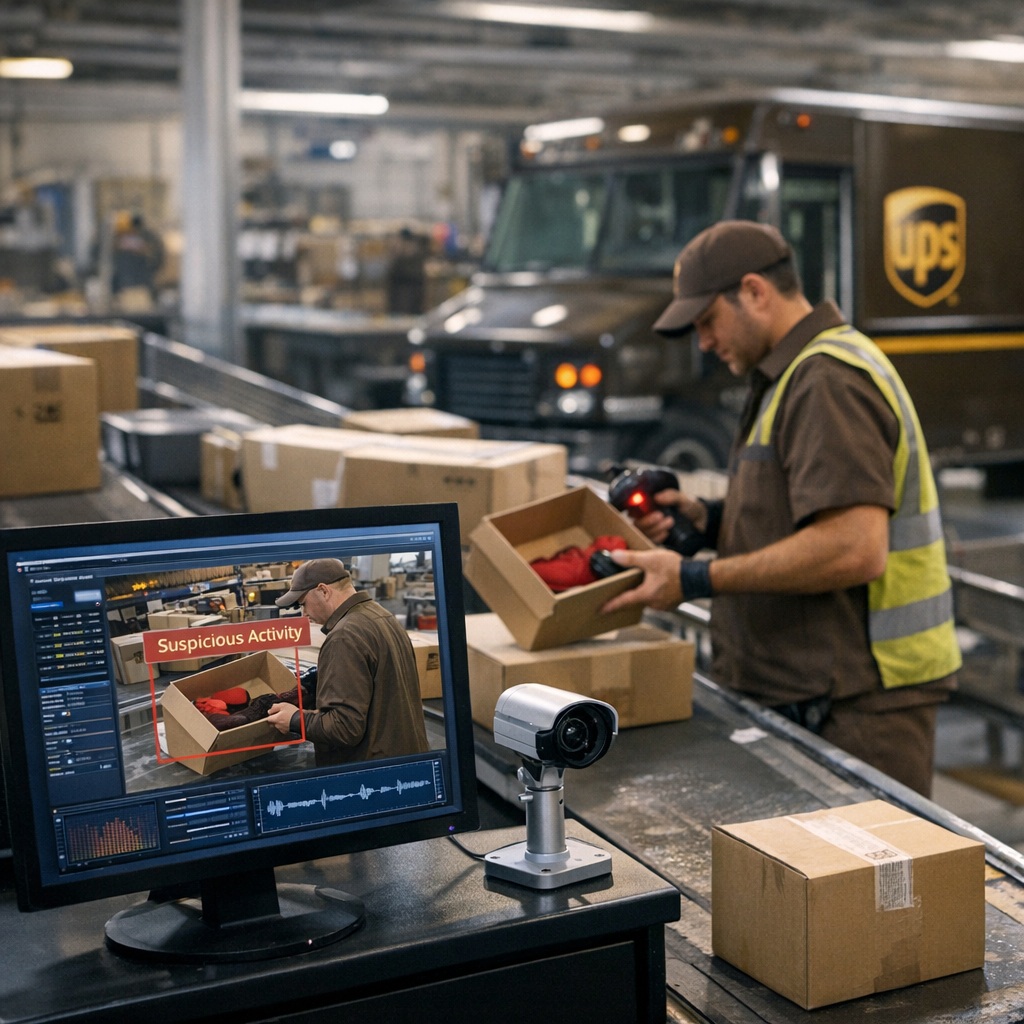
As post-holiday packages flood warehouses, the logistics giant deploys artificial intelligence to flag fraudulent returns, underscoring a broader shift toward automation in global supply chains.

In the quiet days after the holiday rush, when consumers begin sending back sweaters that do not fit and gadgets that failed to impress, the world’s largest logistics networks enter a different kind of peak season. For UPS, the surge in returns has become a proving ground for a new generation of artificial intelligence systems designed to spot fraud before it drains revenue and clogs operations.
The company has rolled out AI-driven tools across key points of its returns pipeline, from digital intake to warehouse inspection. The systems analyze patterns in customer behavior, shipping histories, and package characteristics to identify anomalies that suggest abuse. The goal is not to eliminate returns, which remain a cornerstone of modern retail, but to distinguish legitimate customers from those exploiting lenient policies during the busiest time of the year.
Holiday returns have long been a weak spot for retailers and carriers alike. The volume spikes sharply as gift recipients exchange or refund purchases, and fraudsters take advantage of overwhelmed systems. Common tactics include returning used or counterfeit items, sending back empty boxes, or claiming refunds for goods that were never shipped. For logistics providers, each fraudulent return represents not only lost revenue but also wasted labor, transportation, and warehouse capacity.
UPS executives say artificial intelligence offers a way to respond at scale. Machine learning models trained on years of returns data can flag suspicious shipments in real time, assigning them a higher risk score. Those packages may be routed for additional inspection or verification, while low-risk returns move through the network without delay. The company argues that this targeted approach protects honest customers from friction while focusing human attention where it is most needed.
The deployment reflects a broader transformation underway in logistics. Automation has already reshaped sorting centers, where computer vision and robotics handle millions of parcels per hour. AI-driven fraud detection extends that logic beyond physical movement into decision-making, using software to determine how packages are treated and which ones warrant scrutiny. Industry analysts see this as a natural evolution as carriers seek to manage complexity without adding headcount.
Retailers are watching closely. Many rely on UPS not just for transportation but also for reverse logistics, the often-overlooked process of moving goods back from consumers to sellers. Fraudulent returns can erode margins, especially in categories like electronics and apparel where resale value drops quickly. By embedding intelligence into the carrier’s network, UPS positions itself as a partner in loss prevention rather than a neutral conduit.
There are also implications for customer experience. Returns have become a competitive differentiator in e-commerce, with consumers expecting fast refunds and minimal hassle. Overly aggressive fraud controls risk alienating shoppers, particularly during the post-holiday period when emotions run high and patience runs thin. UPS says its systems are designed to be adaptive, learning from outcomes to reduce false positives and avoid penalizing legitimate behavior.
Privacy advocates note that AI-driven analysis depends on large volumes of data, raising questions about transparency and oversight. While UPS emphasizes compliance with data protection standards, the use of behavioral signals to assess risk highlights the growing role of algorithmic judgment in everyday transactions. For now, the company frames the technology as a defensive measure, aimed at protecting the integrity of the returns ecosystem rather than profiling customers.
The timing of the rollout is deliberate. As the year draws to a close, warehouses are clearing space for new inventory cycles, and carriers are under pressure to process returns quickly. Any efficiency gains can ripple across the supply chain, freeing capacity and reducing costs at a moment when margins are under scrutiny. Analysts say that if the system proves effective during this intense period, it is likely to become a permanent fixture.
UPS is not alone in this push. Across the logistics sector, companies are experimenting with AI to predict demand, optimize routes, and automate customer service. Fraud detection in returns represents a particularly visible application because it touches both retailers and consumers. Success here could accelerate adoption elsewhere, embedding AI more deeply into the mechanics of global commerce.
As holiday lights come down and shoppers tally their exchanges, the real test of UPS’s technology will unfold quietly in sorting hubs and data centers. If artificial intelligence can separate genuine returns from deceptive ones without slowing the flow of parcels, it will mark another step toward a more automated, algorithm-driven logistics industry—one where decisions once made by people are increasingly shaped by machines, just as the year turns and the next cycle begins.