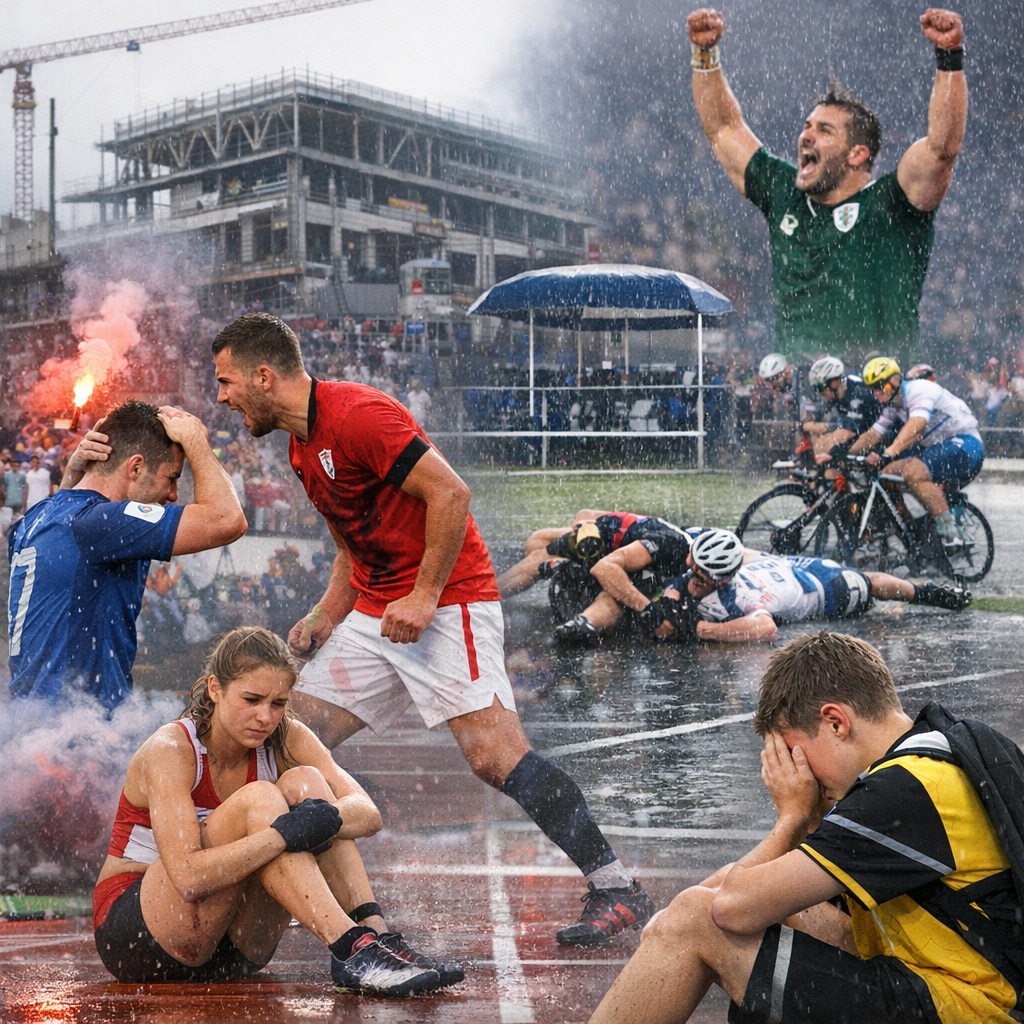
From fractured calendars to reform in youth competitions, a roller-coaster season leaves European sport searching for balance as it looks ahead.
As the new year opens, Europe’s sporting world is taking stock after twelve months that rarely settled into a steady rhythm. The past season unfolded less like a traditional campaign and more like a sequence of shocks, pauses, and sudden accelerations. Across elite arenas and school gymnasiums alike, 2025 became a proving ground for resilience, adaptability, and governance in European sport.
At the professional level, disruption was the defining theme. Football, the continent’s cultural and commercial engine, spent much of the year grappling with congested calendars and persistent institutional tension. Clubs and national teams were forced into overlapping cycles that pushed athletes to physical and mental limits. Matches arrived in relentless waves, recovery windows shrank, and the debate over who controls the modern game intensified. While crowds continued to fill stadiums, the strain was evident in mounting injury lists, heavy squad rotation, and increasingly outspoken criticism from players and coaches.
Athletics reflected a different but equally unsettling form of turbulence. A restructured international circuit reshaped travel patterns and preparation routines, demanding rapid adaptation from European competitors. Stricter integrity controls and regulatory oversight were applied more consistently, reinforcing credibility while also unsettling established routines. The season became unpredictable: some seasoned stars struggled for continuity, while emerging talents thrived in the altered landscape, producing surprise results that kept the sport compelling but uneven.
Away from the glare of elite competition, school and university sport experienced some of the most consequential changes of the year. Several education systems revised inter-school competition formats, seeking to reduce early specialization and ease pressure on students balancing sport and academics. Long-standing regional tournaments were reconfigured or replaced, a move applauded by policymakers but met with concern among traditionalists. Participation dipped in some areas during the transition, before signs of stabilization appeared toward the end of the year.
Women’s sport continued its upward trajectory, though progress came with its own instability. Greater visibility brought increased investment and audience growth, particularly in football and athletics. At the same time, disparities between nations and leagues became more pronounced. Some competitions flourished, setting new standards for attendance and professionalism, while others struggled to secure sustainable funding, revealing an uneven foundation beneath the surface of growth.
Governance and sustainability debates ran through nearly every discipline. Questions about athlete welfare, environmental impact, and the long-term viability of expanding calendars dominated meetings and public forums. Yet amid the turbulence, there were moments of collaboration. Federations, clubs, schools, and athlete representatives increasingly acknowledged that fragmented solutions were no longer sufficient for a system under constant pressure.
Looking ahead, the prevailing mood across Europe’s sporting landscape is reflective rather than triumphant. The past year functioned as a stress test, exposing vulnerabilities while accelerating conversations that had long been postponed. If 2025 was a roller-coaster, it was also a rehearsal—an intense ride that may yet prepare European sport for a more coherent and sustainable future as it moves deeper into the new year.
 The Tower Post