How a British Eurosceptic became one of the continent’s most influential political voices

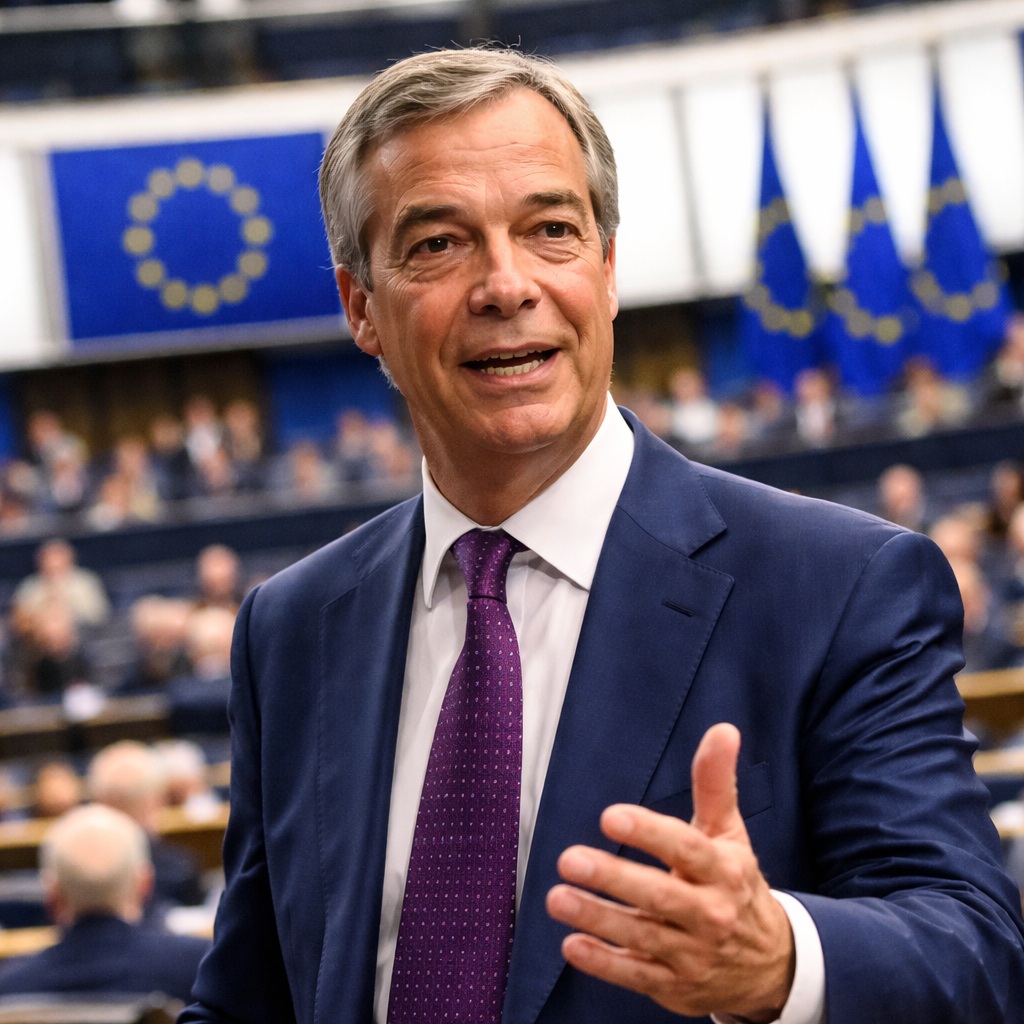
In a political era defined by fragmentation and cross-border turbulence, Nigel Farage has emerged as a figure whose influence stretches well beyond the shores of the United Kingdom. Once regarded primarily as a domestic agitator, he is now increasingly discussed in European capitals as a catalyst for debate, a reference point for populist movements, and, paradoxically, one of the most “European” politicians Britain has produced.
Farage’s rise to continental prominence rests on a contradiction that has become central to modern European politics. He built his career on opposition to the European Union, yet few British politicians have engaged so consistently and intensely with European institutions, leaders, and public opinion. His speeches, media appearances, and alliances have placed him in ongoing dialogue with the very system he criticizes, making him an unavoidable presence in pan-European political discourse.
Across Europe, Farage is seen less as a British eccentric and more as a symbol. For supporters of Eurosceptic and nationalist movements, he represents proof that sustained pressure from outside the traditional political mainstream can reshape the agenda of an entire continent. For critics, he embodies the disruptive forces that have challenged post-war European integration, amplifying polarization and eroding trust in shared institutions.
What sets Farage apart from many national populists is his fluency in European politics. Long before his ideas found resonance at home, he was a familiar figure in Brussels, where he honed a rhetorical style designed for a multinational audience. His arguments were rarely confined to British exceptionalism; instead, they framed the European project itself as distant, technocratic, and detached from everyday voters. That framing has since been echoed, with local variations, from northern Europe to the Mediterranean.
In recent years, Farage’s role has shifted from insurgent to reference point. Political actors across the continent invoke his name to signal either warning or inspiration. Election campaigns in multiple countries have drawn on themes he popularized: sovereignty, borders, and skepticism toward centralized authority. Even parties that reject his conclusions often adopt his language, a sign of how deeply his approach has permeated political debate.
The label of “Britain’s most European politician” may seem counterintuitive, but it captures an essential truth. Farage’s influence depends on constant engagement with Europe as a whole. His relevance is measured not by legislative achievements but by his capacity to shape conversations across borders. In an interconnected media environment, his statements circulate rapidly, translated and reframed for national audiences who see their own frustrations reflected in his critiques.
This prominence also highlights the intensity of the current European political climate. The continent is navigating economic uncertainty, security concerns, and questions about democratic legitimacy. In such an environment, figures who challenge established norms gain disproportionate attention. Farage thrives in this space, positioning himself as both outsider and veteran, a politician who claims authenticity while demonstrating strategic awareness of European power dynamics.
Critically, Farage’s ascent underscores the transformation of political influence in Europe. Power no longer flows solely through formal institutions. Media visibility, narrative control, and the ability to mobilize sentiment across borders now matter as much as parliamentary seats. Farage’s career illustrates how a single figure can operate transnationally without holding executive office, shaping debates from the margins inward.
As Europe enters another phase of political recalibration, Farage’s role remains contested but undeniable. He is cited in think tanks, debated in newsrooms, and referenced by rivals who measure their own strategies against his successes and failures. Whether admired or opposed, he functions as a connective thread in Europe’s fragmented political landscape.
Ultimately, Nigel Farage’s significance lies less in the policies he champions than in the questions he forces Europe to confront. His career reflects a continent wrestling with its identity, torn between integration and autonomy. In that sense, the paradox holds: a politician defined by Euroscepticism has become one of the most European figures of his time, shaping debates that transcend borders and continue to redefine the continent’s political conversation.