Authorities confront identification challenges and international coordination after a catastrophic bar fire in Crans-Montana

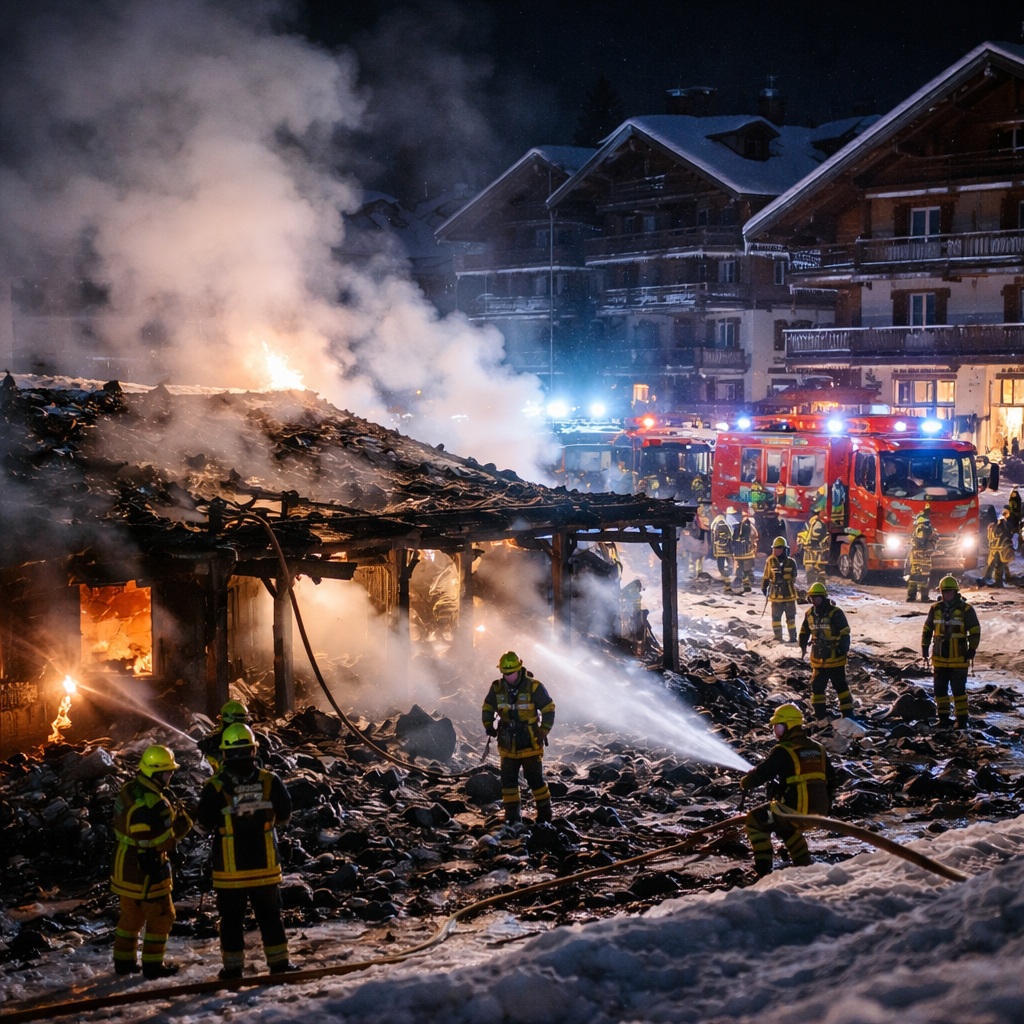
CRANS-MONTANA, Switzerland — Switzerland awoke to mourning and disbelief after a devastating fire tore through a crowded bar in the Alpine resort of Crans-Montana during New Year celebrations, leaving around 40 people dead and approximately 115 seriously injured, according to cantonal police in Valais. The blaze, which broke out as revelers gathered to welcome the new year, has been described by officials as one of the gravest civilian tragedies the country has faced in recent memory.
Emergency services were confronted with scenes of chaos as flames and smoke engulfed the venue, forcing patrons to flee into the freezing mountain night. Survivors spoke of panic, blocked exits, and dense smoke that rapidly reduced visibility. Firefighters, police officers, and medical teams from across the region rushed to the scene, working through the night to rescue victims and transport the injured to hospitals in Valais and neighboring cantons.
Authorities confirmed that many of those killed and injured were young people, reflecting the festive nature of the gathering. Several victims were foreign nationals, underscoring the international character of Crans-Montana, a destination that draws visitors from across Europe and beyond during the winter season. This diversity has added a layer of complexity to the aftermath, as officials coordinate with foreign embassies and families scattered across multiple countries.
In Bern, the shock reverberated quickly through the federal government. President Guy Parmelin ordered flags on federal buildings lowered to half-staff and issued a statement expressing the nation’s condolences to the families of the victims. Calling the incident “one of the worst tragedies” Switzerland has witnessed in decades, he praised first responders for their swift and courageous actions under extreme conditions.
At the heart of the response is the painstaking task of identifying victims. Police and forensic teams are relying on a combination of personal documents, forensic evidence, and cooperation with international authorities. In some cases, identification has been slowed by the severity of injuries and the absence of immediate next-of-kin information, a common challenge in tourist centers where visitors may be far from home.
Hospitals across the region have activated emergency protocols, with doctors and nurses working extended shifts to treat burn injuries, smoke inhalation, and trauma sustained during the escape. Health officials described the situation as serious but stable, noting that many of the injured remain in intensive care. Psychological support units have also been deployed to assist survivors, witnesses, and families grappling with the sudden loss and shock.
Investigators have sealed off the remains of the bar as they seek to determine the cause of the fire. Early inquiries are focusing on the building’s interior layout, fire safety measures, and the possibility of an accidental ignition linked to the crowded New Year setting. Authorities have cautioned against speculation, emphasizing that a full technical and criminal investigation will take time.
The tragedy has ignited a broader national conversation about fire safety in nightlife venues, particularly in alpine resorts that experience seasonal surges in population. Experts note that older buildings, festive decorations, and overcrowding can create deadly conditions if safety standards are not rigorously enforced. Calls are growing for inspections and reviews of emergency exit access, alarm systems, and capacity limits in similar establishments nationwide.
In Crans-Montana itself, the mood is somber. Candles, flowers, and handwritten notes have appeared near the cordoned-off site, forming a growing memorial. Local residents describe a tight-knit community shaken to its core. Businesses have closed temporarily, and several public events have been canceled as a sign of respect.
International reaction has been swift, with messages of sympathy arriving from neighboring countries and beyond. Foreign ministries are assisting citizens affected by the disaster, while airlines and travel companies have offered flexibility to those needing to return home unexpectedly.
As Switzerland enters the first days of the year, the focus remains on supporting the injured, comforting grieving families, and uncovering the truth behind the fire. For a nation accustomed to safety and stability, the events in Crans-Montana serve as a painful reminder of how quickly celebration can turn to catastrophe — and of the shared vulnerability that binds communities together in moments of loss.