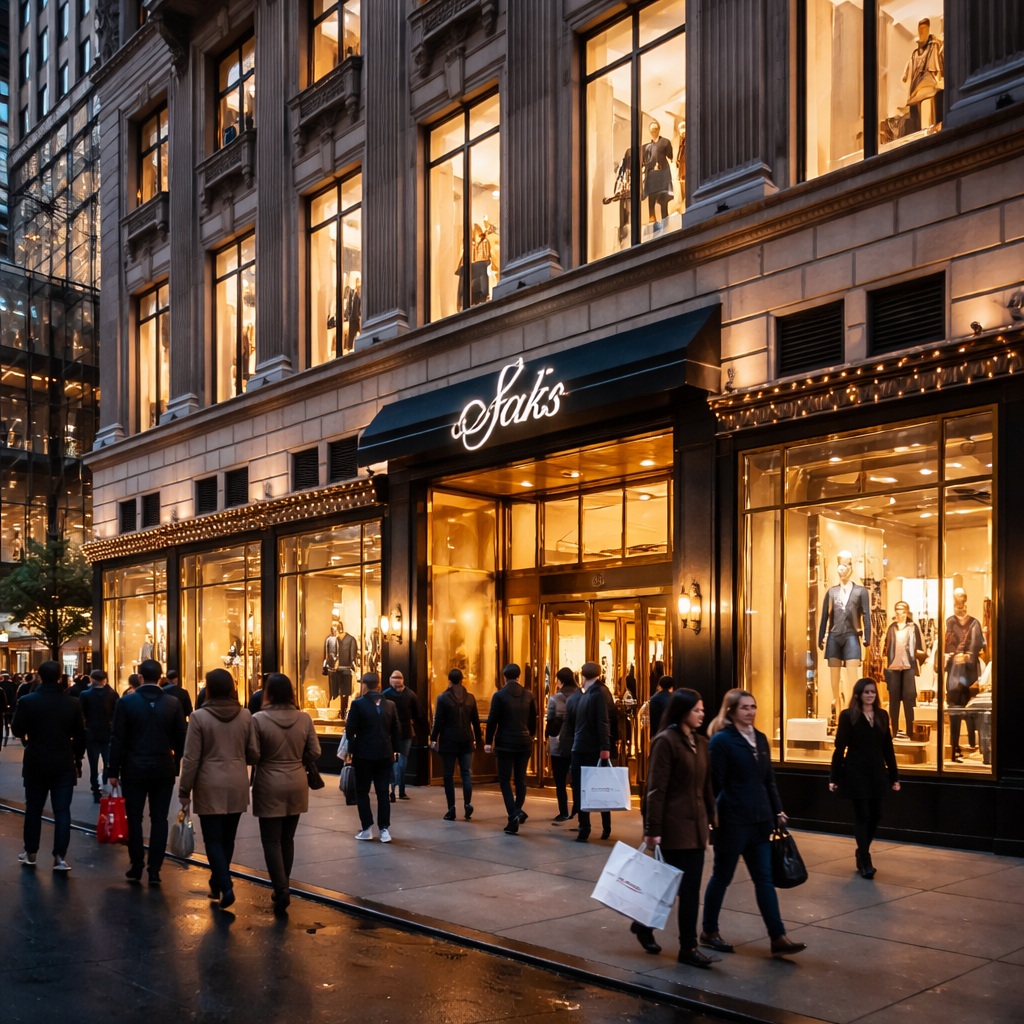
Missed payments push the luxury retail group into creditor talks, unsettling designers, landlords, and investors watching for signals of how high-end retail may be reshaped in the year ahead.
As the new year opens, uncertainty hangs over the luxury fashion sector after Saks Global failed to meet a scheduled debt payment, triggering urgent talks with creditors and sparking widespread speculation about a potential bankruptcy filing. The development has sent ripples through fashion houses, shopping mall owners, and financial markets, all of whom are deeply intertwined with the fate of one of the most recognizable names in American luxury retail.
Saks Global, the parent company behind a portfolio of upscale department store operations, has confirmed that it is engaged in discussions with lenders to explore restructuring options. While the company has not formally declared insolvency, the missed payment has raised alarms across the industry, where liquidity pressures and shifting consumer behavior continue to test even the most established players.
At issue is not only the company’s balance sheet, but the broader role department stores play in the luxury ecosystem. For decades, Saks has served as a critical wholesale partner for international fashion brands, offering exposure, scale, and prestige. Any disruption to that platform could have consequences far beyond a single corporate restructuring.
Industry insiders say the current situation reflects a collision of long-term structural challenges and short-term financial strain. Luxury spending has cooled in several key markets, particularly in North America, as affluent consumers grow more selective and tourism-driven shopping remains uneven. At the same time, department stores face rising operating costs, from real estate and logistics to staffing and technology investments required to compete with digital-native rivals.
The missed debt payment underscores how narrow the margin for error has become. Creditors are now weighing scenarios that range from maturity extensions and covenant resets to a more comprehensive balance-sheet overhaul. In a more severe outcome, a court-supervised bankruptcy process could be used to renegotiate leases, shed unprofitable locations, and reset obligations to lenders.
Designers and fashion executives are watching closely. Many luxury brands rely on Saks as a key point of distribution in the United States, particularly for ready-to-wear, accessories, and beauty. A disruption in payments or store operations could affect cash flow for brands already navigating cautious wholesale strategies.
“There’s a lot of nervous energy,” said one senior executive at a European fashion house, speaking on condition of anonymity. “If Saks stumbles, it’s not just about fewer doors. It’s about confidence in the wholesale channel at a moment when brands are already reassessing how and where they sell.”
Landlords, too, have reason to be concerned. Saks stores often serve as anchor tenants in high-end malls and urban retail corridors. Any effort to renegotiate leases or close underperforming locations could reverberate through commercial real estate portfolios, particularly at a time when retail landlords are still recovering from earlier waves of store closures.
From a financial perspective, analysts note that the situation at Saks Global is emblematic of a broader recalibration underway in luxury retail. The sector is no longer insulated from macroeconomic pressures, higher interest rates, and changing consumer priorities. Even well-known brands and retailers must now demonstrate operational discipline and a clear path to sustainable profitability.
In conversations with creditors, Saks Global is expected to emphasize the enduring value of its brand and customer base. Digital sales, private client programs, and luxury services remain bright spots, offering potential levers for recovery. The challenge lies in aligning these strengths with a capital structure that can withstand slower growth and ongoing investment needs.
For employees, vendors, and partners, the coming weeks will be critical. While restructuring talks are commonplace in retail, the symbolism of Saks facing such a moment is hard to ignore. The company has long been viewed as a bellwether for the health of luxury department stores in the United States.
Should a formal bankruptcy filing occur, it would not necessarily signal liquidation. More often, such processes are used as tools to reorganize and emerge leaner. Still, the stigma and uncertainty can weigh on relationships with brands and consumers alike.
As the fashion industry looks ahead, the situation raises fundamental questions about the future of luxury retail. Will department stores retain their central role, or will brands accelerate their shift toward direct-to-consumer models and curated partnerships? Can legacy retailers adapt quickly enough to justify the scale of their physical footprints?
For now, Saks Global’s missed debt payment has become a focal point for these debates. Retailers, designers, and investors are watching for clues in every statement and negotiation, aware that the outcome could help define the contours of luxury retail in the months to come.
Whatever path emerges, the episode serves as a reminder that even storied names are not immune to the pressures reshaping the global fashion business. As creditor talks continue, the industry waits to see whether Saks Global can stabilize its finances—or whether this moment marks a deeper turning point for luxury retail as a whole.




 The Tower Post