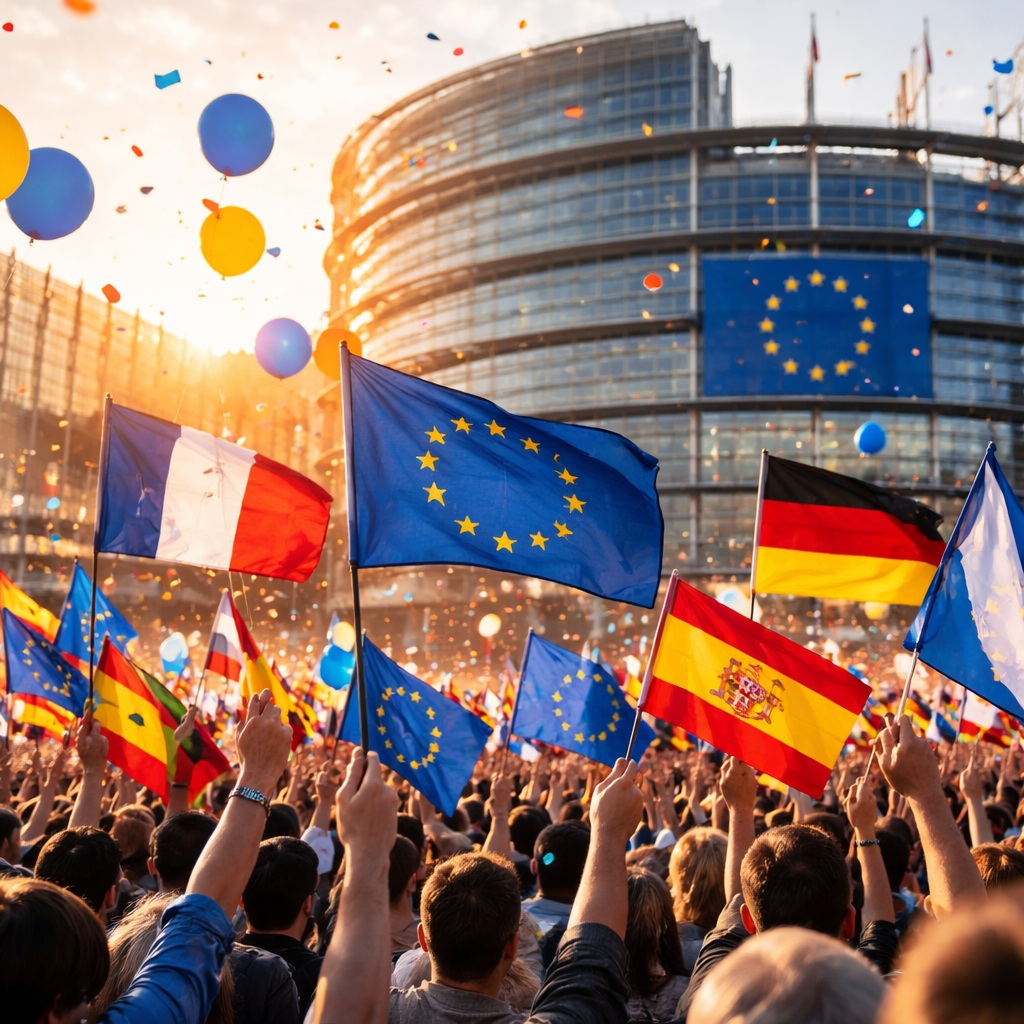
A Continent at the Ballot Box as Security, Migration, and Economic Choices Converge
By early January 2026, Europe has entered a prolonged electoral season that many officials in Brussels privately describe as a stress test for the European project itself. Across the European Union, a series of national elections scheduled throughout the year are expected to redefine political balances in several capitals, with direct consequences for defence cooperation, migration policy, economic governance, and the future pace of EU integration.
The votes will not take place in isolation. They unfold against a backdrop of geopolitical instability, lingering economic uncertainty, and a growing divide between governments advocating deeper European coordination and those pushing for a stronger return of national sovereignty. Together, these elections could recalibrate how Europe acts at home and abroad.
Central Europe: Sovereignty Versus Alignment
Among the most closely watched contests is Hungary’s parliamentary election. Prime Minister Viktor Orbán’s long-standing dominance has made Hungary a focal point in debates over the rule of law, sanctions policy, and relations with Russia. Opposition forces, fragmented in previous cycles, are again attempting to present a united front, framing the vote as a referendum on Hungary’s place within the European mainstream.
Similar dynamics are visible across Central Europe. In Slovakia and the Czech Republic, governing coalitions face pressure from parties critical of EU climate targets, migration quotas, and defence spending commitments. While none of these elections alone would alter EU policy, a cluster of sceptical governments could complicate consensus-building in the Council of the EU, particularly on sanctions, enlargement, and budgetary reforms.
Southern Europe: Economic Anxiety and Migration
In Southern Europe, elections are expected to revolve around the economy and migration. Years of inflationary pressure, combined with uneven recovery across regions, have kept cost-of-living concerns at the centre of political debate. Governments in Italy, Spain, and Greece face electorates that are increasingly impatient with structural reforms promised under EU recovery plans.
Migration remains a defining issue. Coastal states argue that existing burden-sharing mechanisms remain insufficient, while northern partners insist on stronger border controls and faster returns. Parties on both the right and the left are using the campaign season to argue that Brussels either overreaches or fails to deliver. The outcome of these votes could determine whether the EU moves closer to a common asylum system or retreats into ad hoc national measures.
Western Europe: Fragmentation and Coalition Politics
In Western Europe, voters are confronting increasingly fragmented political landscapes. Traditional centre-left and centre-right parties continue to lose ground to challengers on both ends of the spectrum. In countries such as Belgium and the Netherlands, elections are likely to produce complex coalition negotiations, delaying policy decisions at a time when the EU is under pressure to act swiftly on defence and industrial policy.
France and Germany, while not necessarily holding national elections in 2026, will be deeply affected by the broader European trend. Their governments rely on alliances with like-minded states to advance proposals on fiscal reform, joint defence procurement, and strategic autonomy. A shift in neighbouring countries could weaken their ability to lead.
Defence and the War Next Door
Security policy is expected to be one of the most consequential themes of the year. With the war in Ukraine still shaping Europe’s strategic thinking, voters are being asked to weigh higher defence spending against domestic priorities. Parties advocating robust military support for Ukraine face competition from those calling for negotiations or a more neutral stance.
The elections will influence whether Europe continues to move toward a more coordinated defence posture or remains dependent on NATO frameworks dominated by the United States. Governments emerging from these votes will shape decisions on joint arms procurement, defence industry subsidies, and long-term commitments to Eastern European security.
The Far Right and the Far Left: Early Mobilisation
Across the continent, parties at the political extremes are mobilising earlier than ever. Right-wing nationalist movements are campaigning on promises to restore border controls, reduce EU authority, and protect national industries. On the left, anti-austerity and climate-focused parties argue that existing economic rules constrain social investment and environmental ambition.
Their influence may not always translate into outright victories, but even modest gains can shift coalition arithmetic and policy priorities. In several countries, mainstream parties are already adjusting their platforms in response, signalling a harder line on migration or a more cautious approach to green regulation.
Implications for EU Integration
Perhaps the most profound question raised by the 2026 elections is the future direction of European integration. Will the EU emerge more cohesive, with governments willing to pool sovereignty in defence, energy, and finance? Or will it become a looser arrangement, marked by opt-outs and selective cooperation?
Brussels officials are acutely aware that treaty change is politically unrealistic in the near term. Instead, they are watching for signals of whether new governments will engage constructively within existing frameworks or seek to block initiatives from within.
A Year That Will Echo Beyond the Ballot
As campaigning accelerates, one message is clear: the elections of 2026 are not merely national events. They represent a collective moment of choice for Europe. The outcomes will influence how the EU responds to external threats, manages internal divisions, and defines its role in a rapidly changing world.
For voters, the stakes are high but often abstract. For policymakers, the implications are immediate and concrete. By the end of the year, Europe may look much the same on the map—but politically, it could be a very different continent.

 The Tower Post