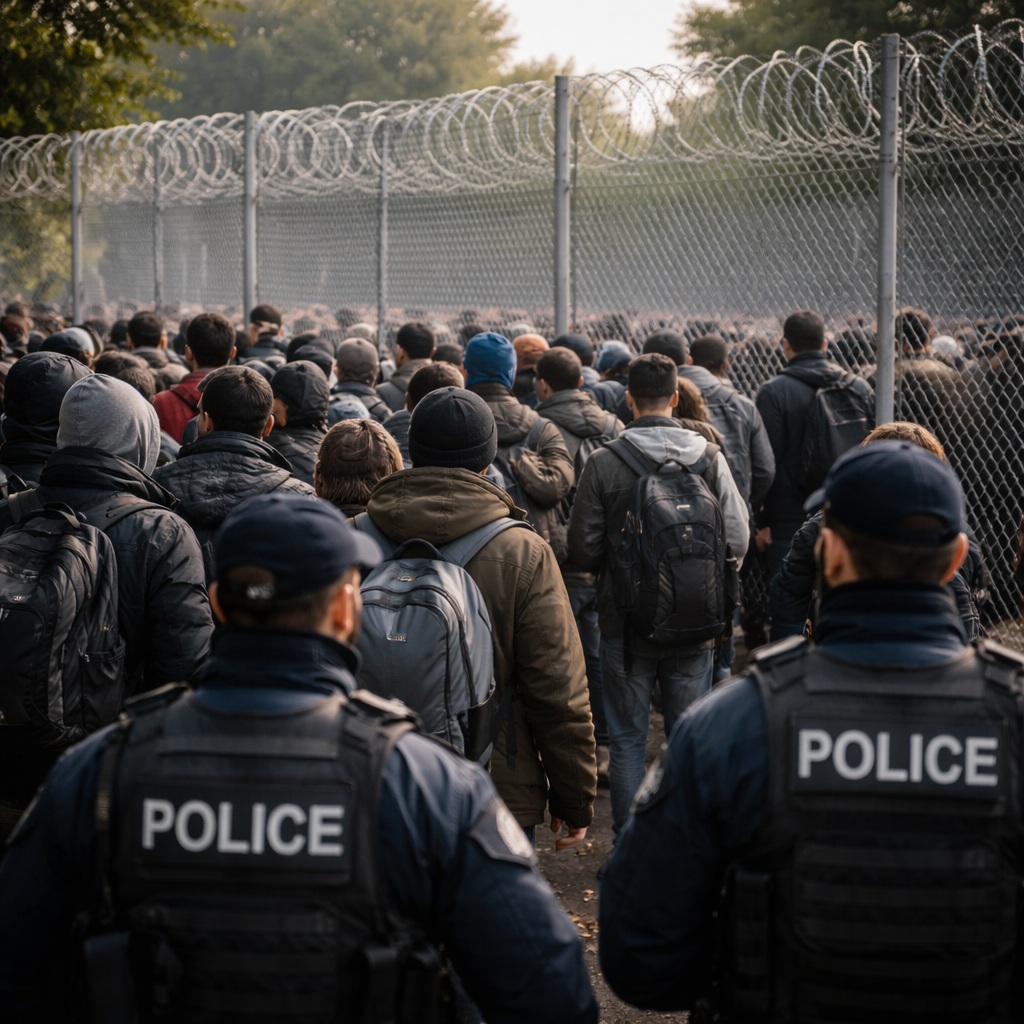
Unprecedented detention powers and sanctions linked to migration status spark legal and political backlash across the bloc.
EU home affairs ministers have moved forward with a far-reaching set of migration proposals that could significantly reshape how the European Union manages irregular migration, border control, and internal security. Backed by a coalition of member states under mounting domestic pressure to curb arrivals, the plan introduces unprecedented detention mechanisms and sanctions tied directly to an individual’s migration status.
The proposal, discussed intensively in Brussels in the first week of the new year, reflects a broader political shift across Europe. Governments facing polarized electorates and resurgent nationalist parties are seeking tougher measures to demonstrate control over migration flows. Supporters argue that existing systems are overstretched and legally fragmented, leaving authorities unable to respond effectively.
At the heart of the plan is an expansion of detention powers for migrants whose asylum claims have been rejected or are deemed inadmissible. Under the proposal, individuals could be held for extended periods if authorities assess a risk of absconding or non-cooperation with return procedures. In parallel, access to certain public services could be restricted for those without a recognized legal status.
Several ministers described the measures as a necessary correction to what they see as loopholes in current EU law. According to diplomats involved in the talks, the aim is to align national practices more closely and prevent migrants from moving irregularly between member states after receiving a negative decision.
However, human rights organizations and legal experts have raised alarm. They warn that linking sanctions and prolonged detention to migration status risks undermining fundamental legal protections enshrined in EU treaties and international conventions. Critics argue that the proposal blurs the line between administrative migration control and punitive measures, potentially violating the principle of proportionality.
Civil society groups have also expressed concern about the impact on vulnerable individuals, including families and people with mental health conditions. They caution that expanded detention could become a default response rather than a last resort, despite longstanding EU commitments to alternatives such as community-based supervision.
The proposal has exposed deep divisions among member states. Southern countries, which often serve as the first point of arrival, have welcomed stronger enforcement tools but insist that responsibility-sharing mechanisms must accompany any tougher stance. Northern and western states remain split, with some backing the plan and others warning of legal and ethical consequences.
Eastern member states, traditionally skeptical of relocation schemes, have focused their support on the deterrence aspects of the proposal. For them, stricter detention and sanctions are seen as a signal that the EU is serious about protecting its external borders, even as debates over solidarity remain unresolved.
Within EU institutions, the reaction has been cautious. Legal services are expected to scrutinize the proposal closely, while the European Parliament is likely to become a key battleground. Several lawmakers have already signaled that they will oppose any measures that weaken judicial oversight or fundamental rights.
The debate comes at a time when migration remains one of the most politically charged issues in Europe. Recent months have seen renewed pressure along key routes, alongside heightened public attention to security and social cohesion. Against this backdrop, ministers argue that inaction is no longer an option.
Yet opponents counter that short-term political gains could come at the cost of long-term legal stability and moral authority. They warn that once expanded detention and sanctions are normalized, rolling them back will be difficult, even if they prove ineffective or harmful.
As negotiations continue, the proposal is set to dominate the EU’s political agenda. Whether it emerges as a cornerstone of a tougher, more unified migration policy or becomes another flashpoint in Europe’s enduring migration debate will depend on the compromises struck in the weeks ahead.


 The Tower Post