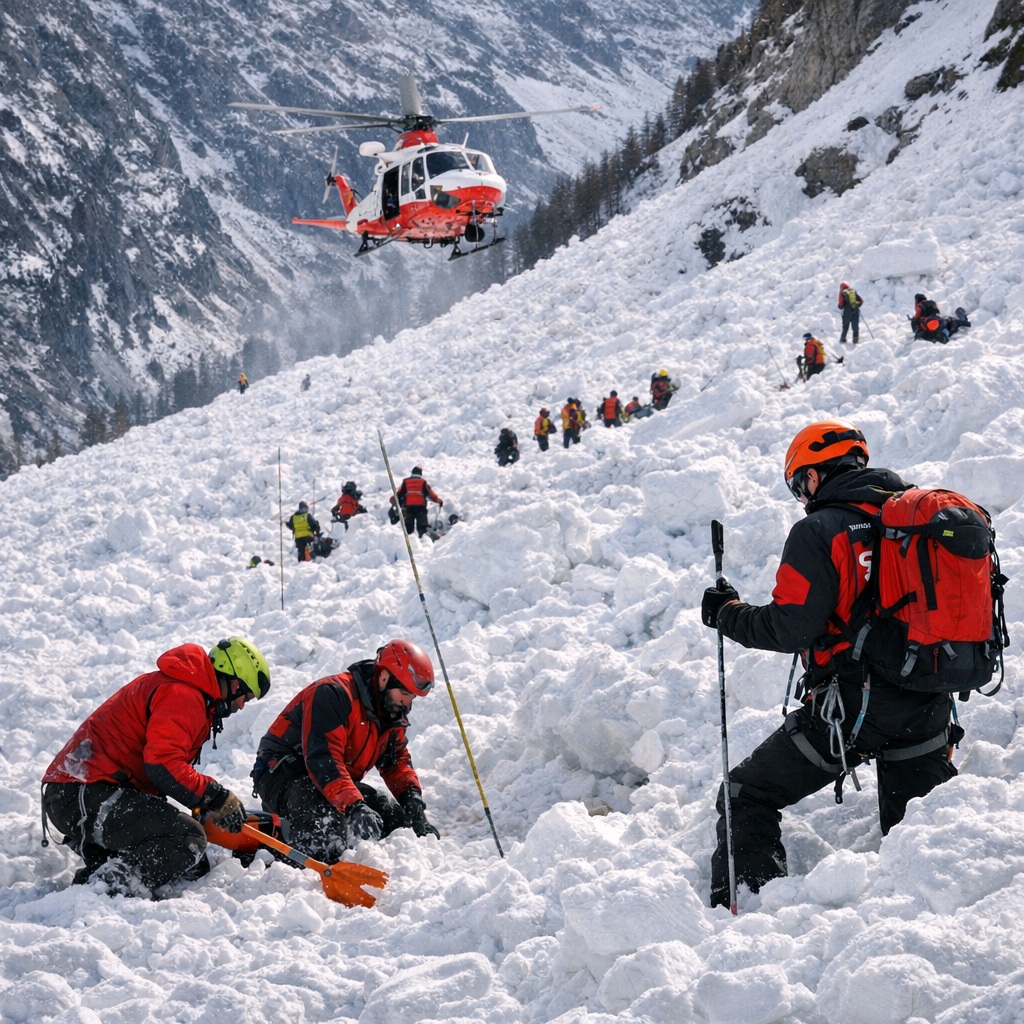
Severe weather and unstable terrain trigger deadly slides as rescuers race against time and mountain communities brace for further winter risks.

Italy’s high mountains have once again become the stage for tragedy this winter, as a series of powerful avalanches swept across sections of the Alps, killing and injuring climbers, skiers, and mountain workers. The incidents, driven by a volatile mix of heavy snowfall, fluctuating temperatures, and unstable terrain, have forced emergency services into prolonged search and recovery operations and left alpine communities on edge as winter deepens.
Rescue helicopters have crisscrossed valleys from dawn to dusk, while specialized alpine units have combed avalanche paths on foot, probing deep snow with poles and dogs trained to detect signs of life beneath the white mass. In several areas, operations have been slowed by poor visibility and the continued risk of secondary avalanches, a constant threat that rescuers must weigh against the urgency of saving lives.
According to mountain safety experts, the conditions leading up to the latest avalanches were particularly dangerous. Successive snowfalls layered light, powdery snow over older, compacted surfaces, creating weak bonds within the snowpack. When combined with brief warm spells and strong winds, the result was a fragile structure prone to sudden collapse. Even minor disturbances — a skier’s turn, a climber’s step, or natural shifts in the terrain — were enough to unleash massive slides.
“These are classic high-risk conditions,” explained one avalanche forecaster involved in monitoring the situation. “The snow looks inviting on the surface, but underneath it is unstable. The mountains are essentially loaded weapons waiting for a trigger.”
Among the victims were both experienced mountaineers and recreational winter sports enthusiasts, highlighting that expertise alone does not guarantee safety in extreme conditions. In some cases, groups were caught while traversing routes considered manageable under normal circumstances, underscoring how rapidly alpine environments can change.
Local hospitals activated emergency protocols as injured survivors were airlifted from remote slopes to trauma centers in nearby cities. Doctors described treating patients for fractures, hypothermia, and severe internal injuries caused by the immense force of moving snow, which can reach speeds comparable to a racing car and exert crushing pressure.
For alpine communities, the avalanches have been a grim reminder of their vulnerability. Many villages depend heavily on winter tourism, and the incidents have prompted temporary closures of ski areas, hiking routes, and access roads deemed unsafe. Hoteliers and guides face difficult decisions as they balance economic survival with the safety of visitors and residents.
Municipal authorities have urged caution, asking people to strictly follow avalanche bulletins and respect closures. In some valleys, controlled detonations have been carried out to trigger smaller, managed avalanches before larger, more destructive ones can form. These preventive measures, while disruptive, are considered essential tools in reducing risk.
Climate researchers note that such are becoming more complex to predict. While avalanches have always been part of alpine life, shifting weather patterns are altering snowfall behavior. More intense precipitation events followed by sudden warming periods can destabilize snowpacks more frequently, increasing the danger window for both natural and human-triggered slides.
As rescue teams continue their painstaking work, attention is also turning to prevention and preparedness. Mountain guides are calling for renewed investment in education, better real-time monitoring of snow conditions, and clearer communication to the public. “The mountains will always be there,” said one veteran guide, “but we must adapt how we move within them.”
For now, Italy’s Alps remain under close watch. Weather forecasts suggest further snowfall in the coming days, keeping risk levels elevated. In chalets and town halls alike, the mood is somber but resolute. Communities accustomed to living with the mountains know the winter is far from over — and that vigilance, respect for nature, and solidarity will be essential in the weeks ahead.