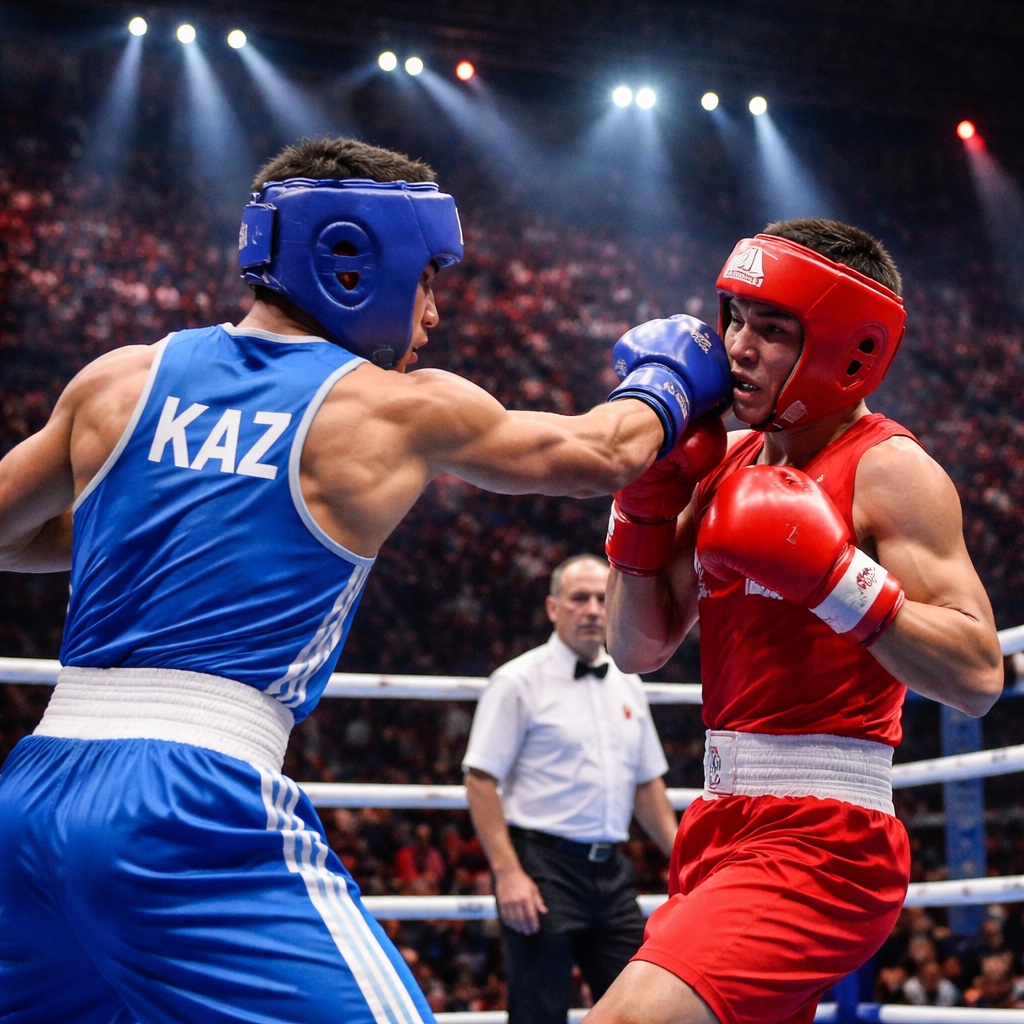
Kazakh athletes surge atop early medal tables as Liverpool hosts a global test of rising pugilistic talent
LIVERPOOL — The early sessions of the World Boxing Championships have unfolded with a crackle of intensity that has filled the arena from the first bell, setting the tone for a tournament defined by depth, discipline, and a notable tilt toward Central Asian excellence. As boxers from across the globe trade combinations under the bright lights, one storyline has emerged with striking clarity: Kazakhstan’s fighters are setting the pace, collecting golds and commanding the early medal tables with a blend of technical precision and steely composure.
The championships have drawn competitors from 66 nations, transforming Liverpool into a crossroads of boxing cultures. From Europe’s traditional strongholds to emerging programs in Asia, Africa, and the Americas, the diversity of styles has made each bout a study in contrasts. Orthodox fundamentals collide with improvisational flair; compact counterpunchers test rangy technicians. In this crucible, Kazakh athletes have consistently found ways to impose order.
Observers point to the hallmark traits of Kazakhstan’s boxing system—meticulous footwork, patient ring control, and a disciplined approach to defense that allows offense to bloom at opportune moments. In weight classes across the spectrum, their boxers have advanced through early rounds with a calm efficiency, often neutralizing opponents before accelerating late to decisive conclusions. The result has been a steady accumulation of podium finishes that places the Central Asian nation at the forefront of the standings.
Liverpool’s hosting has added a distinct European texture to the event. The city’s storied sporting heritage and knowledgeable crowds have provided a charged yet respectful backdrop, one that rewards clean technique as much as raw aggression. Europe remains central to the sport’s ecosystem, and the championships have reinforced the continent’s role as both a proving ground and a bridge between traditions. European fighters, particularly from Eastern and Southern programs, have shown depth and resilience, ensuring that the medal race remains competitive even as Kazakhstan leads.
What distinguishes this edition of the championships is the sheer intensity of the schedule. With multiple bouts per session and little margin for error, athletes are tested not only on skill but on recovery and mental stamina. Coaches speak of meticulous planning between fights—managing weight, sharpening tactics, and preserving focus amid the tournament’s relentless rhythm. In such conditions, experience matters, and many of the leading performers display a maturity beyond their years.
The global reach of the event is evident in the variety of narratives unfolding simultaneously. African boxers have impressed with athleticism and fearlessness, often pushing seasoned opponents into uncomfortable exchanges. Asian contenders outside the Kazakh contingent have brought speed and volume punching that energize the crowd. From the Americas, fighters blend power with adaptability, reflecting professional influences while adhering to amateur scoring demands. This convergence underscores boxing’s evolving geography, even as Europe remains a central axis.
Yet it is Kazakhstan’s consistency that has drawn the most attention. Analysts note that their success is not built on singular stars alone but on a pipeline that produces contenders across divisions. Each victory appears less an upset than an expectation fulfilled, reinforcing the perception of a program operating at peak efficiency. The golds gathered early serve as both reward and pressure, as rivals recalibrate strategies to slow the advance.
Beyond medals, the championships carry broader implications. For many athletes, strong performances here shape funding, selection, and future careers. For federations, results validate long-term investments in coaching and youth development. In Liverpool, these stakes are palpable, lending extra weight to every exchange and every raised glove.
As the tournament progresses, the central questions sharpen. Can Kazakhstan maintain its momentum under mounting scrutiny? Will European fighters leverage home-continent familiarity to close the gap? And which emerging nations will seize the opportunity to announce themselves on boxing’s biggest amateur stage?
What is already clear is that the World Boxing Championships have delivered on their promise: a global gathering defined by competitive integrity, stylistic richness, and moments of brilliance. In the echo of gloves on canvas and the murmur of an engaged crowd, the sport’s present and future are being written—round by round, bout by bout—in a city that understands the language of the fight.


 The Tower Post