As the single currency enters daily life, hopes of stability and investment compete with fears of inflation and political uncertainty.

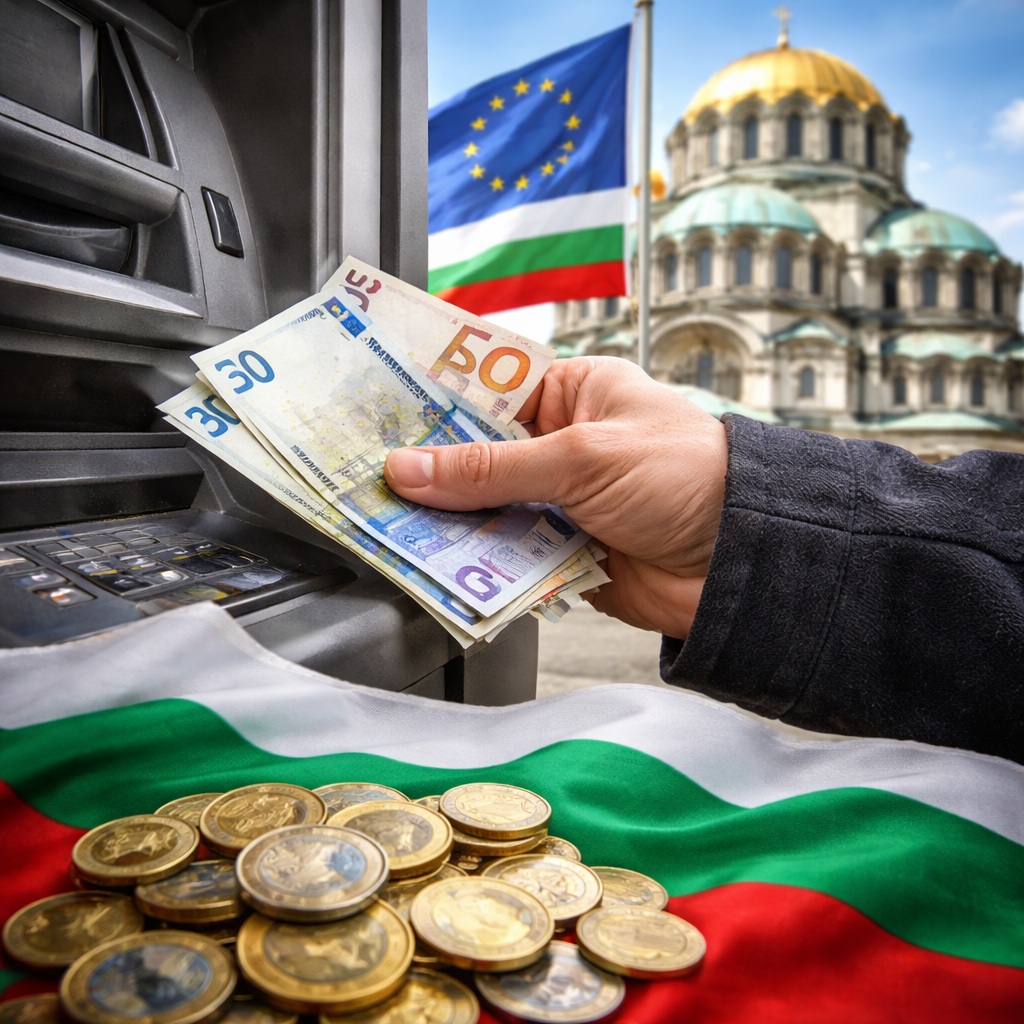
By January 2026, Bulgaria has crossed one of the most symbolic thresholds of European integration: the adoption of the euro. The changeover marks the end of the lev, a currency that had been part of Bulgarian identity for more than a century, and places the country firmly inside the euro area’s monetary framework. On the streets of Sofia and in provincial towns alike, citizens are now withdrawing crisp euro banknotes from ATMs, encountering a tangible sign of a strategic decision years in the making.
The government has framed the transition as a vote of confidence in Bulgaria’s economic maturity. Officials argue that euro adoption reduces transaction costs, strengthens financial credibility, and anchors the country more deeply within the European Union’s core. For export-oriented businesses and foreign investors, the disappearance of currency risk is expected to simplify operations and improve long-term planning.
Banks and payment providers reported largely smooth technical operations in the first days of the changeover. ATMs dispensed euros without disruption, and dual pricing—displaying values in both lev and euro—remains visible in shops to ease consumer adjustment. For many Bulgarians, the novelty of handling the new currency has brought a mix of curiosity and cautious optimism.
Yet beneath the surface, the mood is far from uniformly celebratory. A recurring concern voiced by households is inflation. Bulgaria has experienced price pressures in recent years, and many citizens worry that the currency switch could be used as a pretext for rounding prices upward. Economists stress that the euro itself does not automatically cause inflation, but public perception remains sensitive, shaped by experiences in other countries that adopted the single currency.
Pensioners and low-income families are among the most anxious. Fixed incomes leave little room for absorbing even modest price increases, and skepticism persists despite assurances from regulators that monitoring mechanisms are in place. Consumer protection authorities have pledged to sanction unjustified price hikes, but trust in enforcement remains uneven.
Small businesses also face a learning curve. While larger firms and multinational retailers were well prepared, smaller shops have had to adapt accounting systems, update pricing displays, and manage customer concerns in real time. For some, the transition represents an administrative burden; for others, it is an opportunity to integrate more seamlessly into regional supply chains.
From a macroeconomic perspective, analysts highlight potential long-term gains. Membership in the euro area can lower borrowing costs, stabilize financial markets, and attract investment seeking predictable monetary conditions. Bulgaria’s banking sector, already closely aligned with European standards, stands to benefit from deeper integration and access to euro-area financial mechanisms.
However, euro adoption arrives at a moment of political fragility. Repeated elections and shifting coalitions have contributed to a perception of instability that weighs on economic confidence. Critics argue that while the currency change is technically sound, political uncertainty could dilute its positive effects by delaying reforms and discouraging investors seeking clear policy direction.
Public opinion reflects these tensions. Surveys suggest broad acceptance of the euro in principle, coupled with unease about timing. Supporters see the move as irreversible progress toward European convergence, while skeptics question whether domestic institutions are strong enough to manage the transition without social cost.
The disappearance of the lev carries emotional weight as well. For older generations, the national currency symbolized sovereignty regained after decades of upheaval. Younger Bulgarians, more accustomed to cross-border mobility and digital payments, tend to view the euro pragmatically, as a tool rather than a symbol.
In the coming months, the true impact of the changeover will become clearer. Inflation trends, wage dynamics, and investment flows will test the promises made by policymakers. Much will also depend on political stability and the government’s ability to communicate transparently with the public.
For now, Bulgaria stands at a crossroads. The euro’s arrival underscores a strategic choice to bind the country’s economic future more tightly to Europe. Whether this milestone delivers the prosperity and stability its architects envision will depend not only on the currency in citizens’ wallets, but on the policies and confidence that surround it.