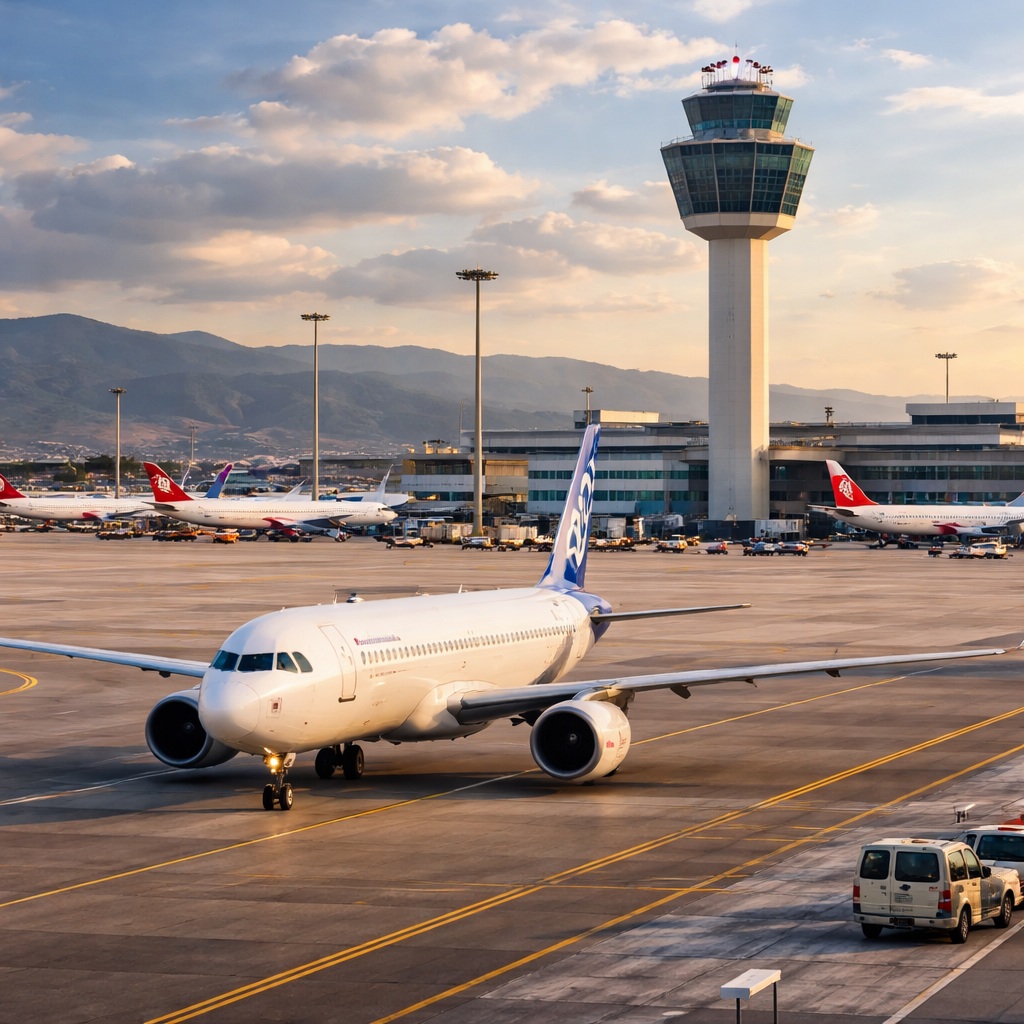
Flights resume as authorities investigate a disruption that briefly exposed vulnerabilities in Europe’s aviation infrastructure.
ATHENS — Air traffic across Greece began returning to normal this week after a widespread radio frequency failure temporarily disrupted communications between aircraft and ground controllers, forcing the suspension of major commercial flights and rippling across European air routes.
The malfunction, which affected the transmission systems used by air traffic control, led to precautionary ground stops at several airports, including the country’s main international hub near Athens. Pilots already in the air were rerouted or held at safe distances, while departures were delayed as authorities worked to isolate and resolve the fault.
Greek aviation officials confirmed that core flight operations were progressively restored after engineers stabilized the affected radio frequencies and implemented backup communication channels. By the end of the recovery phase, most scheduled flights were operating again, though delays and residual congestion continued to affect passengers throughout the region.
While no injuries or accidents were reported, the incident quickly became a sensitive political issue. Greece, a key aviation crossroads linking Europe, the Middle East, and North Africa, sits at the heart of some of the continent’s busiest air corridors. Any prolonged disruption risks cascading effects far beyond its national airspace.
The failure also renewed scrutiny of the resilience of critical infrastructure within the European Union. Radio communication between pilots and air traffic controllers is considered a foundational safety layer, and even short-lived interruptions raise concerns about redundancy, cybersecurity, and maintenance standards.
According to officials familiar with the response, the outage did not stem from human error but from a technical anomaly within the frequency management system. Investigators are now examining whether aging equipment, electromagnetic interference, or external factors contributed to the breakdown.
Opposition parties in Greece have called for greater transparency, urging the government to clarify how such a failure occurred and whether previous warnings were overlooked. The transport ministry, for its part, has emphasized that contingency procedures functioned as designed, preventing escalation and ensuring passenger safety.
Aviation unions also weighed in, noting that controllers followed protocol under intense pressure. “This incident shows both the fragility and the professionalism of the system,” said one union representative, calling for accelerated investment in modernized communication technologies.
For travelers, the disruption translated into long waits, missed connections, and crowded terminals. Airlines offered rebooking options and, in some cases, accommodation assistance, though passenger advocacy groups have already begun assessing compensation claims under EU air passenger rights rules.
Beyond the immediate inconvenience, analysts say the episode underscores a broader challenge facing European infrastructure: balancing rising demand with systems that must operate flawlessly at all times. As air traffic volumes continue to climb, even rare technical failures can have outsized economic and political consequences.
Greek authorities have pledged a full technical review and closer coordination with European aviation bodies to prevent a recurrence. For now, skies over Greece are busy again, but the brief silence on the airwaves has left a lasting echo in policy circles across the continent.




 The Tower Post