North Korea’s ballistic launches and sharp rhetoric against U.S. action in Venezuela deepen global unease, signaling a new convergence of distant flashpoints.
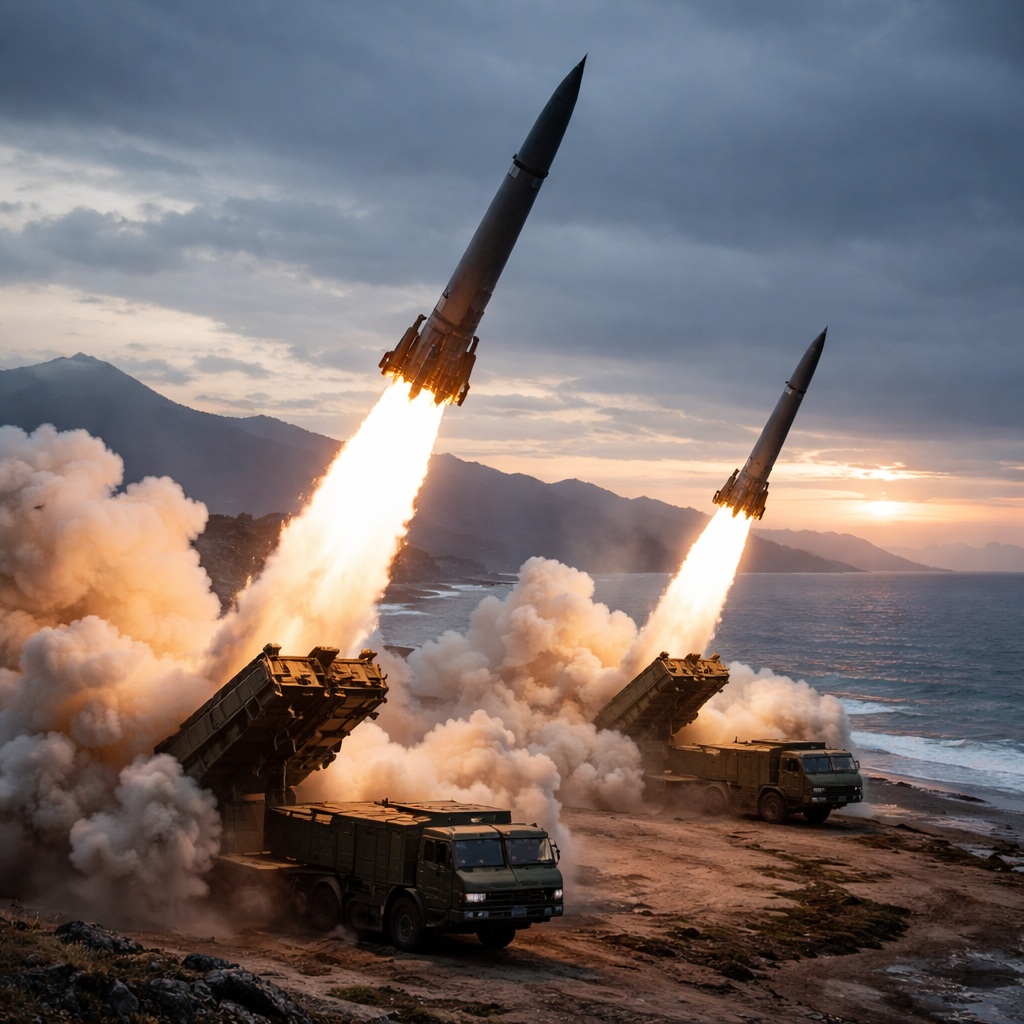
As dawn broke over the Korean Peninsula, North Korea launched a series of ballistic missiles into the sea, pairing the tests with an unusually pointed condemnation of U.S. military action in Venezuela. The synchronized show of force and diplomacy-by-megaphone underscored how conflicts thousands of miles apart are increasingly intersecting in a tense, multipolar world.
State media in Pyongyang framed the launches as a “defensive response” to what it called American “imperial adventurism,” explicitly citing Washington’s recent strikes in Venezuela as evidence of a widening pattern of intervention. The message was unmistakable: North Korea intends to position itself as both a military actor and a political voice in opposition to U.S. power, even in regions far from Northeast Asia.
The missiles, which followed a familiar trajectory toward waters east of the peninsula, were detected by regional monitoring systems and prompted immediate alerts in neighboring capitals. While the tests did not cross international boundaries, their timing magnified their impact. Officials in Seoul and Tokyo convened emergency consultations, while U.S. commanders emphasized that allied defenses remained fully operational.
What set this episode apart from previous North Korean launches was the explicit linkage to Latin America. In a rare reference, Pyongyang accused Washington of “exporting instability” to the Western Hemisphere, arguing that the strikes in Venezuela represented an escalation that threatened global peace. Analysts say the rhetoric reflects North Korea’s effort to knit together disparate crises into a single narrative of resistance.
“The launches themselves follow a pattern we’ve seen before,” said a senior security analyst based in Asia. “But the political framing is new. Pyongyang is signaling solidarity with governments opposed to the United States, regardless of geography.”
The condemnation comes as the United States insists its actions in Venezuela were limited and targeted, aimed at deterring what it describes as destabilizing activities by Caracas. U.S. officials have rejected accusations of imperialism, emphasizing that the strikes were conducted with regional security in mind and in coordination with partners.
Still, the ripple effects have been swift. Governments across Latin America expressed concern about becoming entangled in a broader geopolitical confrontation, while European diplomats urged restraint on all sides. The United Nations called for de-escalation, warning that the layering of crises risks miscalculation.
For North Korea, the episode serves multiple purposes. Domestically, missile launches reinforce the regime’s narrative of strength and vigilance. Internationally, they remind adversaries that Pyongyang retains the capability and willingness to escalate tensions. By invoking Venezuela, North Korea also seeks to broaden its diplomatic relevance, aligning itself rhetorically with states that challenge U.S. influence.
“This is about visibility,” noted a former diplomat familiar with Korean Peninsula affairs. “North Korea wants to be seen as part of a global bloc pushing back against Washington. Even symbolic gestures can have strategic value.”
The United States, for its part, has downplayed the connection between the two theaters. Pentagon officials described the missile launches as “provocative but expected,” reiterating calls for North Korea to return to dialogue. Yet privately, officials acknowledge that managing simultaneous crises stretches diplomatic bandwidth and complicates alliance coordination.
Markets reacted cautiously, with energy prices edging upward amid fears of broader instability. Shipping insurers raised premiums for routes near the Korean Peninsula, while investors weighed the possibility that further tests or retaliatory statements could follow.
As the international community absorbs the latest developments, one reality is clear: regional conflicts no longer remain neatly contained. North Korea’s missiles and its words about Venezuela illustrate how acts intended to project local strength can reverberate globally, tightening the knots of an already strained international order.
Whether the episode marks a fleeting convergence of crises or the start of a more sustained alignment remains uncertain. For now, the launches stand as a reminder that in today’s geopolitical landscape, messages are often delivered at supersonic speed.



 The Tower Post