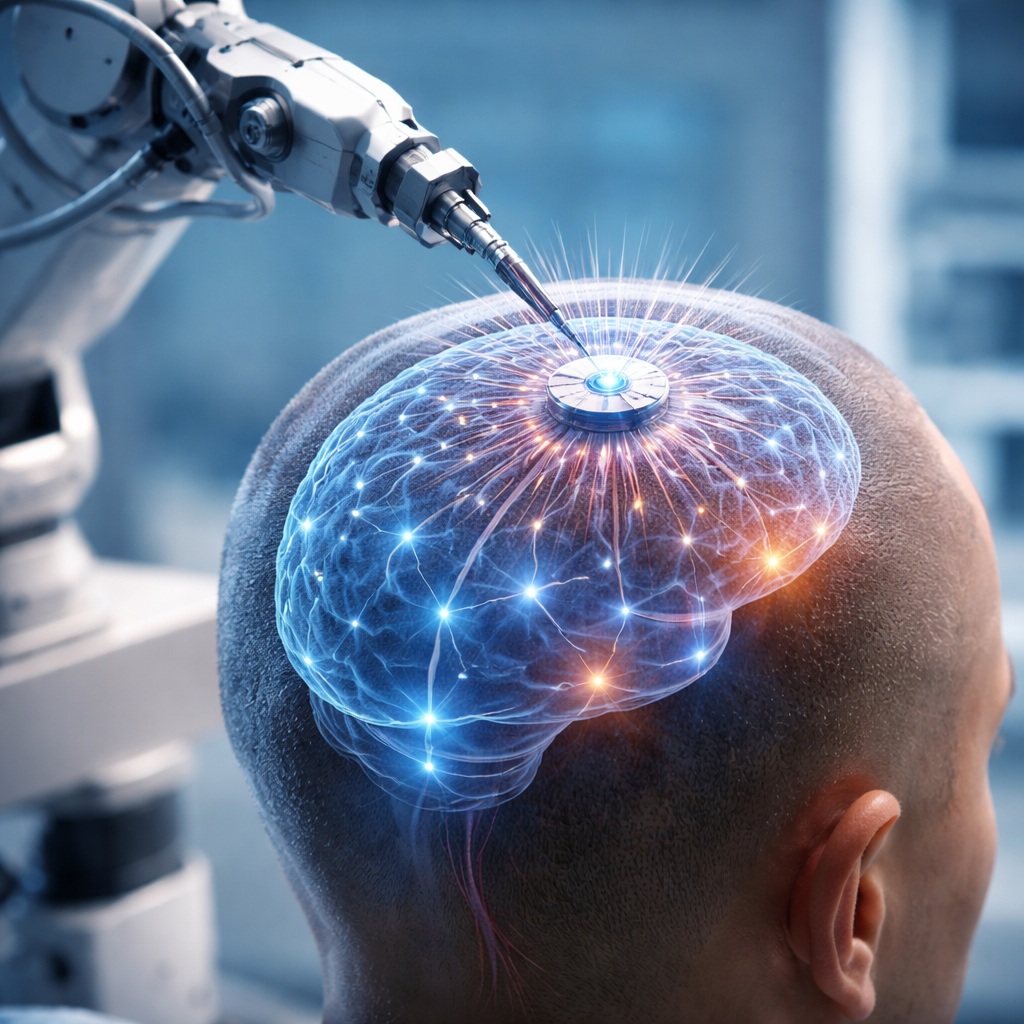
Elon Musk’s neurotechnology venture prepares automated manufacturing lines to scale brain–computer interfaces, signaling a pivotal year for human–machine integration.

By early January 2026, the race to bring brain–computer interfaces from experimental labs to clinical reality is accelerating. Neuralink, the neurotechnology company founded by Elon Musk, has begun laying the groundwork for high‑volume production of its brain implant systems, a shift that could mark a turning point for the entire field of neural interfaces.
For years, Neuralink has operated at the intersection of bold ambition and cautious medical progress. Its implant—designed to read and stimulate neural activity through ultra‑thin threads inserted into the brain—has so far been produced in limited batches, largely by hand and under intense regulatory scrutiny. Now, company officials and industry analysts say Neuralink is moving toward a more automated, industrial approach to manufacturing, one aimed at supporting broader clinical use and, eventually, commercial availability.
The push toward scale reflects both technical maturity and growing confidence in the underlying platform. Early human trials have demonstrated that the implant can enable patients with paralysis to interact with computers using thought alone, a milestone that has drawn global attention. Scaling production, however, represents a different kind of challenge—one that requires not just engineering finesse, but also robust quality control, supply‑chain resilience, and compliance with medical manufacturing standards.
At the heart of Neuralink’s strategy is automation. Producing a brain implant is not comparable to assembling consumer electronics; each device must meet exacting tolerances, and the process of integrating microscopic electrodes with flexible substrates is notoriously delicate. Neuralink has invested heavily in robotic assembly systems capable of handling these tasks with consistency that surpasses manual methods. According to people familiar with the effort, these systems are designed to replicate, at scale, the precision once achievable only by highly trained technicians.
This manufacturing pivot comes amid rising competition. Other companies in the brain–computer interface space are also advancing their technologies, though many remain focused on narrower clinical applications. Neuralink’s ambition is broader: to build a platform that can serve millions of users over time. Achieving that vision depends on reducing per‑unit costs and increasing throughput without compromising safety—a balance that has eluded many medical device startups.
Regulators are watching closely. Any increase in production volume must align with strict oversight, particularly given the invasive nature of the implants. Industry experts note that scaling manufacturing does not automatically translate into faster approvals for new indications. Still, a reliable production pipeline can make it easier to support larger clinical trials, which are essential for expanding approved uses.
The implications extend beyond medicine. Advocates argue that brain–computer interfaces could redefine how humans interact with technology, from restoring lost functions to augmenting communication and learning. Critics, meanwhile, raise concerns about privacy, long‑term safety, and the societal impact of embedding digital systems directly into the brain. Neuralink’s move toward mass production brings these debates into sharper focus, transforming theoretical discussions into near‑term policy questions.
Inside the company, the shift has required cultural change. Engineers accustomed to rapid prototyping are now working alongside manufacturing specialists focused on repeatability and yield. The goal is to create a production environment more akin to an advanced medical factory than a Silicon Valley lab. Sources say Neuralink has recruited talent from both the semiconductor and medical device industries, blending expertise from fields that rarely overlap.
Supply chains pose another hurdle. The materials used in neural implants—biocompatible polymers, custom silicon chips, and specialized coatings—must be sourced reliably and ethically. Any disruption could slow production or raise costs. To mitigate this, Neuralink is reportedly diversifying suppliers and exploring in‑house fabrication for critical components.
As production scales, so too does public scrutiny. Elon Musk’s high profile ensures that Neuralink’s progress is followed not just by scientists and investors, but by a global audience. Each announcement is parsed for signals about timelines, safety, and intent. While the company has avoided committing to specific consumer rollout dates, the emphasis on high‑volume manufacturing suggests a belief that demand will grow rapidly once regulatory pathways are cleared.
For patients currently enrolled in trials, increased production could mean more robust support and faster iteration of device improvements. For the broader public, it signals that brain–computer interfaces are moving out of the realm of speculative futurism and into the infrastructure of modern healthcare.
Whether Neuralink can meet its ambitions remains uncertain. Scaling any complex medical technology is fraught with risk, and setbacks are common. Yet the decision to invest in automated, high‑volume production marks a decisive step. As the new year unfolds, Neuralink’s manufacturing push may prove to be as consequential as its breakthroughs in neuroscience, shaping how—and how quickly—the next generation of human–machine interfaces arrives.