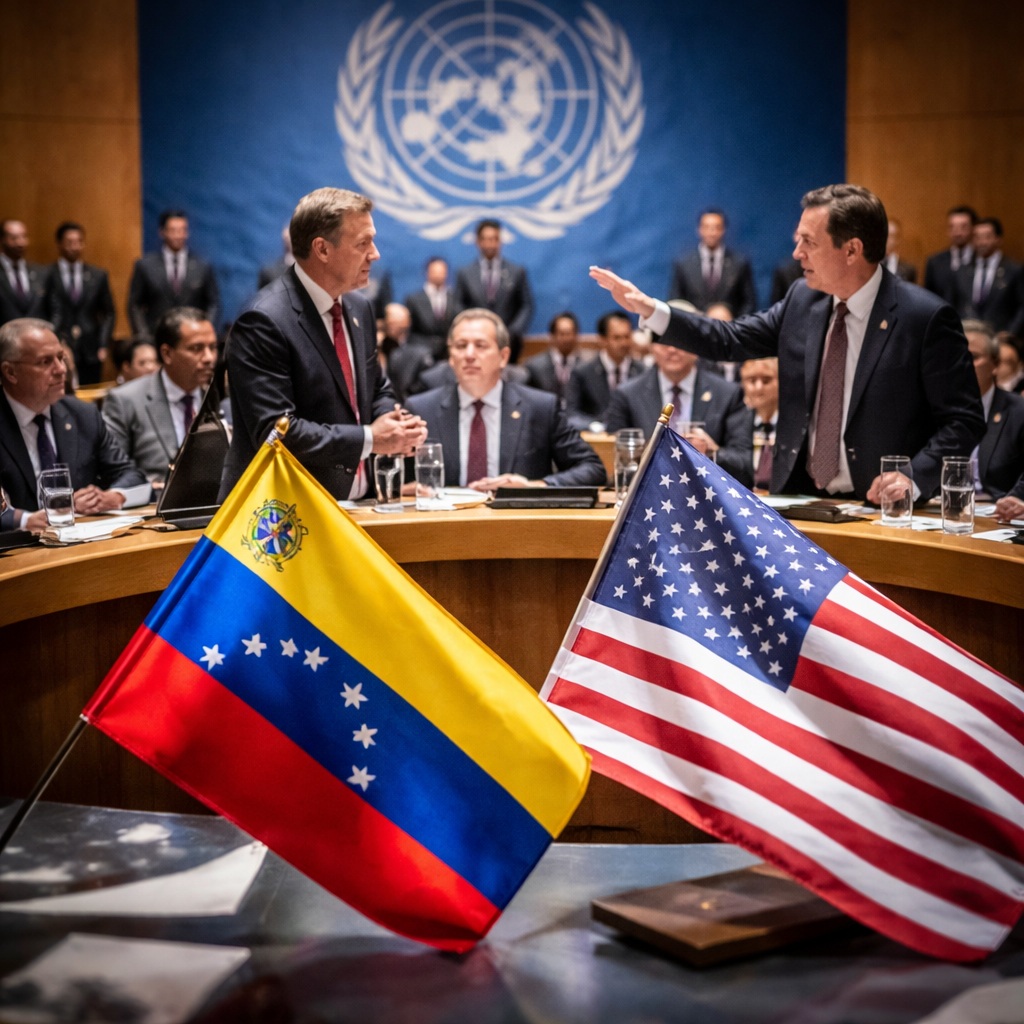
Sudden change of power in Caracas sends shockwaves through diplomacy as global actors warn of lasting consequences.

The United Nations Security Council is preparing for an urgent and highly charged meeting following a dramatic escalation in the Western Hemisphere, after the United States launched a coordinated military and political operation in Venezuela that resulted in the removal of President Nicolás Maduro from power. The development has triggered intense diplomatic activity across capitals, with allies and adversaries alike questioning the legality, intent, and long-term impact of Washington’s move.
According to diplomats familiar with the situation, the Security Council session was requested within hours of the announcement from Washington that U.S. forces had acted to “restore democratic governance” in Venezuela. The United Nations confirmed that consultations were underway among permanent and non-permanent members, reflecting the gravity of an intervention that has abruptly reshaped the political landscape of a country already marked by years of crisis.
In Caracas, scenes of uncertainty unfolded as military units loyal to the new transitional authority secured key government buildings. While U.S. officials described the operation as limited and necessary, critics argue that it represents a dangerous precedent. The ousting of Maduro, who had remained in power despite international sanctions and disputed elections, has reopened long-standing debates over sovereignty and intervention.
Russia and China, both permanent members of the Security Council, issued sharp statements condemning the U.S. action. Moscow characterized it as a “flagrant violation of international law,” while Beijing warned that unilateral interventions risk destabilizing entire regions. Several Latin American governments, divided in their responses, expressed concern over the potential for spillover effects, including refugee movements and economic disruption.
Supporters of the U.S. decision, including some opposition figures from Venezuela and a handful of allied states, argue that years of diplomatic pressure had failed to bring political change. They contend that the collapse of institutions, widespread poverty, and repression left few alternatives. “This was not a choice taken lightly,” a senior U.S. official said, speaking on condition of anonymity. “The objective is a peaceful transition led by Venezuelans.”
At the United Nations headquarters, diplomats anticipate a tense exchange. The Security Council is expected to hear briefings from the Secretary-General’s office, humanitarian agencies, and possibly representatives of the new authorities in Caracas. Emergency resolutions are being drafted, though prospects for consensus remain slim given deep divisions among major powers.
Humanitarian organizations are also watching closely. Venezuela’s population has endured years of shortages and mass emigration, and aid groups fear that renewed instability could worsen conditions. Calls for humanitarian corridors and guarantees for civilian protection are likely to feature prominently in the Council’s deliberations.
Beyond the immediate crisis, the episode underscores a broader shift in global politics. The confrontation over Venezuela is unfolding at a time of strained relations between major powers, raising fears that the Security Council could once again be paralyzed at a moment of acute need. Whether the emergency meeting leads to de-escalation or further polarization may shape international norms for years to come.
As diplomats arrive in New York for the emergency session, the world is watching closely. The decisions taken — or blocked — inside the Security Council chamber will resonate far beyond Venezuela, testing the relevance of multilateral institutions in an increasingly fractured international order.