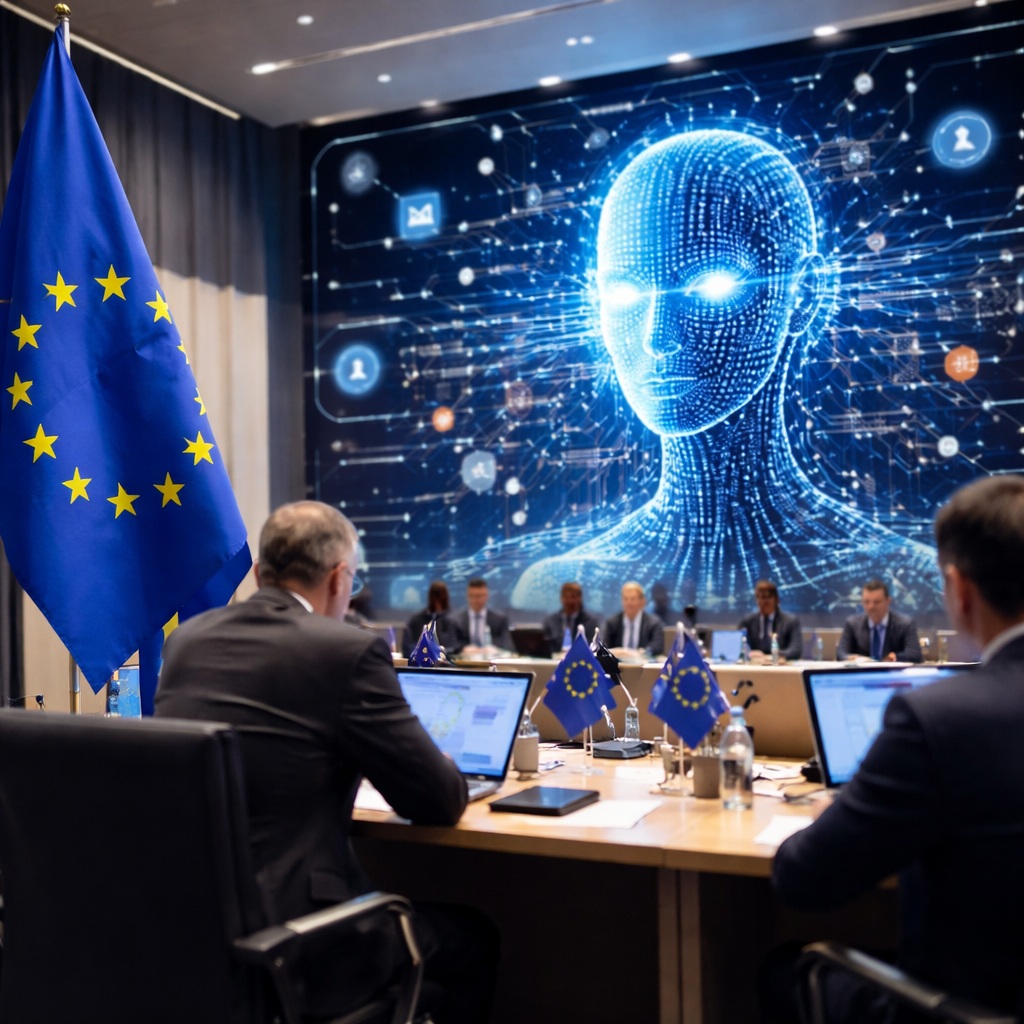
Germany’s media minister urges the European Commission to test the strength of EU digital laws as concerns mount over AI-generated misinformation and platform responsibility.
As the debate over artificial intelligence and online speech intensifies across Europe, Germany has taken a decisive step. Berlin’s media minister has publicly urged the European Commission to consider legal action over the spread of harmful AI-generated content on the social media platform X, owned by Elon Musk. The call underscores growing frustration among EU member states about the pace and effectiveness of enforcement under Europe’s sweeping digital regulations.
At the heart of the dispute is the rapid proliferation of AI-generated images, videos, and text that critics say distort public debate, mislead users, and amplify harmful narratives. According to German authorities, such content has increasingly circulated on X, often spreading faster than traditional moderation systems can respond. While the platform has defended its approach as aligned with free expression, Berlin argues that existing EU law already sets clear limits.
Germany’s intervention highlights the political pressure building around the EU’s Digital Services Act, the bloc’s flagship framework designed to rein in large online platforms. The law obliges companies to assess systemic risks, curb illegal content, and be transparent about algorithms and moderation practices. For German regulators, AI-generated material that manipulates public opinion or incites harm falls squarely within that scope.
The media minister’s appeal to Brussels is more than a technical complaint; it is a test of credibility. European lawmakers have long portrayed the EU as a global standard-setter for digital governance. Failure to act decisively now, German officials warn, could weaken that reputation and embolden platforms to treat compliance as optional rather than mandatory.
X has been a recurring flashpoint in these debates. Since its acquisition by Musk, the platform has significantly reduced moderation staff and revised its policies, emphasizing user-driven speech controls. Critics say these changes have coincided with an uptick in misleading or manipulated content, including AI-generated media that can be difficult for users to identify as synthetic.
German regulators stress that the issue is not innovation itself. Artificial intelligence, they note, has enormous potential for creativity, efficiency, and economic growth. The concern arises when AI tools are deployed without adequate safeguards, allowing synthetic content to masquerade as authentic and influence political or social discourse without accountability.
The European Commission now faces a delicate balancing act. On one hand, it must demonstrate that EU rules have teeth and can be enforced even against powerful global platforms. On the other, it must navigate accusations of censorship and avoid escalating tensions with the United States, where many of the largest tech companies are based.
Legal experts suggest that any formal action would likely begin with requests for information and risk assessments, followed by potential infringement proceedings if deficiencies are found. Penalties under EU law can be substantial, but officials emphasize that compliance and systemic change are the primary goals.
Germany’s call has resonated with several other member states, which share concerns about election interference, public trust, and the accelerating realism of AI-generated media. As generative technologies evolve, distinguishing fact from fabrication is becoming an everyday challenge for citizens, journalists, and regulators alike.
For now, Brussels has signaled that it is closely monitoring developments and remains in dialogue with X. Whether that scrutiny will translate into legal action remains uncertain. What is clear, however, is that the confrontation marks a pivotal moment for Europe’s digital strategy.
As the new year unfolds, the EU’s response will help determine whether its ambitious regulatory framework can keep pace with the rapid transformation of online platforms. For Germany, the message is clear: rules are only as strong as the willingness to enforce them, especially in an age when artificial intelligence can shape reality itself.




 The Tower Post