Former defender warns that constant managerial churn is eroding identity and trust at Old Trafford

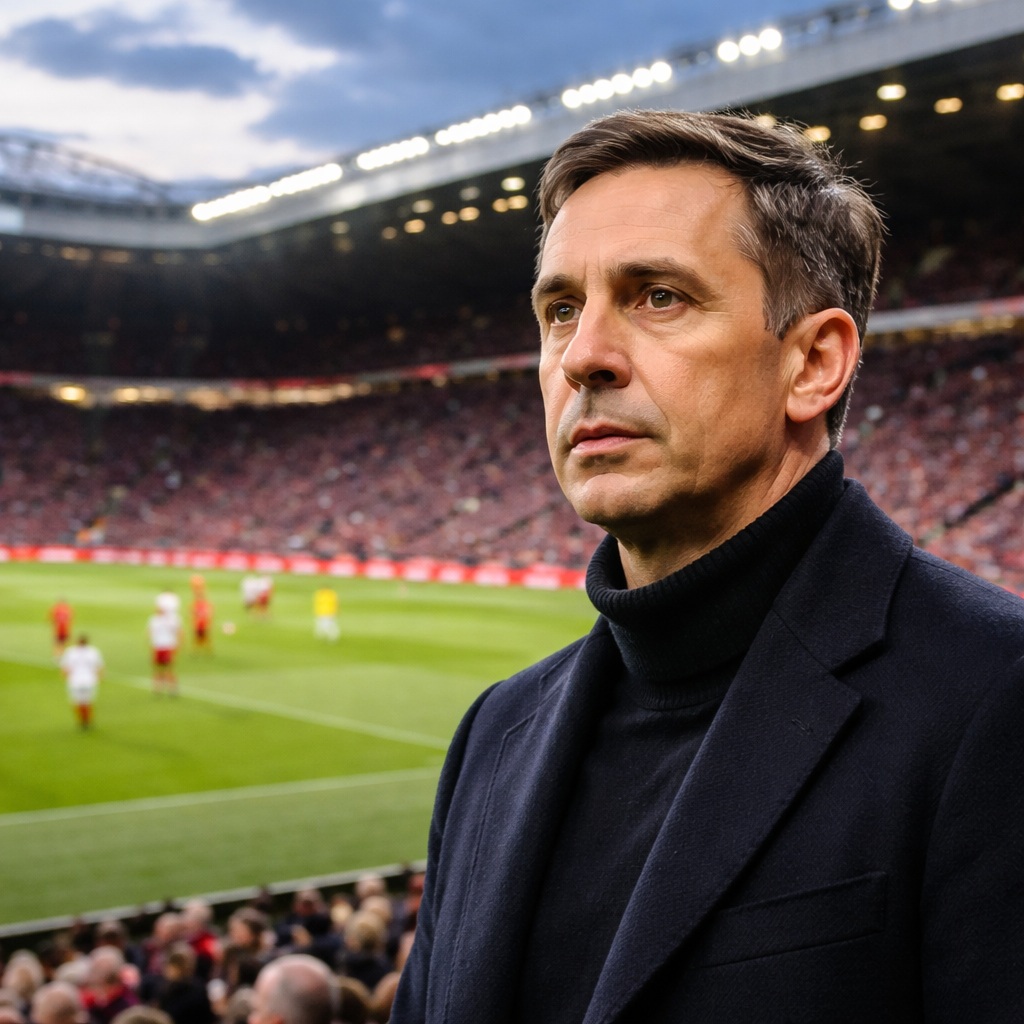
In the subdued aftermath of another managerial exit at Manchester United, Gary Neville’s voice cut through the noise with familiar urgency. Speaking with the authority of someone who has seen eras rise and fall at Old Trafford, the former defender offered a blunt assessment: the club’s cycle of short-term appointments and abrupt dismissals is no longer just a symptom of instability, but a cause of it.
Neville’s criticism was not aimed at one individual, nor was it rooted in nostalgia. Instead, it reflected a growing concern that Manchester United have lost clarity about who they want to be on the pitch. In his view, the problem is not merely about finding the “right” manager, but about the absence of a clearly defined footballing philosophy that survives beyond any single appointment.
For more than a decade, United have oscillated between contrasting styles and leadership profiles. Each managerial change has arrived with promises of renewal, only for those plans to be abandoned before taking full shape. Neville argues that this pattern has created a culture of impatience, where managers are judged on immediate results rather than long-term progress, and players struggle to adapt to constantly shifting demands.
“The club has to decide what it stands for,” Neville said in his commentary. “Until that happens, no manager is going to succeed consistently.” His remarks echo a sentiment increasingly shared among supporters who see rivals benefit from long-term planning and structural coherence.
Neville pointed to clubs across Europe that have committed to a clear identity, allowing recruitment, youth development, and coaching to align under one vision. At United, he suggested, those elements have too often pulled in different directions. The result has been a squad assembled for multiple systems, yet perfectly suited to none.
There is also a human cost to this turbulence. Frequent managerial changes, Neville noted, erode authority within the dressing room. Players become conditioned to wait out difficult periods, knowing that responsibility is likely to shift again. Over time, that dynamic undermines accountability and weakens standards.
From the boardroom perspective, pressure has been relentless. Expectations remain sky-high, shaped by decades of success, but the modern game leaves little room for nostalgia. Neville acknowledged that Manchester United operate under intense scrutiny, yet insisted that reacting to short-term criticism only deepens the club’s problems.
His call was not for blind patience, but for strategic conviction. Commit to a style of play. Appoint leaders who fit that model. Support them through inevitable setbacks. Without those steps, Neville warned, United risk repeating the same cycle regardless of who occupies the dugout.
As the club once again prepares to turn the page, Neville’s message resonates as both critique and caution. Stability, he argues, is no longer a luxury for Manchester United. It is a necessity if the club is to rebuild credibility, rediscover identity, and move forward with purpose rather than hope alone.