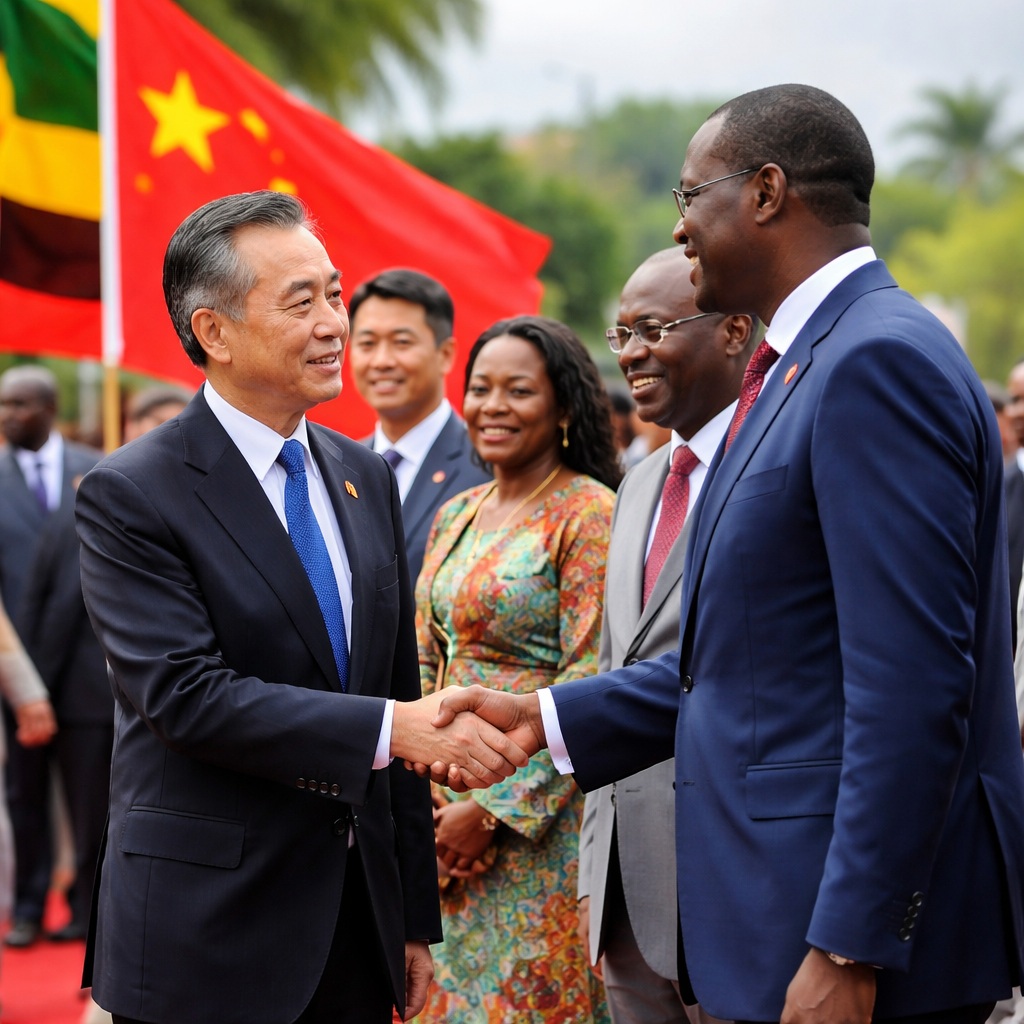
A New Year mission underscores Beijing’s push to secure strategic routes, resources, and partnerships across the continent.

As the year opens, China’s senior diplomat has embarked on a sweeping tour of Africa, signaling Beijing’s determination to deepen trade ties and consolidate its presence along some of the world’s most strategic commercial corridors. The visit, framed as a partnership-driven outreach, places economic cooperation at its core while reflecting China’s broader ambition to shape global trade flows at a moment of geopolitical flux.
The tour spans key regions linking the Atlantic and Indian oceans, underscoring Africa’s growing importance in China’s global strategy. From port infrastructure to energy and critical minerals, discussions have centered on improving access to resources and ensuring reliable routes for commerce. Chinese officials have emphasized mutual benefit, presenting Beijing as a long-term partner willing to invest in connectivity, logistics, and industrial capacity.
African leaders, for their part, have welcomed the attention while carefully balancing expectations. Many governments are seeking investment that goes beyond raw material extraction, pressing for technology transfer, local processing, and job creation. The diplomatic engagements have highlighted these priorities, with pledges of expanded cooperation in manufacturing zones, renewable energy, and digital trade platforms.
Trade remains the anchor of the mission. China is already Africa’s largest trading partner, and the New Year tour aims to reinforce that position by smoothing supply chains and reducing vulnerabilities. With global shipping lanes facing periodic disruption, access to diversified routes through African ports has become increasingly strategic. Beijing’s outreach reflects a calculation that stronger ties across the continent can mitigate external shocks while opening new markets for Chinese goods.
Beyond economics, the tour carries political weight. It projects continuity in China’s Africa policy, a relationship built over decades through aid, infrastructure financing, and diplomatic solidarity. At each stop, the message has been consistent: China sees Africa not as a peripheral partner, but as central to a multipolar world order. This narrative resonates with leaders seeking alternatives to traditional Western alliances.
Yet the engagement is not without scrutiny. Civil society groups and opposition figures in several countries continue to question debt sustainability, environmental standards, and transparency in large-scale projects. Chinese diplomats have responded by highlighting recent adjustments, including renegotiated loan terms and an increased focus on smaller, high-impact investments.
The timing of the tour is also notable. As global powers recalibrate their foreign policies at the start of the year, Beijing’s early outreach sends a signal of intent. It suggests that Africa will remain a priority arena for influence, cooperation, and competition alike. For China, the continent offers not only resources and routes, but diplomatic support in international forums.
Looking ahead, the success of the mission will be measured less by announcements and more by implementation. African partners will watch closely to see whether commitments translate into tangible gains on the ground. For Beijing, the tour reinforces a message it has steadily advanced: that trade, infrastructure, and diplomacy are inseparable pillars of its global engagement.
As the New Year unfolds, China’s diplomatic overture to Africa stands as a reminder of the continent’s rising strategic value—and of Beijing’s resolve to be a central player in shaping the pathways of global trade.



 The Tower Post