
Paris argues that exempting fertilisers from the bloc’s carbon border tax is vital to protect farmers and food security, exposing sharp rifts among member states over climate economics.
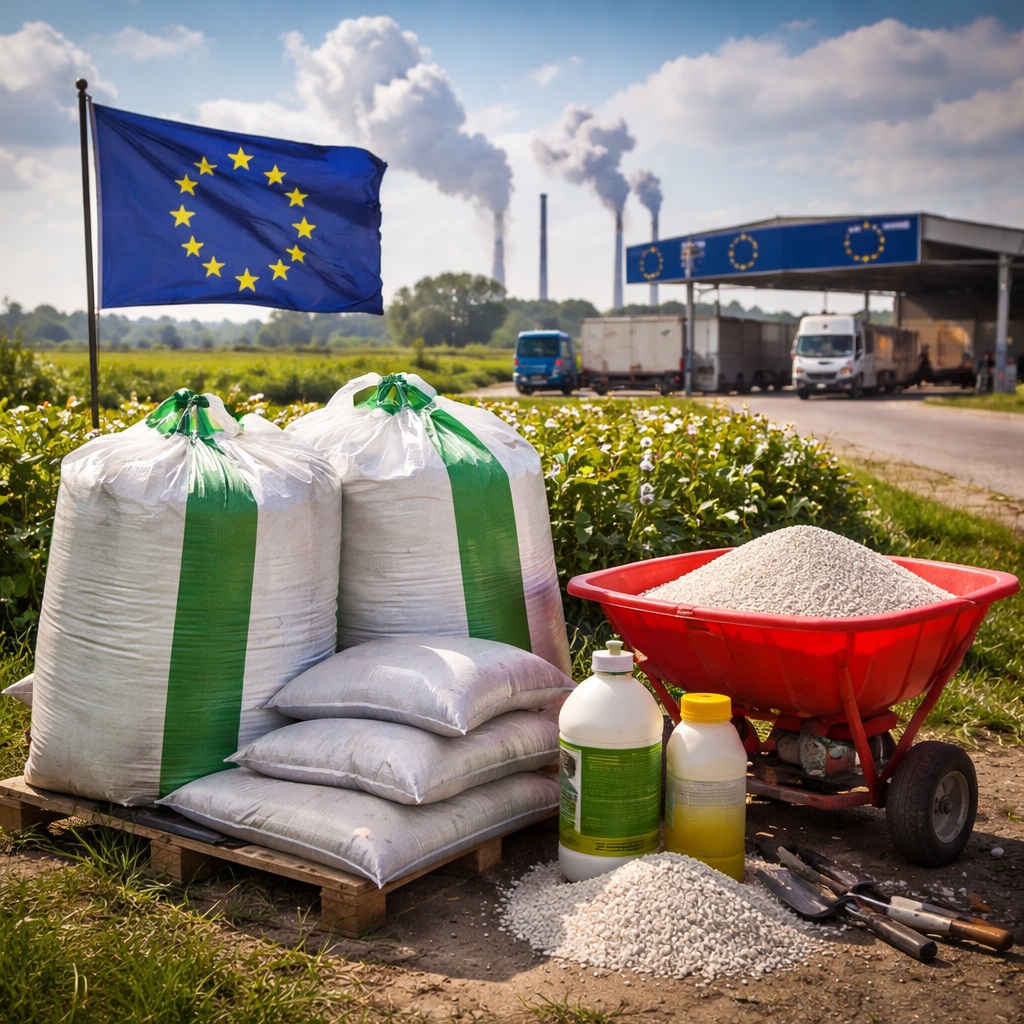
By early January, as winter set in across Europe’s farmlands, a quieter but consequential battle was unfolding in Brussels. French officials were pressing their case for a carve‑out in the European Union’s new carbon border levy, seeking to exempt fertilisers from the mechanism designed to penalise high‑emission imports.
At stake is the Carbon Border Adjustment Mechanism, the EU’s flagship tool to prevent “carbon leakage” by taxing imports of carbon‑intensive goods produced outside the bloc under looser climate rules. Fertilisers, especially nitrogen‑based products, sit at the heart of the debate. Their manufacture is energy‑hungry, emissions‑heavy, and deeply entwined with the economics of European agriculture.
France’s argument is framed as a matter of competitiveness and sovereignty. Officials warn that subjecting fertilisers to the levy would raise costs for farmers already squeezed by volatile energy prices, environmental regulations, and global competition. In Paris’s telling, higher fertiliser prices would ripple through food supply chains, eroding margins and threatening the viability of domestic agriculture.
“Fertilisers are not just another industrial input,” said one European diplomat familiar with the discussions. “They are strategic for food production. France is arguing that climate ambition should not undermine the resilience of European farming.”
Behind closed doors, French negotiators have emphasised that farmers cannot easily substitute fertilisers in the short term, even as the EU pushes for greener agricultural practices. While the bloc promotes precision farming, organic inputs, and reduced chemical use, the transition remains uneven across regions and crops. An abrupt increase in fertiliser costs, they argue, risks political backlash in rural areas already wary of Brussels.
Other member states are unconvinced. Northern and western European countries, long advocates of strict climate pricing, see fertilisers as a textbook case for inclusion. Exemptions, they warn, would weaken the credibility of the carbon border levy and invite further carve‑outs from other sectors.
“There is a fear of a slippery slope,” said a policy adviser from a climate‑forward member state. “If fertilisers are excluded on competitiveness grounds, steel, chemicals, and cement will be next. The whole mechanism loses its teeth.”
The dispute reflects a deeper divide over how to balance climate ambition with industrial and agricultural policy. For countries with less politically powerful farming sectors, the levy is a necessary extension of the EU’s emissions trading system, ensuring that imported goods face similar carbon costs to those produced within the bloc. For others, especially those with large agricultural economies, the mechanism risks importing inflation and social tension.
Fertiliser producers themselves are watching closely. European manufacturers already operate under strict emissions rules and face higher energy costs than many global competitors. Some argue that the levy could level the playing field if applied evenly, discouraging imports from regions with cheaper, more polluting production. Others worry that complex exemptions would distort markets and create legal uncertainty.
Trade considerations loom large as well. Several of the EU’s trading partners export significant volumes of fertilisers and have criticised the carbon border levy as protectionist in disguise. Exempting fertilisers could ease diplomatic friction, but it may also complicate the EU’s narrative that the mechanism is purely climate‑driven and non‑discriminatory.
Within the European institutions, the debate has taken on a symbolic dimension. The carbon border levy is often portrayed as a cornerstone of the EU’s global climate leadership, a model that could inspire similar policies elsewhere. Any visible weakening of its scope risks undermining that ambition.
Yet political reality intrudes. Farmers’ protests in recent years have shown how quickly agricultural issues can ignite broader social movements. French officials, acutely sensitive to rural discontent, are determined to avoid policies that could be portrayed at home as Brussels‑imposed penalties on food production.
As negotiations continue, compromise scenarios are circulating. These include temporary exemptions, phased‑in coverage, or special treatment for fertilisers used in essential food production. None fully satisfies either camp, underscoring the difficulty of aligning climate policy with economic and social priorities.
What is clear is that the fertiliser debate has become a proxy for a larger question facing the European Union: how far and how fast to push carbon pricing without fracturing internal cohesion. As the carbon border levy edges closer to full implementation, the outcome of this dispute will signal whether the EU can reconcile its climate ambitions with the political realities of feeding itself.
For now, France’s push has ensured that fertilisers remain at the centre of the conversation, emblematic of the hard choices that define Europe’s green transition.


 The Tower Post