
France’s prime minister faces a delicate balancing act as budget negotiations resume amid divided party lines and economic constraints, with outcomes set to shape the country’s domestic agenda for the year ahead.
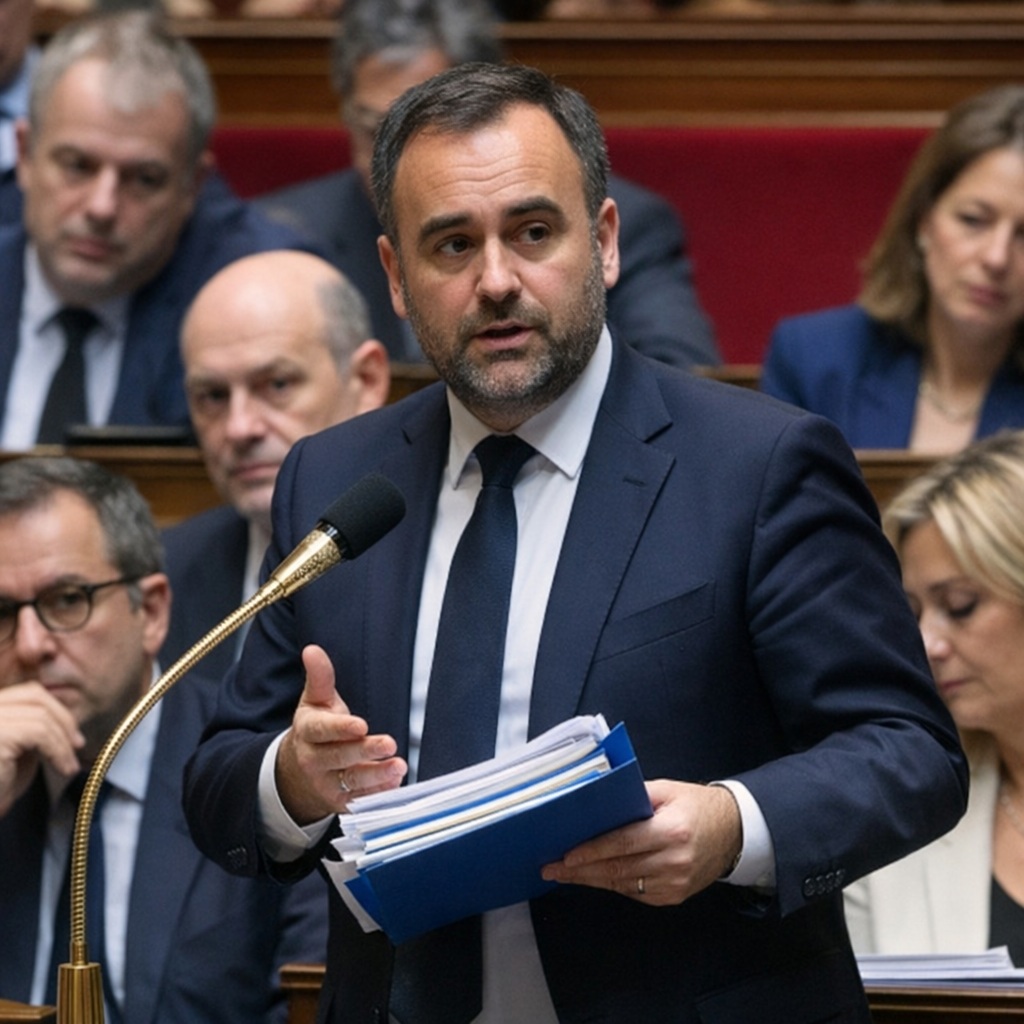
Budget negotiations have returned to the heart of French politics, reopening a familiar yet fraught debate over spending discipline, social priorities, and political survival. As talks resume, Prime Minister Sébastien Lecornu finds himself navigating a narrow path between fiscal restraint and mounting demands from a fragmented National Assembly, in a climate where compromise is both necessary and politically perilous.
The renewed discussions follow a period of stalled dialogue that laid bare deep ideological rifts across the political spectrum. Centrist allies are pressing for credibility with European partners and financial markets, while parties on the left argue that public services and household purchasing power can no longer absorb further restraint. On the right, opposition figures warn that any sign of fiscal laxity could undermine France’s economic standing at a moment of lingering uncertainty.
At the core of the negotiations lies a budget framework intended to stabilize public finances without provoking a parliamentary backlash. Government officials insist the objective is not austerity but responsible adjustment, a formulation that has become increasingly common in official discourse. For many lawmakers, however, the distinction feels largely theoretical as voters continue to grapple with elevated living costs and uneven economic momentum.
Lecornu’s task is complicated by the arithmetic of the National Assembly. Lacking a clear majority, the government must negotiate each budget line with care, turning technical details into political leverage. Informal talks have intensified, with smaller parties seeking targeted concessions in exchange for support, while larger blocs weigh the political risks of cooperation against the possibility of institutional confrontation.
Political analysts observe that the prime minister is pursuing an incremental strategy rather than a sweeping fiscal overhaul. By dividing the budget into thematic pillars — public investment, social protection, and economic competitiveness — the government hopes to assemble shifting coalitions capable of passing individual measures even if a comprehensive agreement remains out of reach. Critics argue this piecemeal approach risks blurring the budget’s overall direction and postponing necessary structural decisions.
Economic constraints loom heavily over the discussions. Sluggish performance in key sectors, combined with the legacy of past emergency spending, has narrowed the government’s room for maneuver. While officials point to tentative signs of stabilization, independent economists caution that confidence alone will not resolve deeper fiscal imbalances. Any miscalculation, they warn, could have repercussions beyond France, given its central role in the euro area.
The social dimension of the budget remains particularly sensitive. Trade unions and civil society groups are calling for firmer commitments on wages, healthcare, and education funding. The prospect of renewed street mobilization serves as a reminder that fiscal debates in France often extend well beyond parliamentary chambers and into the public square.
For Lecornu, the stakes extend beyond the immediate passage of the budget. The outcome is widely seen as a test of his capacity to govern amid fragmentation and to set the tone for the government’s domestic agenda for the year ahead. A narrowly approved budget could preserve short-term stability while leaving the executive exposed, whereas a broader compromise might offer political breathing space at the cost of significant concessions.
As negotiations continue, uncertainty remains the defining feature of the process. What ultimately emerges will not only determine the contours of public spending but also signal how France intends to reconcile political division with economic responsibility. In that sense, the budget debate has become more than an exercise in accounting; it is a measure of the country’s ability to govern under constraint.


 The Tower Post