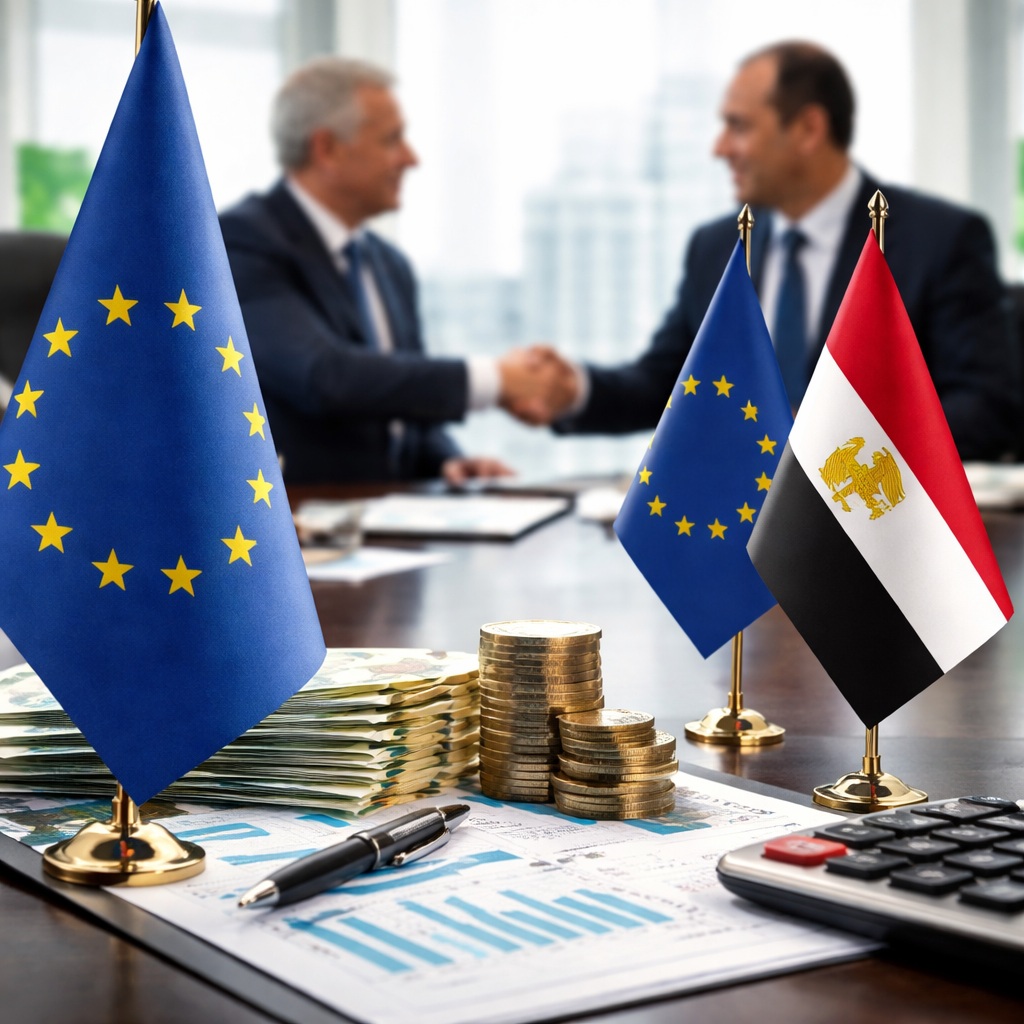
Cairo signals confidence that long-term EU macro-financial assistance will be fully disbursed by 2027, reinforcing economic reforms and regional stability
Egypt is expecting to receive the remaining €4 billion from a comprehensive European Union support package by 2027, as part of a broader, long-term partnership aimed at stabilizing the country’s economy and strengthening cooperation across the southern Mediterranean.
Officials in Cairo say the macro-financial assistance, agreed under a multi‑year framework with Brussels, reflects growing alignment between Egypt and the EU on economic reform, migration management, and regional security. The package combines concessional loans, grants, and policy-linked support designed to help Egypt navigate persistent fiscal pressures while sustaining growth.
The anticipated disbursement comes at a critical moment for Africa’s most populous country. Egypt continues to face high inflation, foreign currency constraints, and the social costs of structural reforms, even as it plays a pivotal diplomatic role in a region marked by conflict and volatility. EU officials view Egypt as a cornerstone partner whose stability has direct implications for Europe, particularly on energy transit routes and migration flows.
Under the agreement, macro-financial assistance is tied to reform benchmarks negotiated with international lenders. These include measures to enhance fiscal discipline, improve transparency in public finances, and expand the role of the private sector. Egyptian authorities argue that progress on these fronts has positioned the country to receive the remaining funds within the agreed timeframe.
European diplomats describe the package as part of a strategic shift toward deeper engagement with neighboring regions. Rather than ad‑hoc crisis support, the EU is increasingly favoring long-term frameworks that link financial aid to policy coordination and mutual interests. Egypt’s case is often cited as a test of this approach.
In Cairo, policymakers stress that EU support complements, rather than replaces, ongoing programs with other international partners. The funds are expected to bolster foreign exchange buffers, ease balance‑of‑payments pressures, and support social protection mechanisms aimed at shielding vulnerable groups from the impact of reforms.
Analysts note that the credibility of the EU‑Egypt agreement will depend on timely disbursement and sustained political commitment on both sides. Delays or shifting priorities in Europe could undermine confidence, while reform fatigue at home remains a risk for Egyptian authorities.
Despite these challenges, expectations remain positive. Egyptian officials say they anticipate the full macro‑financial envelope to be delivered as planned, reinforcing confidence among investors and signaling durable EU backing at a time of global economic uncertainty.
As Europe reassesses its neighborhood policy amid geopolitical realignments, Egypt’s anticipated receipt of the remaining €4 billion stands as a concrete indicator of a partnership moving from crisis management toward long‑term economic anchoring.




 The Tower Post