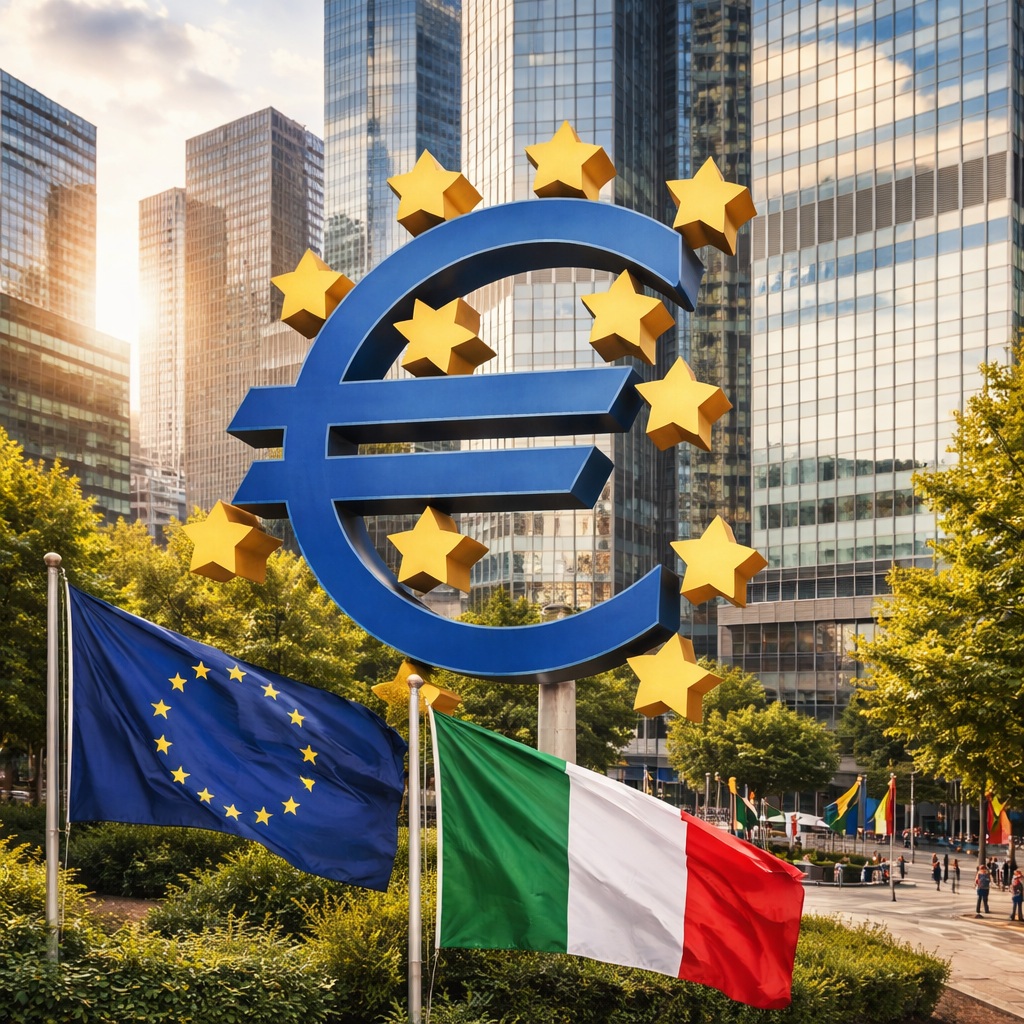
Stability in Italy calms markets as Europe weighs fragile growth and approaching political tests

Eurozone inflation has eased back to the European Central Bank’s long‑sought target, offering households brief relief after years of price pressure. Yet policymakers are in no hurry to declare victory. With growth subdued and political uncertainty lingering across several member states, the return to price stability has not translated into an immediate shift toward lower interest rates.
The disinflation trend reflects a gradual normalization of energy markets, cooling consumer demand, and tighter financial conditions working their way through the economy. Core inflation remains sticky, however, particularly in services, where wages continue to adjust upward after a prolonged period of real income erosion. For the ECB, this persistence reinforces a cautious stance: inflation may be back at target, but confidence that it will stay there is not yet complete.
Financial markets had hoped that easing price pressures would quickly open the door to monetary relief. Instead, central bankers are signaling patience. The message is clear: premature cuts could risk reigniting inflation or weakening the euro at a moment when global conditions remain volatile. The result is a prolonged pause, leaving borrowing costs high for businesses and households already grappling with slow growth.
Nowhere is this tension more visible than in Italy. Prime Minister Giorgia Meloni has succeeded in projecting an image of political stability that had long eluded the country. Her government’s pragmatic tone toward Brussels and fiscal discipline has reassured investors, narrowing risk premiums and calming fears of confrontation with European institutions.
Stability, however, has not yet translated into momentum. Italy’s economy continues to expand only marginally, constrained by weak productivity, aging demographics, and cautious private investment. European recovery funds offer a potential boost, but implementation delays and administrative bottlenecks limit their immediate impact. For many Italian firms, high financing costs remain a more pressing reality than long‑term reform promises.
Across the euro area, the broader picture is similar. Germany struggles with an industrial slowdown, France faces fiscal pressures, and smaller economies remain sensitive to shifts in global trade. The ECB must weigh these growth concerns against the hard‑won credibility of its inflation fight. Cutting rates too soon could undermine years of tightening; waiting too long risks deepening economic stagnation.
Political calendars add another layer of complexity. Several countries are approaching important electoral moments that could reshape fiscal priorities and test European unity. Markets are watching closely, not for dramatic ruptures, but for subtle changes in policy direction that could affect debt dynamics and reform commitments.
For now, the eurozone finds itself in an uneasy equilibrium. Inflation has cooled, but confidence is fragile. Italy offers a case study in how political calm can stabilize expectations without immediately lifting growth. As winter progresses, Europe’s central bankers and political leaders alike face a narrow path: preserving stability while laying the groundwork for a recovery that remains frustratingly out of reach.




 The Tower Post