
The French president voices concern over a perceived U.S. retreat from international rules, reopening old transatlantic anxieties under Donald Trump’s renewed leadership.
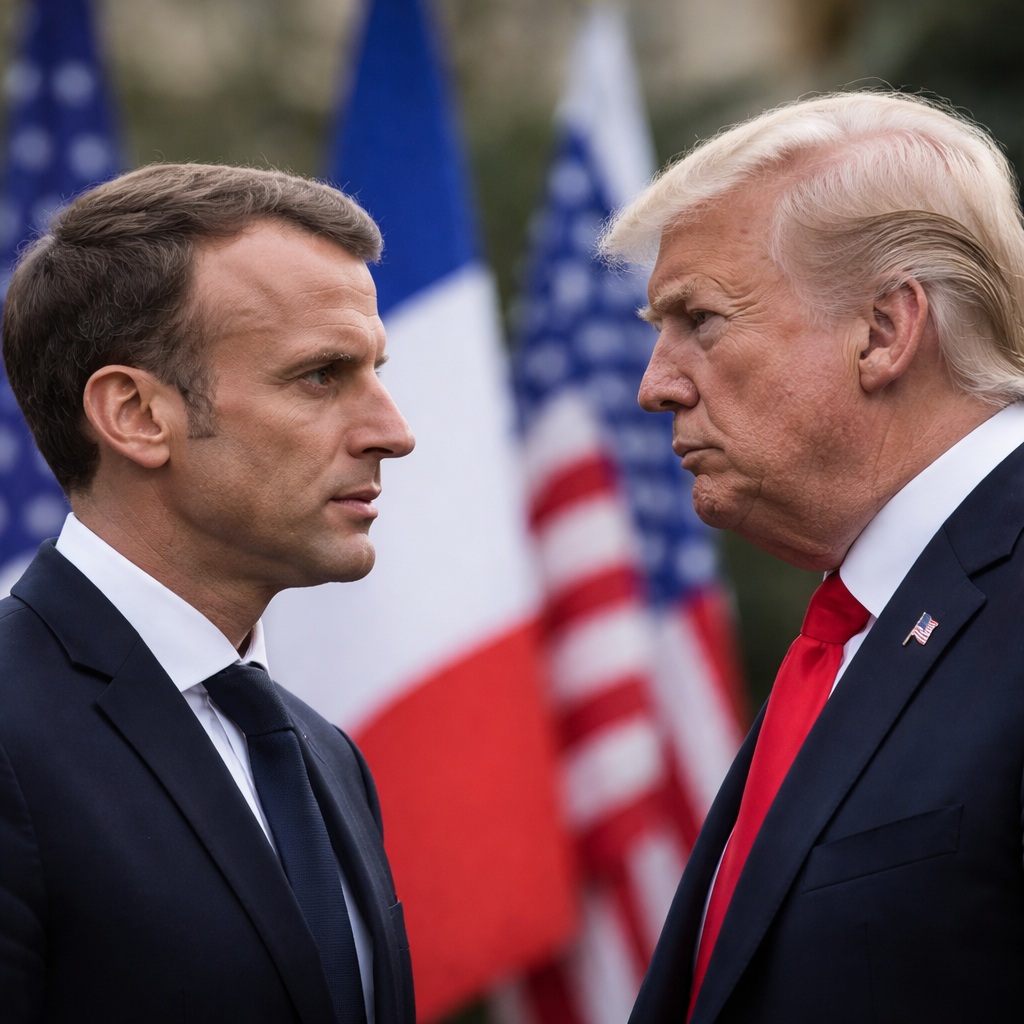
A familiar unease has returned to Europe’s political corridors. In a pointed address that resonated well beyond France’s borders, President Emmanuel Macron warned that the United States, under President Donald Trump, appears to be “turning away” from its traditional allies. The remark, delivered with deliberate gravity, reflects mounting concern in European capitals that Washington is once again stepping back from the international rules and cooperative frameworks that have shaped the postwar world.
Macron’s words are not merely rhetorical. They tap into a broader anxiety about the durability of the transatlantic relationship at a time when global power balances are shifting and multilateral institutions are under strain. For France, and much of Europe, the prospect of an inward-looking United States raises uncomfortable questions about security, trade, and the future of collective problem‑solving.
At the heart of Macron’s critique is what he sees as a weakening U.S. commitment to international norms. From climate agreements to trade arbitration mechanisms, Washington’s posture has increasingly emphasized national sovereignty over shared rules. While American officials argue that such an approach restores fairness and autonomy, European leaders fear it undermines predictability and trust — the very foundations of alliances.
The return of Donald Trump to the White House has sharpened these concerns. During his earlier presidency, Trump repeatedly challenged NATO partners, questioned the value of multilateral accords, and favored bilateral deals over collective arrangements. Macron’s warning suggests that, in Paris’s view, these instincts have not softened. Instead, they appear to be re‑emerging as guiding principles of U.S. foreign policy.
Transatlantic tensions are particularly acute in the realm of security. Europe remains heavily reliant on American military capabilities, even as it debates greater strategic autonomy. Macron has long advocated for a Europe that can act independently when necessary, arguing that over‑dependence on the United States leaves the continent vulnerable to political shifts in Washington. His latest comments reinforce that message, signaling that Europe must prepare for scenarios in which U.S. support is less automatic.
Economic relations add another layer of complexity. Trade disputes, industrial subsidies, and regulatory divergence have strained ties on both sides of the Atlantic. European policymakers worry that a U.S. turn toward protectionism could disadvantage European industries and fragment global markets. Macron’s emphasis on rules is, in this sense, also a defense of a system that offers smaller and medium‑sized economies a measure of protection against raw power.
In Washington, reactions to Macron’s remarks have been mixed. Supporters of the Trump administration argue that America is not abandoning allies but recalibrating relationships they see as unbalanced. Critics, however, warn that alienating long‑standing partners risks eroding U.S. influence at a time when geopolitical competition is intensifying.
For Macron, the message is as much inward‑looking as it is transatlantic. By publicly voicing concern, he positions France — and Europe more broadly — as a defender of multilateralism and international law. It is a role that carries both ambition and risk, requiring unity among European states that do not always share the same strategic priorities.
As global crises multiply, from regional conflicts to climate instability, the stakes of this debate are high. Whether Macron’s warning serves as a catalyst for renewed dialogue or deepens existing rifts will depend on choices made on both sides of the Atlantic. What is clear is that the question of America’s place in the world — and its relationship with its allies — has once again become a defining issue of the moment.



 The Tower Post