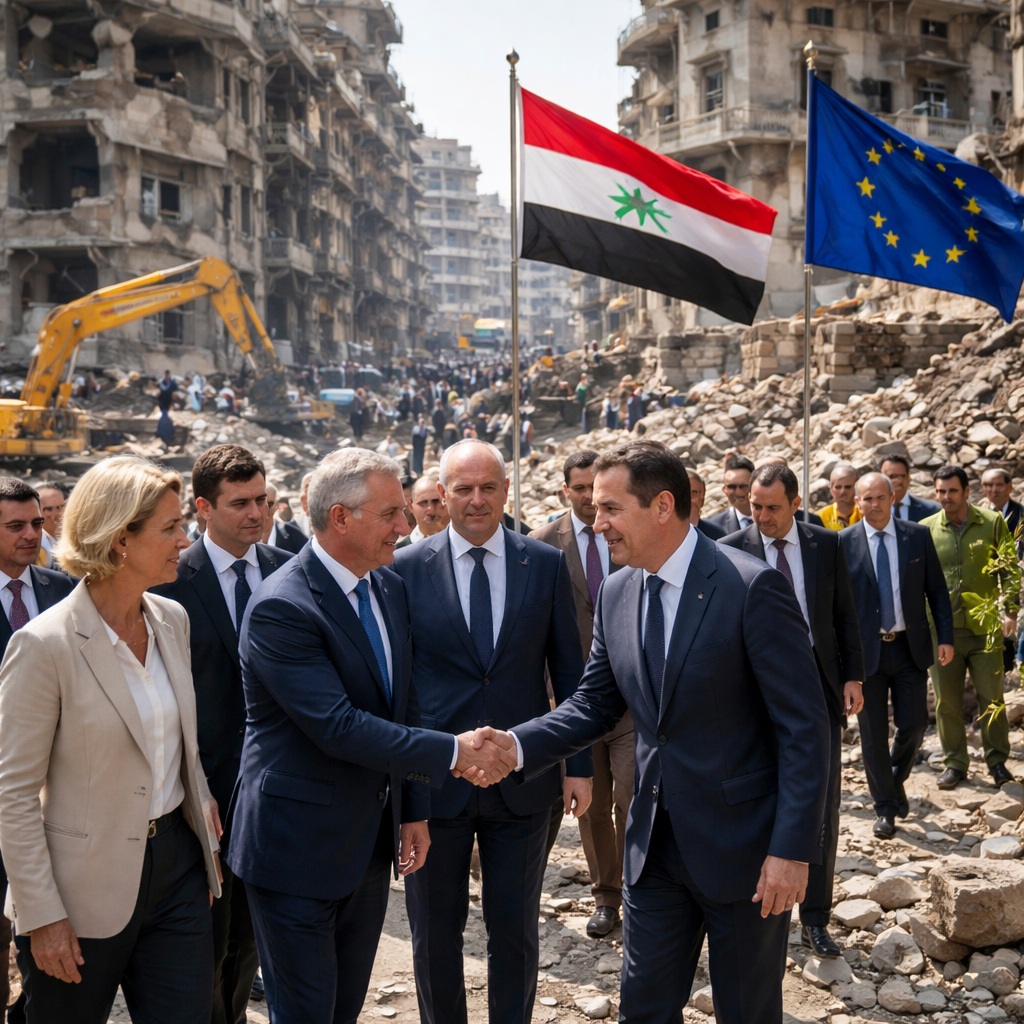
Warming Ties as European Officials Meet Syria’s Interim President in Damascus
European Union leaders arrived in Damascus this week for high-level talks with Syria’s interim president, marking one of the most significant diplomatic engagements between Brussels and the Syrian capital since the outbreak of the conflict that fractured the country and reshaped the region. The visit, framed by both sides as pragmatic and forward-looking, signals a cautious thaw after years of estrangement, sanctions, and limited contact.
The European delegation, composed of senior officials and foreign policy representatives, held meetings focused on reconstruction, humanitarian access, and the protection of civilians in areas emerging from prolonged violence. While the trip stopped short of full normalization, it underscored a shared recognition that Syria’s post-war recovery will require sustained international engagement—and that Europe intends to play a role.
A Shift from Isolation to Engagement
For much of the conflict, the European Union maintained a policy of diplomatic isolation toward Damascus, pairing sanctions with humanitarian assistance delivered largely through international organizations. The new interim leadership in Syria, installed after a fragile political transition, has prompted a reassessment in several European capitals.
EU officials emphasized that the visit does not represent an endorsement of past actions, but rather an attempt to support stability and prevent a relapse into conflict. “This is about the future,” said one European diplomat familiar with the talks. “Reconstruction, civilian protection, and inclusive governance are the priorities that will determine whether peace holds.”
The symbolism of the meetings was hard to miss. Photographs released by Syrian state media showed European envoys seated across from the interim president in Damascus, a setting that until recently had been off-limits to most Western officials. The tone, according to participants, was direct but constructive.
Reconstruction and Civilian Protection at the Core
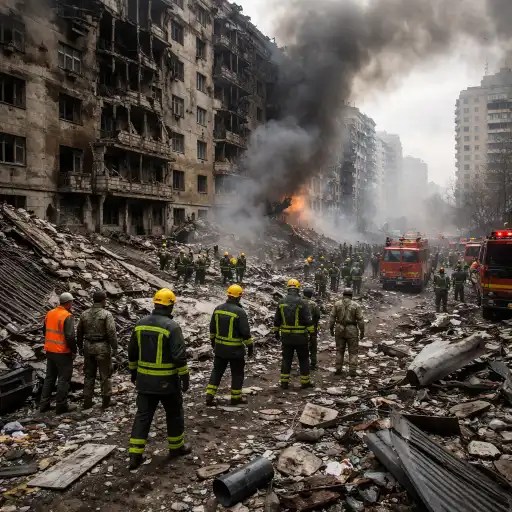
At the heart of the discussions was Syria’s immense reconstruction challenge. Entire neighborhoods remain in ruins, infrastructure is fragile, and basic services are unevenly restored. European leaders signaled readiness to support rebuilding efforts, particularly in areas linked to civilian welfare—such as hospitals, schools, water systems, and housing—provided that aid is transparently managed and reaches local communities.
Civilian protection featured prominently on the agenda. EU officials raised concerns about unexploded ordnance, displacement, and the need for safe conditions for voluntary returns. They also stressed accountability and the importance of safeguarding human rights as reconstruction moves forward.
Syrian representatives, for their part, called for the gradual easing of sanctions, arguing that economic restrictions hamper recovery and worsen living conditions. While no immediate policy shifts were announced, European officials indicated that targeted relief measures could be considered if tangible progress is made on governance and civilian protections.
Regional Stability and Europe’s Stakes
The visit reflects broader European concerns about regional stability. Prolonged instability in Syria has contributed to migration pressures, cross-border insecurity, and economic strain across neighboring countries. EU leaders see engagement as a way to address root causes rather than manage consequences.
Analysts note that Europe’s approach remains calibrated. Financial commitments are expected to be phased and conditional, with close monitoring mechanisms. “The EU is testing the waters,” said a Middle East policy expert. “This is not a blank check, but it is a clear signal that isolation alone is no longer seen as sufficient.”
A Cautious Path Forward
As the delegation departed Damascus, both sides described the talks as a starting point rather than a breakthrough. Working groups are expected to continue discussions on reconstruction priorities and humanitarian coordination, while political dialogue remains carefully bounded.
For Syria, the visit offers a measure of international legitimacy and the prospect of much-needed assistance. For the European Union, it represents a calculated step toward shaping the country’s recovery in line with stability, civilian protection, and long-term peace.
Whether this cautious rapprochement will translate into lasting change remains uncertain. What is clear is that, after years of distance, Europe and Syria are once again speaking directly—an early chapter in a post-war story still being written.

 The Tower Post