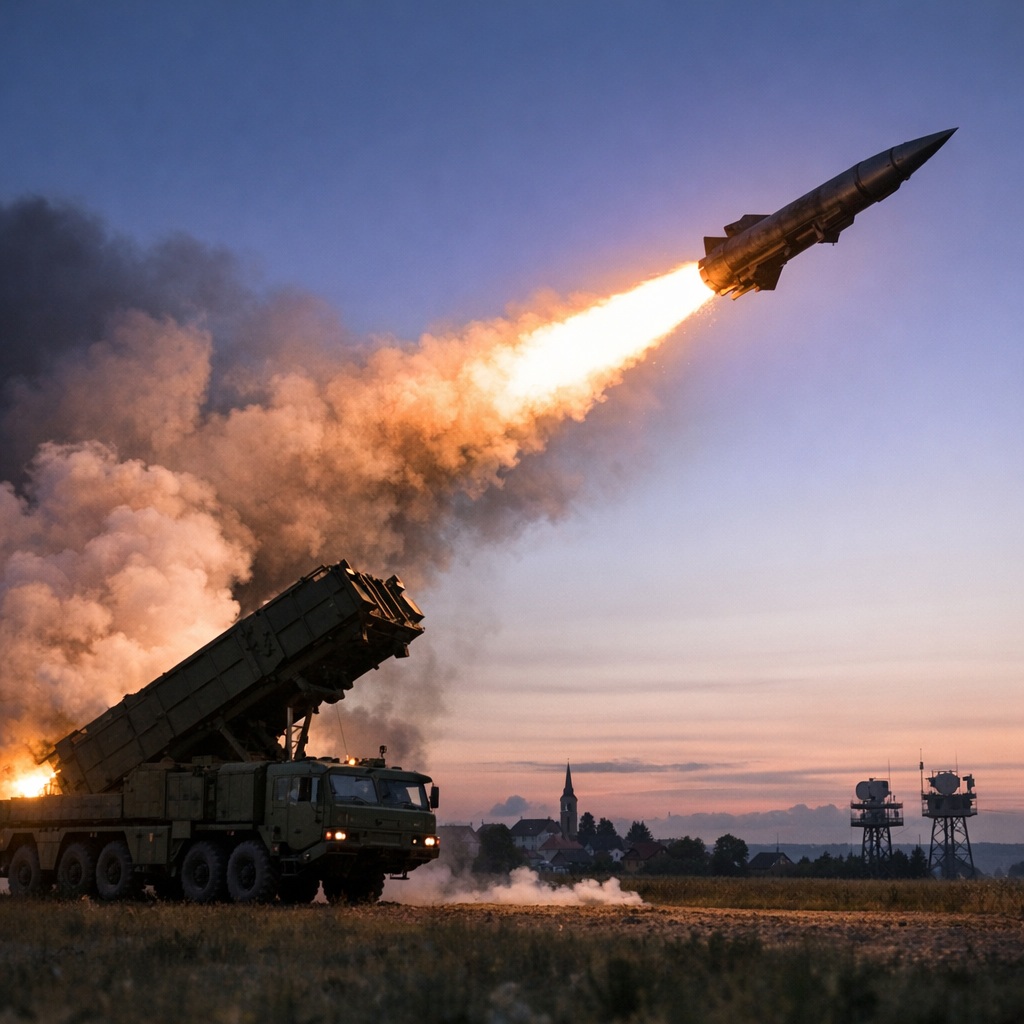
A Russian Oreshnik missile launch toward western Ukraine rattles Europe, reviving fears of escalation and forcing urgent diplomatic calculations across the Atlantic alliance.
A sudden flash on radar screens and the unmistakable signature of a hypersonic launch jolted European security officials this week, as Russian forces fired what Moscow described as a new Oreshnik missile toward western Ukraine. The strike did not cross into NATO territory, but its trajectory and proximity to alliance borders were enough to set off alarms in capitals from Warsaw to Brussels.
Western governments reacted with carefully calibrated language, condemning the launch while stopping short of declaring a direct provocation. Behind closed doors, however, diplomats and military planners described the incident as a deliberate signal—one meant to test the nerves of NATO allies and underscore Russia’s ability to threaten Europe’s eastern flank with speed and precision.
The Oreshnik missile, which Russian officials portray as a next-generation hypersonic system, is designed to travel at extreme velocities while maneuvering unpredictably. Such characteristics make interception difficult and warning times short, compressing the decision-making window for any potential response. Even without crossing borders, the launch carried strategic weight.
For Ukraine, the message was blunt. Western regions of the country, long seen as logistical lifelines and comparatively safer rear areas, are no longer immune from advanced strikes. Kyiv officials said the missile was aimed at military infrastructure, though they emphasized that the broader intent appeared political rather than tactical.
“This was not just an attack on a target,” a senior Ukrainian security official said. “It was an attack on the sense of distance that Europe has relied upon.”
European leaders echoed that assessment. In emergency consultations, several governments argued that the launch exposed vulnerabilities in the continent’s air and missile defenses, particularly against hypersonic threats. Calls grew louder for accelerating joint defense projects, enhancing radar coverage, and increasing the readiness of rapid-response units stationed near the alliance’s eastern borders.
Public statements from NATO stressed unity and vigilance. Alliance officials reiterated that any attack on a member state would trigger a collective response, while also noting that the missile had landed within Ukrainian territory. The careful phrasing reflected a desire to avoid escalation while making clear that the alliance was watching closely.
Russia, for its part, framed the launch as part of routine military operations and testing. State media highlighted the technological sophistication of the Oreshnik system, presenting it as evidence of Russia’s resilience under pressure and its capacity to counter Western military support for Ukraine.
Security analysts say the episode fits a broader pattern of signaling. By deploying advanced weapons near NATO borders without crossing them, Russia can raise the stakes without triggering automatic responses. Hypersonic systems, in particular, are well suited to this strategy because they blur the line between conventional and strategic deterrence.
Kyiv responded by intensifying its diplomatic outreach. Ukrainian officials called for urgent discussions with NATO and the United Nations, arguing that the use of such weapons near alliance territory threatens regional stability as a whole.
As winter tightens its grip across Europe, the missile’s contrail has already faded from the sky. Its strategic afterimage, however, lingers—casting a long shadow over alliance security and underscoring how close the war has come to NATO’s doorstep without ever crossing it.




 The Tower Post