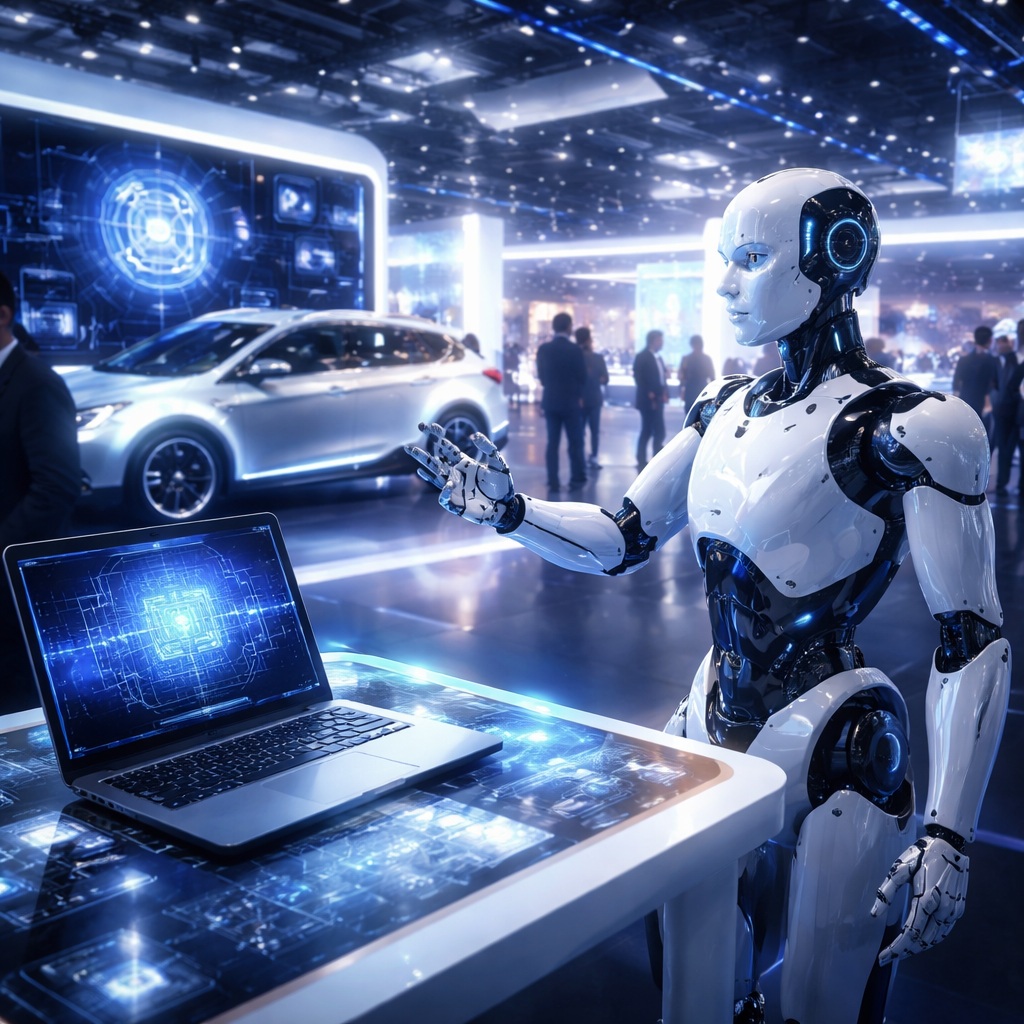
From software intelligence to embodied machines, the world’s largest tech show points to a new era of physical AI
LAS VEGAS — As the technology industry gathers at the start of the year, CES 2026 makes one message unmistakably clear: artificial intelligence is no longer confined to the cloud. This year’s exhibition underscores a decisive transition from AI as a predominantly software-driven phenomenon to AI embedded directly into machines, devices, and vehicles.
For much of the past decade, progress in artificial intelligence has been measured in models, parameters, and algorithms. At CES 2026, however, the spotlight shifts to form factors and physical presence. Robots navigate exhibition halls with increasing autonomy, laptops promise local intelligence without constant connectivity, and vehicles demonstrate decision-making capabilities once reserved for research labs.
One of the most visible signs of this transition is the maturation of consumer and industrial robotics. Unlike earlier generations, which relied heavily on scripted behaviors or remote computing, today’s robots integrate dedicated AI chips that allow them to perceive, reason, and act in real time. This hardware-centric approach reduces latency, improves reliability, and enables robots to operate in environments where network access is limited or unavailable.
The rise of so-called AI PCs further reinforces this shift. Major manufacturers are positioning personal computers not just as access points to cloud-based intelligence, but as capable AI systems in their own right. With neural processing units now standard components, these machines can run language models, image generators, and productivity agents locally. The result is a redefinition of personal computing, where privacy, speed, and customization gain renewed importance.
Automotive technology at CES 2026 tells a similar story. Smart vehicles on display emphasize onboard intelligence rather than remote control. Advanced driver assistance systems increasingly rely on edge AI to interpret sensor data instantly, a requirement for safety-critical decisions. Beyond autonomy, in-car AI systems manage energy consumption, personalize driving experiences, and adapt to user behavior over time, all without continuous reliance on external servers.
Underlying these developments is a broader industry recalibration. Hardware makers, once seen as secondary players in the AI boom, are reclaiming strategic relevance. Custom silicon, optimized for specific AI workloads, becomes a competitive differentiator. Partnerships between chip designers, device manufacturers, and software developers deepen as performance, efficiency, and thermal constraints shape what AI can realistically do in the physical world.
This evolution also reflects growing concerns around data sovereignty and resilience. By processing information locally, AI hardware reduces dependence on centralized infrastructure and mitigates risks associated with latency, outages, or data exposure. For enterprises and consumers alike, this model offers a sense of control that purely cloud-based AI struggles to provide.
CES 2026 does not suggest that software innovation is slowing. On the contrary, advances in models and algorithms continue at pace. What has changed is where intelligence lives. The show paints a picture of AI that is tangible, embedded, and increasingly invisible—woven into everyday objects rather than accessed through screens alone.
As the industry looks ahead, the implications are profound. The convergence of AI and hardware points toward a future in which intelligence is distributed across the physical environment, from homes and offices to roads and factories. CES 2026 captures this moment of transition, marking a step away from abstract intelligence and toward machines that think where they act.




 The Tower Post