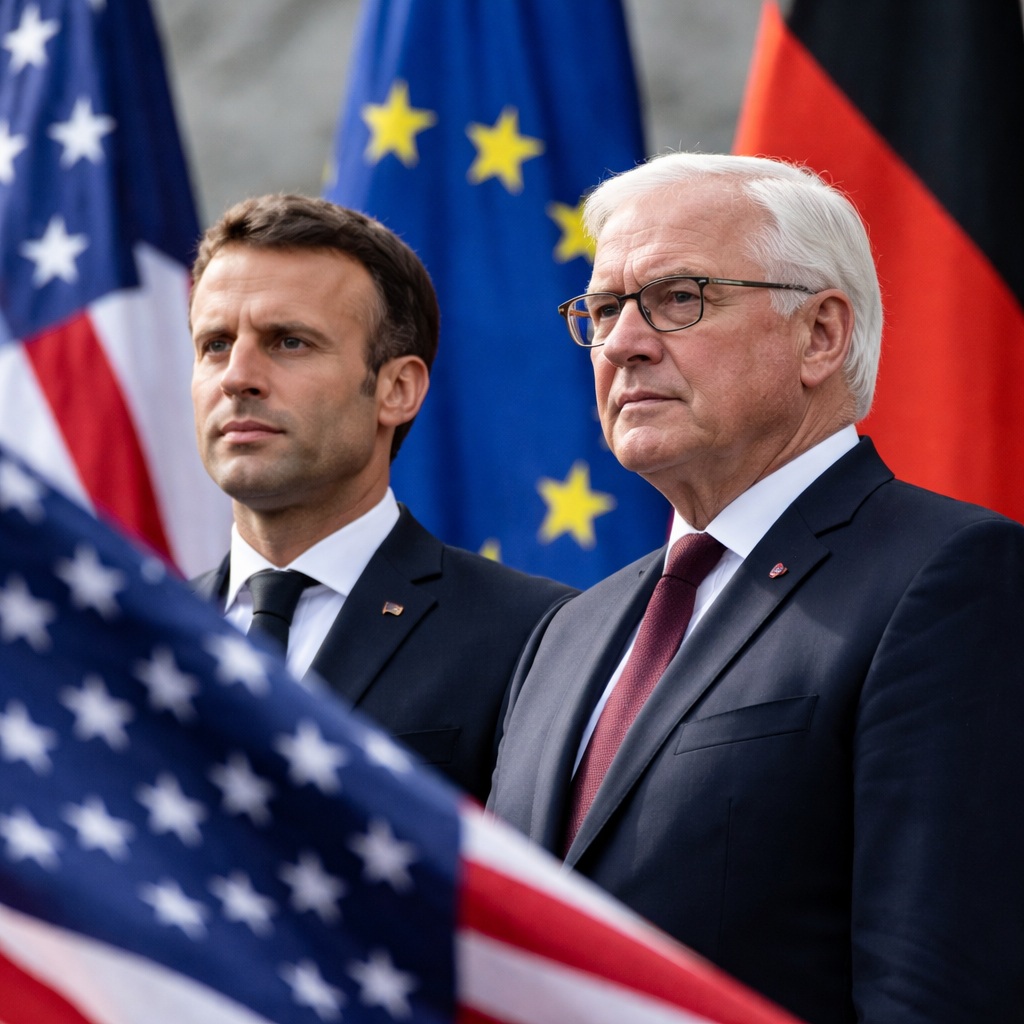
France and Germany warn that the United States’ strategic turn away from allies risks weakening global institutions and democratic security.

France and Germany issued a rare and coordinated rebuke of U.S. foreign policy this week, signaling a deepening rift in the transatlantic relationship at a moment of mounting global uncertainty. Speaking with unusual bluntness, French President Emmanuel Macron and German President Frank-Walter Steinmeier accused Washington, under President Donald Trump, of turning away from long-standing allies and undermining the multilateral order that has underpinned international stability for decades.
The coordinated criticism, delivered from Paris and Berlin within hours of each other, reflects growing European unease over what leaders here describe as an increasingly unilateral American approach to global affairs. While neither leader questioned the historic bond between Europe and the United States, both warned that the current trajectory risks eroding trust, weakening democratic norms, and exposing vulnerabilities in international security.
President Macron framed the issue as one of strategic responsibility. He argued that alliances are not transactional arrangements but political commitments built on shared values and mutual defense. According to the French president, the perception that Washington is stepping back from these commitments sends a destabilizing signal to adversaries and partners alike. In his view, the weakening of collective frameworks does not create freedom of action, but rather invites disorder.
In Berlin, President Steinmeier echoed these concerns, emphasizing the symbolic and practical consequences of a retreat from multilateralism. He warned that international institutions, already under strain from geopolitical competition and internal crises, cannot function if major powers selectively disengage when cooperation becomes inconvenient. For Europe, he suggested, the erosion of shared rules risks reviving a world shaped more by power than by law.
The criticism comes amid a broader reassessment of Europe’s role on the global stage. Officials in both countries have increasingly spoken of the need for strategic autonomy, not as a rejection of the United States, but as a hedge against unpredictability. The current U.S. foreign policy shift, they argue, accelerates this necessity by exposing the limits of reliance on any single partner, however historic the alliance.
At the heart of European concern is the impact on global governance. From security alliances to trade regimes and climate cooperation, multilateral frameworks depend on sustained engagement from their leading members. French and German officials fear that selective withdrawal or open skepticism from Washington weakens these structures at precisely the moment when coordinated responses are most needed.
Democracy itself featured prominently in the warnings from Paris and Berlin. Both leaders argued that when established democracies appear divided or inward-looking, authoritarian models gain confidence and appeal. In this context, the retreat from shared commitments is not merely a diplomatic adjustment but a strategic risk with long-term implications.
U.S. officials have defended the administration’s approach as a necessary recalibration designed to prioritize national interests and correct imbalances. Supporters argue that greater pressure on allies encourages fairer burden-sharing and more efficient institutions. European leaders, however, counter that abrupt shifts and confrontational rhetoric undermine the very cooperation such reforms require.
Despite the sharp tone, both Macron and Steinmeier stopped short of declaring a rupture. Instead, they framed their intervention as a call for reflection and dialogue. The message, diplomats say, is intended as a warning rather than a farewell: a reminder that alliances endure not by habit, but by continuous political investment.
As the new year unfolds, the transatlantic relationship appears to be entering another period of testing. Whether this moment becomes a catalyst for renewal or a marker of lasting divergence may depend on how Washington and its European partners respond to the concerns now being voiced with growing urgency on both sides of the Atlantic.




 The Tower Post