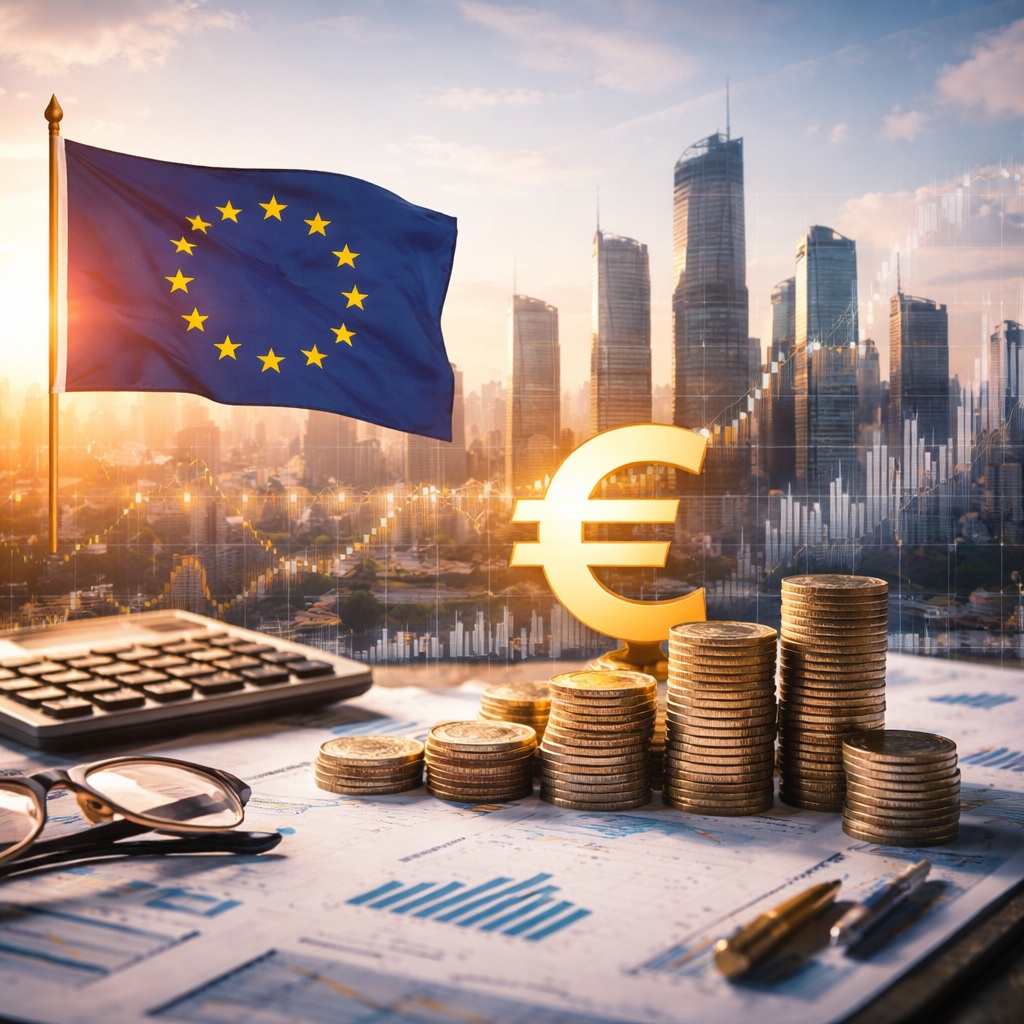
Competitiveness, resilience and preparedness emerge as the defining questions for growth in 2026
Europe enters the new year navigating a landscape shaped by the long shadow of Mario Draghi’s economic legacy and the unresolved questions it leaves behind. His years at the helm of European economic policy helped stabilize markets, preserve the euro through crisis, and redefine the role of public intervention. Now, with Draghi no longer steering the agenda, economists are weighing a more complex outlook: not one of imminent collapse, but of structural uncertainty.
At the heart of the debate is competitiveness. Europe’s productive base remains formidable, yet its ability to translate innovation into scalable growth is under scrutiny. Businesses continue to face fragmented capital markets, uneven regulatory frameworks, and slower adoption of emerging technologies compared with global peers. While industrial policy has returned to favor, critics warn that protection without reform risks dulling incentives rather than sharpening them.
Resilience is the second imponderable. Europe proved over recent years that it can absorb shocks once thought existential. Energy markets have adjusted, supply chains have diversified, and fiscal coordination—once taboo—has become an accepted tool. Yet resilience built through emergency measures is not the same as long-term strength. High public debt and aging demographics constrain governments’ room to maneuver should another crisis hit.
Preparedness, finally, looms as the most intangible factor. Europe is better equipped institutionally than it was a decade ago, but preparedness today is less about firewalls and more about adaptability. Digital transformation, defense of critical infrastructure, and the capacity to respond quickly to geopolitical shifts will determine whether Europe can act collectively or revert to fragmented national responses.
Economists caution against nostalgia for the Draghi era. His tenure was defined by decisive intervention under extraordinary circumstances. The challenge now is subtler: managing slow growth, political fragmentation, and rising global competition without the unifying pressure of crisis. Markets, for their part, are watching closely. Confidence in Europe’s economic model persists, but patience is thinner.
As mid-January unfolds, Europe’s economy stands at a crossroads. The question is not whether the foundations laid in the past will endure, but whether policymakers can move from crisis management to strategic renewal. Growth in 2026 will depend less on bold speeches than on the quieter work of reform—often invisible, often contested, but essential if Europe is to remain economically relevant in a changing world.
 The Tower Post