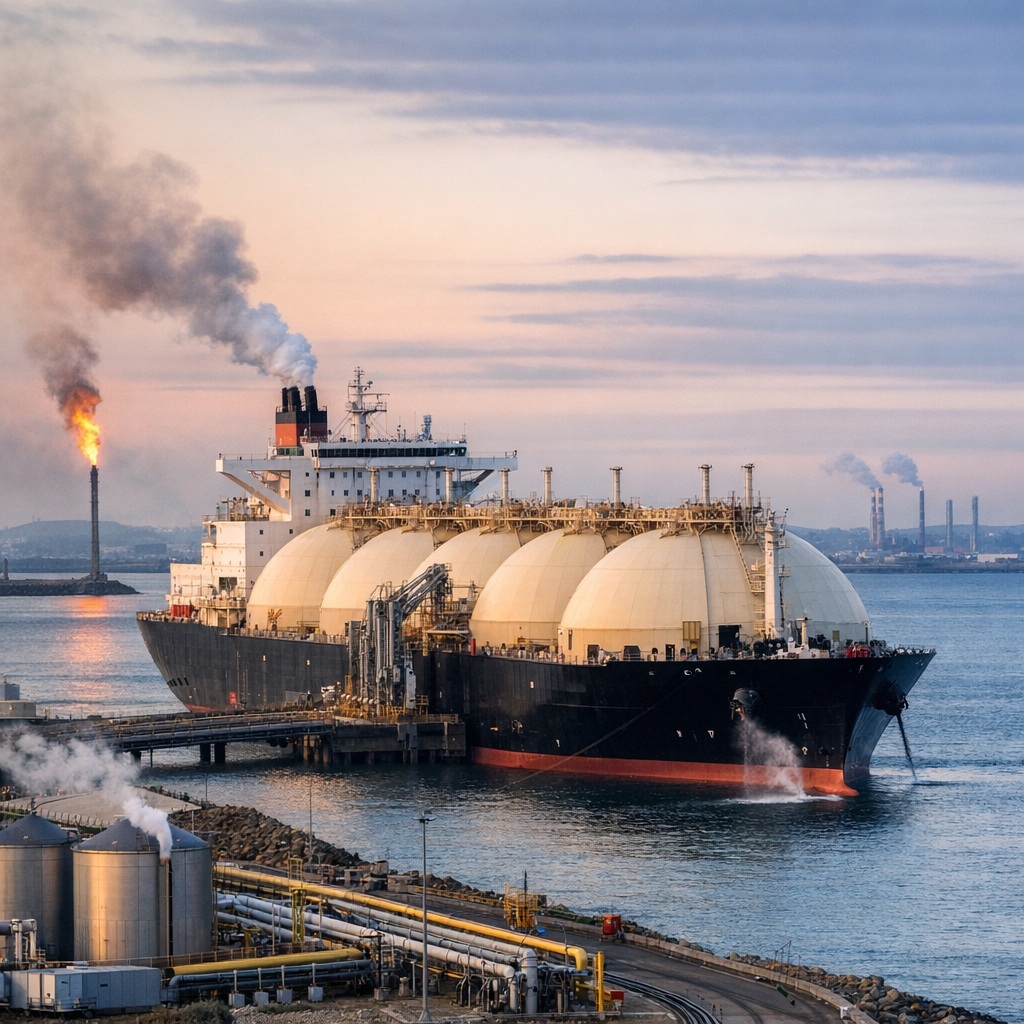
A new report says billions paid for liquefied natural gas continue to prop up Kremlin revenues, exposing a widening gap between Europe’s energy pledges and its actions.
As winter grips Europe and energy security again dominates political debate, the European Union is facing renewed accusations that its appetite for Russian liquefied natural gas is indirectly financing Moscow’s war machine. A new report released this week claims that European buyers imported Russian LNG worth billions of euros last year, sustaining critical revenue streams for the Russian state despite repeated promises to sever energy ties with the Kremlin.
The findings have reignited a contentious debate in Brussels and national capitals over the EU’s credibility as a geopolitical actor. While pipeline gas from Russia has largely vanished from Europe’s energy mix since the invasion of Ukraine, LNG has quietly become a backdoor through which Russian fossil fuels continue to flow into the bloc.
According to the report, EU member states collectively purchased Russian LNG valued at approximately €7.2 billion in the past year. That figure represents a sharp contrast with political commitments to drastically reduce, and eventually eliminate, Russian energy imports. European leaders have pledged to phase out Russian fossil fuels entirely within the next few years, framing energy independence as both a security and moral imperative.
Critics argue that these pledges ring hollow as long as Russian LNG tankers are welcomed in European ports. “You cannot claim to be cutting off the Kremlin’s war funding while keeping the terminals open,” said one senior energy policy analyst involved in the report. “LNG has become the loophole that undermines the entire sanctions narrative.”
At the heart of the controversy is the EU’s decision not to formally sanction Russian LNG. Unlike coal and most seaborne oil, liquefied natural gas has remained largely untouched by EU-wide restrictions. The rationale has been pragmatic: LNG plays a crucial role in stabilising energy markets and preventing price spikes, particularly during cold months. But the political cost of that pragmatism is now under intense scrutiny.
The revenues generated by LNG exports are vital for Moscow. They help offset losses from reduced pipeline gas sales and provide hard currency at a time when Russia’s economy is under strain from Western sanctions. President Vladimir Putin has repeatedly described energy exports as a strategic asset, and LNG is central to Russia’s long-term plans to pivot toward global markets.
Environmental groups and Ukrainian officials have been among the most vocal critics of Europe’s continued LNG imports. They argue that every shipment weakens the EU’s stated commitment to supporting Ukraine and prolongs the conflict by cushioning the Russian economy. Some campaigners have gone further, accusing European governments of moral hypocrisy.
European port access is a particularly sensitive issue. Even when LNG is not directly destined for EU consumers, European infrastructure plays a key role in Russia’s export system. Tankers use EU ports for transshipment, maintenance, and logistical support, enabling Russian LNG to reach buyers around the world. Campaigners say this effectively makes Europe an enabler of Russian energy exports.
Several member states have defended their position, insisting that LNG imports are driven by market dynamics rather than political choices. They note that contracts signed before the war are still in force and that breaking them could expose companies and governments to costly legal disputes. Energy ministers also warn that a sudden ban could destabilise supply at a time when global LNG markets remain tight.
Yet pressure is mounting inside EU institutions. Members of the European Parliament from multiple political groups are calling for clearer rules and greater transparency around LNG imports. Some are pushing for a phased restriction on Russian LNG, combined with accelerated investment in renewables and energy efficiency to reduce overall gas demand.
The European Commission finds itself walking a tightrope. On one hand, it must reassure citizens and industries that energy supplies will remain secure and affordable. On the other, it faces growing criticism that its current approach undermines the EU’s geopolitical stance and damages its credibility abroad. Officials stress that the long-term objective remains the complete elimination of Russian fossil fuels from the European energy system.
For Ukraine, the debate is not abstract. Ukrainian officials argue that continued European spending on Russian energy directly contradicts the political and military support Kyiv receives from the EU. “Solidarity cannot be selective,” one Ukrainian diplomat said. “You cannot support Ukraine with one hand and finance Russia with the other.”
As mid-winter debates intensify, the issue of Russian LNG has become a litmus test for Europe’s resolve. The coming months are likely to see sharper political clashes over whether security of supply should outweigh geopolitical consistency. What is clear is that the EU’s energy transition is no longer just an environmental or economic challenge, but a defining question of its role in a world shaped by war.
Whether Brussels chooses to close the LNG loophole or continue to rely on it will signal how far Europe is willing to go to align its energy policy with its political values. For now, the accusation remains: that even as it condemns the war, Europe is still helping to pay for it.

 The Tower Post