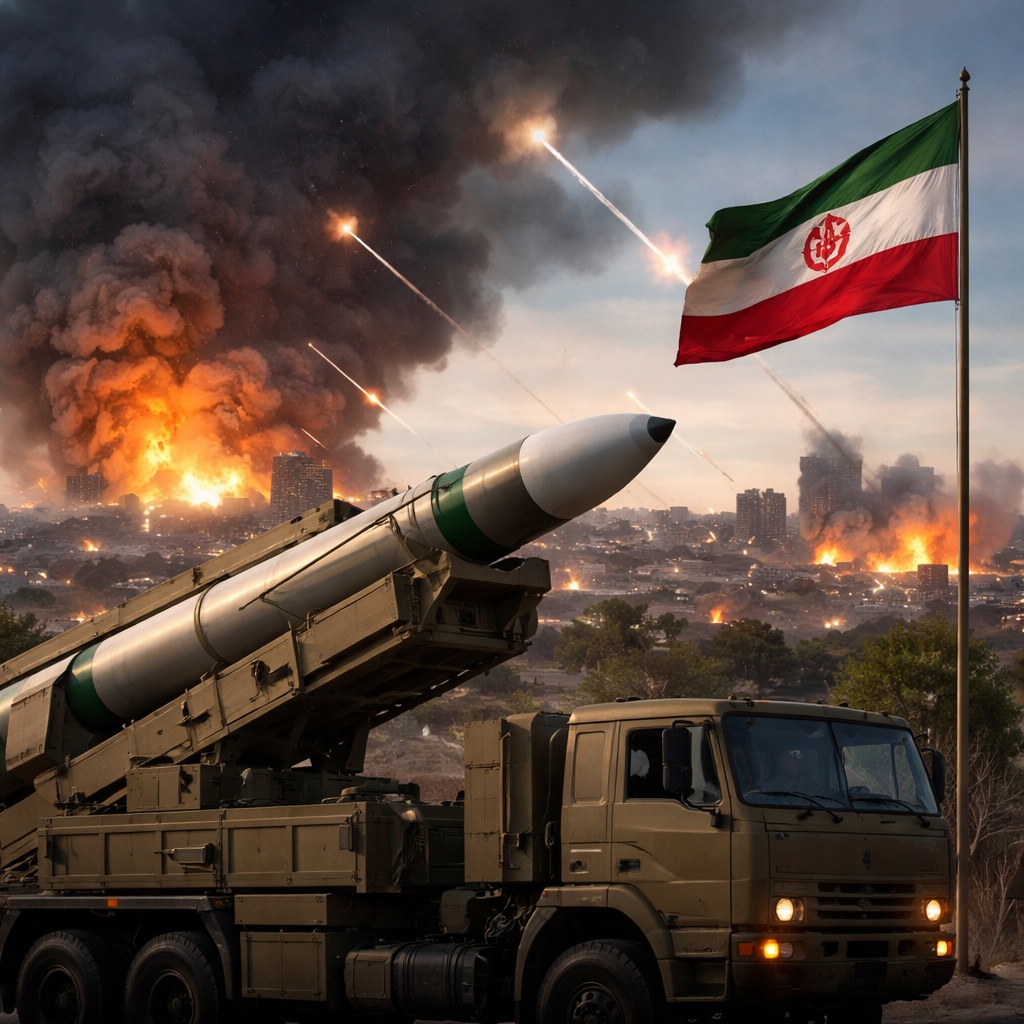
Tehran signals readiness to strike back against U.S. and Israeli forces while facing mounting unrest at home and heightened military alert across the Middle East.
In early January 2026, Iran’s leadership sharpened its rhetoric toward Washington and Tel Aviv, warning that any military strike would be met with swift retaliation. The message, delivered by the speaker of Iran’s parliament, underscored the gravity of a moment in which regional brinkmanship is colliding with domestic upheaval inside the Islamic Republic.
Speaking to lawmakers, the parliament speaker said Iran would not hesitate to target U.S. and Israeli forces should either country initiate an attack. The remarks reflected long-standing Iranian doctrine centered on deterrence, but their timing carried particular weight. Iran is grappling with sustained nationwide protests, a deepening economic crisis, and growing casualties among security forces and demonstrators alike.
Across the region, Israel has remained on high alert. Military officials have signaled concern over potential escalation involving Iranian-backed groups, while also preparing for scenarios in which the United States could be drawn into direct confrontation. Air defenses have been reinforced, reservists placed on standby, and diplomatic channels quietly activated in an effort to prevent miscalculation.
Iran’s warning came amid intensifying street protests that have challenged the regime’s authority for months. Demonstrations, sparked by economic grievances and demands for political change, have spread across major cities and provincial towns. Security forces have responded with arrests and force, leading to rising casualties that state media rarely acknowledge but which independent groups say continue to climb.
For Tehran, the external threat narrative serves a dual purpose. By framing unrest as part of a broader foreign conspiracy, officials aim to rally nationalist sentiment and justify harsher crackdowns. State television has repeatedly linked protests to alleged Western and Israeli interference, a claim rejected by demonstrators who say their anger is rooted in corruption, inflation, and restrictions on personal freedoms.
Analysts say the leadership’s confrontational tone reflects both confidence and vulnerability. On one hand, Iran has expanded its regional reach through allied militias and missile capabilities, giving it tools to retaliate asymmetrically. On the other, internal instability limits its room for maneuver and raises the stakes of any military clash.
The United States has so far avoided direct military action, emphasizing diplomacy while maintaining a strong military presence in the region. American officials have reiterated commitments to Israel’s security and warned Iran against attacking U.S. personnel or interests. Behind the scenes, Washington has reportedly engaged regional partners to contain escalation and protect shipping lanes vital to global energy markets.
Israel, for its part, views Iran as its primary strategic threat. Israeli leaders have repeatedly stated they will not allow Iran to acquire advanced military capabilities that could shift the regional balance of power. While Israel rarely confirms specific operations, its security establishment has long prepared for the possibility of direct confrontation with Tehran or its proxies.
The current standoff is unfolding against a backdrop of shifting alliances and fragile ceasefires. Conflicts involving Iranian-backed groups have flared intermittently, raising fears that a single incident could spiral into wider war. Diplomats describe the situation as volatile, with limited trust among adversaries and few reliable mechanisms for de-escalation.
Inside Iran, the pressure continues to mount. Protesters have shown resilience despite arrests and intimidation, using social media and word of mouth to organize gatherings. Families of those killed or detained have become symbols of resistance, challenging official narratives and drawing international attention.
Human rights organizations have condemned the government’s response, calling for accountability and restraint. Tehran has dismissed such criticism as politically motivated, insisting it is defending national security. The divide between the state and segments of society appears to be widening, even as officials project strength abroad.
For ordinary Iranians, the convergence of internal unrest and external tension fuels uncertainty. Economic activity has slowed, the currency remains under strain, and fears of conflict add to daily anxieties. Many worry that a military confrontation would bring further hardship without addressing underlying grievances.
As January progresses, the region stands at a crossroads. Iran’s vow of retaliation has heightened alert levels and sharpened diplomatic messaging, but it has not closed the door to dialogue. Whether cooler heads prevail may depend on restraint from all sides, as well as the regime’s ability to navigate its most serious domestic challenge in years without resorting to wider conflict.
What is clear is that the interplay between Iran’s internal protests and external threats has created a combustible mix. In this tense environment, even symbolic gestures carry outsized consequences, and the margin for error grows ever thinner.

 The Tower Post