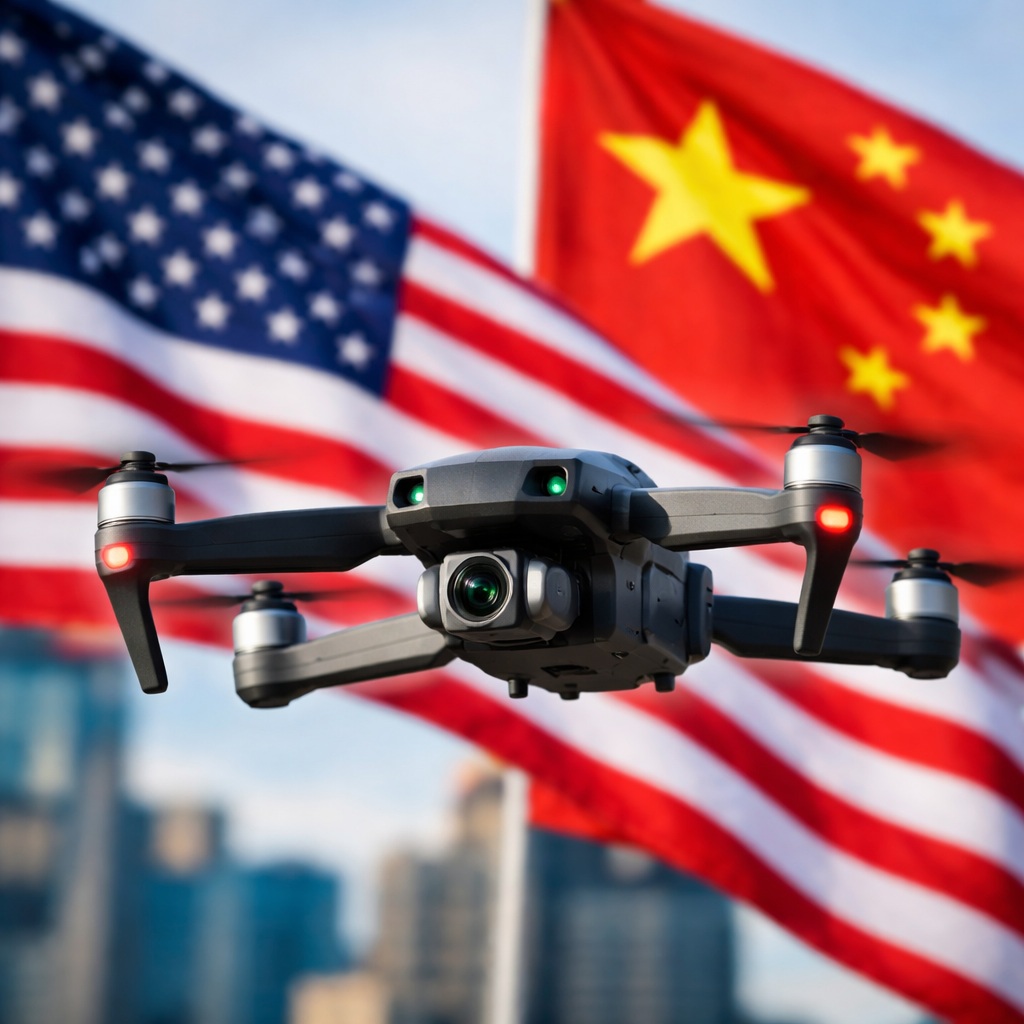
Washington backs away from proposed limits on Chinese-made drones, easing pressure on industry while leaving security debates unresolved

In a move closely watched by technology firms, security analysts, and trade partners, the U.S. Commerce Department has dropped plans to impose new restrictions on the import of Chinese-made drones, marking a notable recalibration of Washington’s approach to one of the fastest-growing segments of the global tech economy.
The decision, taken after months of internal review and consultation with industry stakeholders, signals a pause — if not a full retreat — from a regulatory push that would have sharply limited the presence of foreign-made unmanned aerial systems in the American market. For now, Chinese manufacturers will continue to sell drones to U.S. consumers, businesses, and public agencies under existing rules.
Officials framed the move as a pragmatic reassessment rather than a policy reversal. According to people familiar with the deliberations, the Commerce Department concluded that the proposed measures risked unintended consequences for U.S. companies, emergency services, and supply chains that have become deeply reliant on affordable, high-performance drones.
The abandoned plan had been part of a broader effort to reduce U.S. dependence on Chinese technology in sensitive sectors. Drones, which are increasingly used for infrastructure inspection, agriculture, filmmaking, and public safety, have been caught in the crossfire between national security concerns and economic realities.
At the heart of the debate is the dominance of Chinese manufacturers — particularly market leaders whose products account for a majority of civilian drones sold in the United States. Industry groups warned that abrupt restrictions would leave American users with few viable alternatives in the short term, driving up costs and slowing innovation.
“Drones are no longer niche gadgets,” said a senior executive at a U.S. engineering firm that relies on aerial data collection. “They’re core tools. Cutting off supply without a ready domestic replacement would have disrupted entire workflows.”
Security hawks, however, have long argued that Chinese-made drones pose risks, citing data handling practices and potential links to Beijing. Several U.S. agencies already face limits on using foreign-manufactured drones, and lawmakers have pressed the administration to extend those restrictions more broadly.
The Commerce Department’s decision does not erase those concerns, but it suggests a shift in emphasis. Rather than sweeping import bans, officials are now expected to focus on narrower controls, enhanced cybersecurity standards, and support for domestic drone manufacturing.
Trade analysts say the move could ease tensions with Beijing at a delicate moment for U.S.–China relations. Technology trade has been a persistent flashpoint, with export controls, tariffs, and blacklists reshaping global supply chains. Stepping back from drone restrictions may help prevent further escalation, even as deeper disagreements remain.
“This is a signal of selective decoupling, not total separation,” said a Washington-based trade expert. “The U.S. is trying to balance security with economic self-interest.”
For American drone startups, the news is a mixed blessing. On one hand, continued competition from Chinese firms keeps prices low and sets a high bar for performance. On the other, it underscores the challenge of building a domestic industry without stronger government backing.
Public safety agencies, including fire departments and search-and-rescue teams, welcomed the decision more openly. Many rely on Chinese-made drones for their reliability and affordability, and had warned that restrictions could hamper emergency response.
Looking ahead, the Commerce Department is expected to revisit the issue as technology and geopolitics evolve. The door remains open to future action if security assessments change or if U.S. manufacturers gain greater capacity.
For now, the decision underscores a familiar theme in Washington’s tech policy: strategic caution tempered by economic reality. As drones become ever more embedded in daily life and critical services, the challenge will be crafting rules that protect national interests without grounding innovation.




 The Tower Post