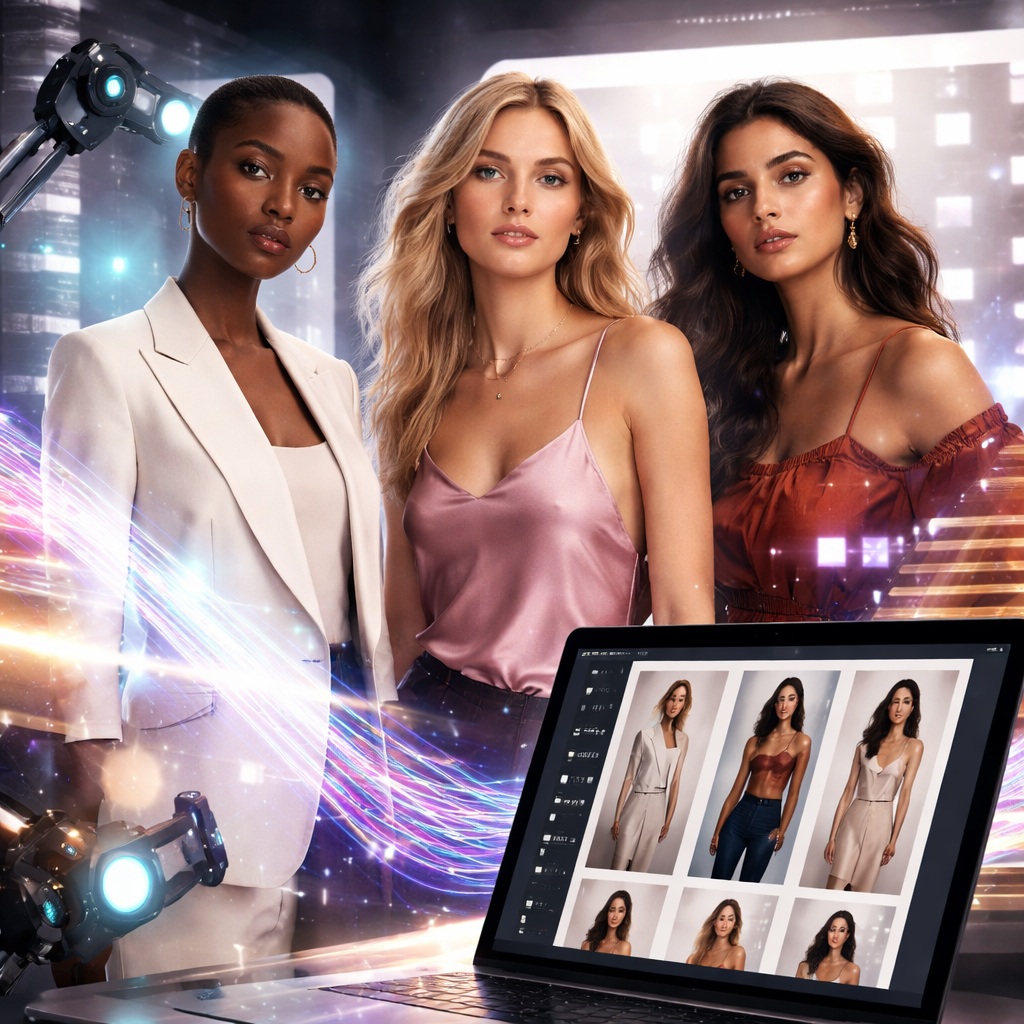
The fast-fashion giant turns to generative technology to reshape how clothes are visualized, marketed, and brought to market.
In the ever-accelerating world of fast fashion, speed has always been the defining currency. This January, Zara is signaling a new phase in that race by expanding the use of artificial intelligence to generate fashion imagery, replacing or complementing traditional photo shoots with AI-created models wearing its latest designs.
The initiative reflects a broader transformation under way across the fashion industry, where brands are increasingly turning to advanced technologies to compress timelines, reduce costs, and respond more fluidly to shifting consumer tastes. For Zara, the move fits squarely within its long-standing strategy: tight control of production, rapid design iteration, and a close feedback loop between stores, data, and design teams.
At the center of this shift is generative AI capable of producing highly realistic images of models with different body types, skin tones, and stylistic attitudes. Rather than photographing each garment on multiple models across different markets, Zara can now generate a wide range of visuals from a single digital source. The result is not just speed, but scale: dozens of image variations created in a fraction of the time required by traditional methods.
Executives close to the project describe the technology as a creative accelerator rather than a replacement for human talent. Designers still conceive the garments, stylists still define the look, and creative directors still oversee the final output. AI, in this model, becomes a tool that translates creative intent into market-ready imagery at unprecedented velocity.
The implications are significant. Fashion photography has long been one of the most time-consuming and expensive elements of retail marketing. Locations, crews, models, and post-production can stretch the process over weeks. By contrast, AI-generated imaging allows Zara to update product pages almost in real time, aligning visuals more closely with inventory availability and regional preferences.
This technological leap also dovetails with sustainability goals that are increasingly central to fashion’s public narrative. Fewer physical shoots mean less travel, reduced material waste, and lower emissions. While AI itself consumes energy, companies argue that centralized digital production can be more efficient than the logistical footprint of global photo campaigns.
Zara’s parent company, Inditex, has been steadily investing in digital infrastructure, from advanced demand forecasting to RFID-enabled inventory tracking. AI-driven imaging is the latest layer in a system designed to shorten the distance between idea and consumer. In practice, this means collections can be tested visually, adjusted, and redeployed with remarkable speed.
The move is not without controversy. Critics warn that widespread use of AI-generated models could further marginalize human workers in creative industries, particularly photographers, makeup artists, and models themselves. Others raise concerns about authenticity, questioning whether consumers will respond positively to images that are, in effect, synthetic.
Zara appears to be betting that transparency and quality will determine acceptance. The company has emphasized that AI-generated images are intended to enhance representation, allowing customers to see garments on a wider range of body types than is typically feasible in conventional shoots. In a market increasingly attentive to inclusivity, this capability carries both commercial and cultural weight.
Across the industry, competitors are watching closely. Luxury houses, traditionally cautious about automation, are experimenting with AI for internal design processes, while mass-market brands are adopting it for marketing and supply-chain optimization. What sets Zara apart is the speed at which it operationalizes these tools and integrates them into everyday workflows.
From a consumer perspective, the shift may feel subtle. Product pages load faster, visuals change more frequently, and collections appear more responsive to trends circulating on social media. Behind the scenes, however, the transformation is profound, redefining how fashion imagery is produced and how quickly it can adapt.
As the new year unfolds, Zara’s experiment underscores a larger truth about fashion’s future. The industry is no longer just about fabrics and silhouettes; it is equally about data, algorithms, and digital ecosystems. AI-generated imagery is one visible manifestation of that evolution, signaling a moment when creativity and computation become inseparable.
Whether this approach becomes the industry standard remains to be seen. What is clear is that Zara has once again positioned itself at the intersection of fashion and speed, using technology not as a novelty, but as a structural advantage. In doing so, it offers a glimpse of a fashion system where images, ideas, and garments move almost as fast as the trends that inspire them.



 The Tower Post