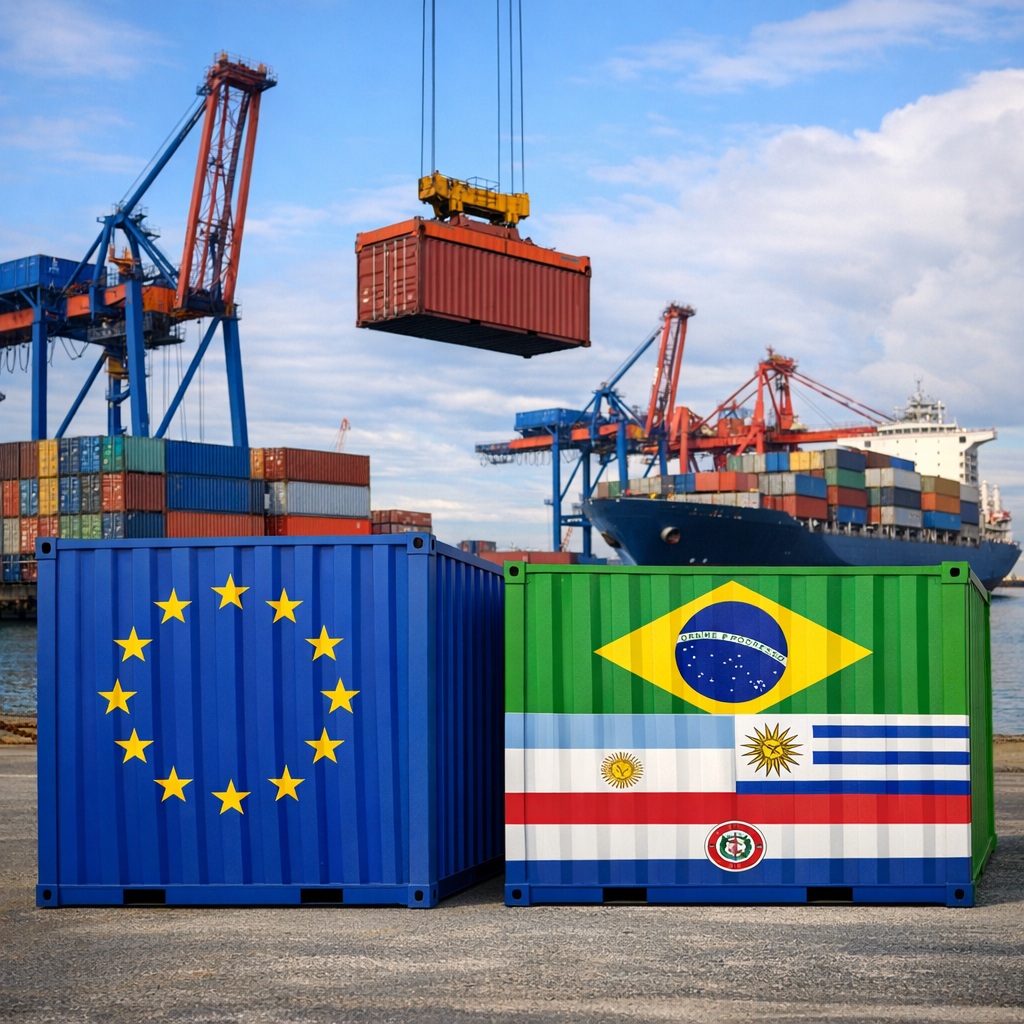
Experts in the Czech Republic argue that the long-debated trade agreement with South America could strengthen European growth, expand consumer choice, and reinforce the EU’s strategic position in a changing global economy.
As winter settles over Europe and policymakers return to their desks after the holiday lull, debate over the European Union’s trade agreement with the Mercosur bloc has re-emerged as a defining economic issue of the moment. In Prague, a growing number of Czech economists and trade analysts are voicing cautious optimism, arguing that the deal could deliver tangible benefits for European consumers while supporting long-term growth across the EU.
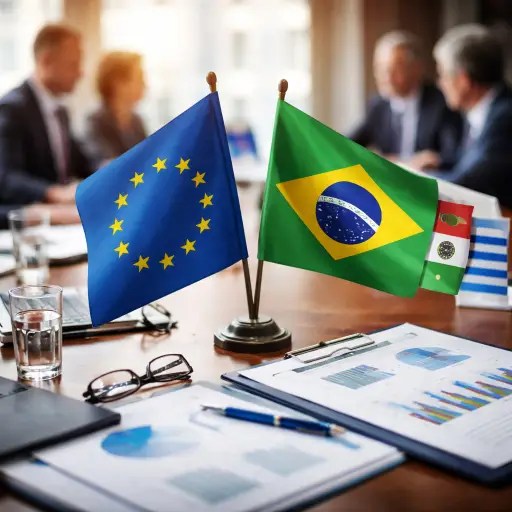
The EU–Mercosur agreement, negotiated over many years with Argentina, Brazil, Paraguay, and Uruguay, aims to create one of the world’s largest free trade areas. Supporters in the Czech economic community say the pact arrives at a time when Europe is searching for new engines of growth, more resilient supply chains, and reliable partners beyond its immediate neighborhood.
According to Czech economists, the core appeal of the agreement lies in its potential to lower tariffs and non-tariff barriers that have long constrained trade between Europe and South America. European exporters, particularly in manufacturing, automotive components, and high-value industrial goods, would gain improved access to fast-growing markets. In return, European consumers would see a wider selection of agricultural and food products at more competitive prices.
From a consumer perspective, analysts emphasize that increased competition tends to translate into lower costs and greater choice. Products such as beef, poultry, fruit, coffee, and sugar-based goods from South America could enter the European market under clearer and more predictable rules. Czech experts note that, while safeguards remain in place for sensitive sectors, the overall effect would be to broaden options on supermarket shelves without undermining European food standards.
Economists in Prague also stress that fears of sudden market disruption are often overstated. The agreement includes transition periods and quotas designed to give European farmers time to adapt. In their view, the debate should focus less on worst-case scenarios and more on how European agriculture can use innovation, quality branding, and sustainability to compete in a more open environment.
Beyond prices and product choice, Czech analysts highlight the strategic dimension of the deal. With global trade increasingly shaped by geopolitical tensions and fragmented alliances, the EU is under pressure to diversify its economic partnerships. Strengthening ties with Mercosur is seen as a way to reduce overdependence on a narrow set of suppliers and to anchor Europe more firmly in global trade networks.
For export-oriented economies like the Czech Republic, the potential gains are not limited to direct trade with South America. Economists point out that Czech firms are deeply embedded in European value chains, particularly in Germany, France, and other major EU economies. If these partners expand exports to Mercosur markets, Czech suppliers of components, machinery, and services are likely to benefit indirectly.
Czech trade specialists also underline the importance of rules-based trade at a time when protectionism is gaining ground worldwide. The EU–Mercosur agreement is presented as a signal that Europe remains committed to open markets, predictable regulations, and multilateral cooperation. For smaller EU member states, such predictability is seen as especially valuable, offering a stable framework within which businesses can plan and invest.
Environmental concerns remain one of the most sensitive aspects of the agreement, particularly in relation to deforestation and agricultural expansion in South America. Czech economists acknowledge these concerns but argue that engagement, rather than isolation, offers better leverage. By embedding sustainability commitments and monitoring mechanisms into trade relations, the EU can exert more influence than it would by standing aside.
In Prague, some analysts point to the broader economic context. Growth across Europe has been uneven, and households remain sensitive to inflation and cost-of-living pressures. In this environment, any policy that can ease price pressures without large fiscal costs is viewed favorably. Trade liberalization, they argue, is one of the few tools that can deliver such benefits over time.
Critics of the deal warn that public skepticism toward globalization has not disappeared, and Czech economists agree that communication will be crucial. They argue that policymakers must clearly explain how the agreement works, what protections are in place, and how potential adjustment costs will be managed. Without transparent debate, even economically sound policies risk losing public support.
Looking ahead, Czech experts see the EU–Mercosur deal as part of a broader recalibration of European trade policy. Rather than choosing between openness and protection, they advocate a balanced approach that combines market access with enforceable standards and strategic interests. In their assessment, the agreement with South America broadly fits this model.
As discussions continue across European capitals, the Czech economic community’s message is one of pragmatic optimism. The EU–Mercosur agreement is not viewed as a cure-all for Europe’s economic challenges, but as a meaningful step toward more diversified trade, stronger growth prospects, and greater choice for consumers. At a moment when Europe is redefining its place in the global economy, Czech economists argue that turning inward would be the greater risk.


 The Tower Post