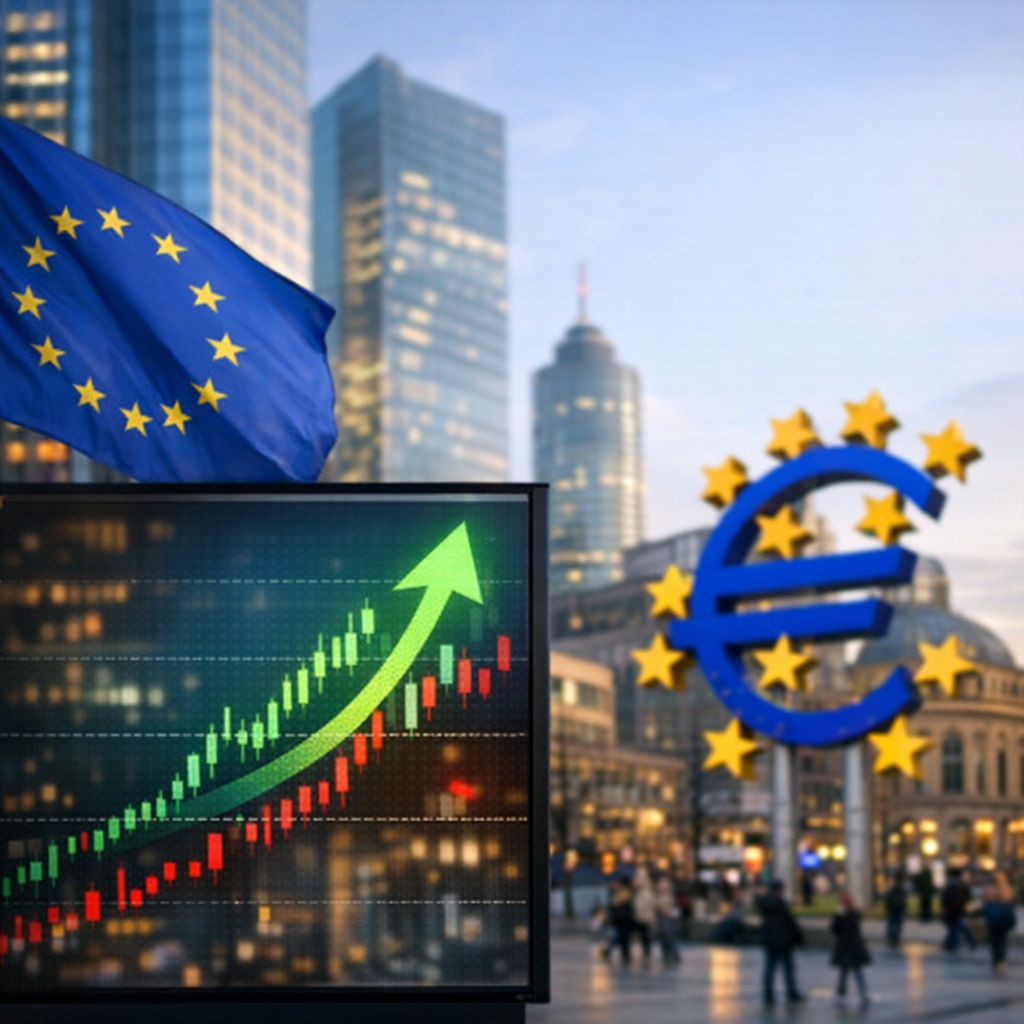
Weekly business roundup shows market gains across Europe supported by easing price pressures
By mid-January, Europe’s economic narrative has shifted in tone. After several years marked by stubborn inflation, weak growth, and political uncertainty, signs of renewed momentum are emerging across the continent. A weekly business roundup from major financial centers points to rising equity markets, improving business confidence, and a gradual return of investor appetite, all underpinned by easing price pressures.
The change is subtle rather than dramatic, but it is broad-based. From Frankfurt to Paris and Milan to Madrid, markets have opened the year with cautious optimism. Inflation, while still above the long-term comfort zone of central bankers, is no longer the dominant force eroding purchasing power and unsettling planning assumptions. For households and firms alike, this moderation is beginning to translate into more predictable conditions.
Markets Find Firmer Footing
European stock markets have broadly extended gains as the new year unfolds. Investors appear encouraged by a combination of cooling inflation, resilient corporate earnings, and expectations that monetary policy will gradually become less restrictive. The rally has not been uniform across sectors, but cyclical industries such as manufacturing, travel, and consumer goods have attracted renewed interest.
Banks and financial services firms have also benefited from improved sentiment. While higher interest rates over the past period boosted margins, concerns about credit quality had weighed on valuations. Recent data suggesting that households and businesses are coping better than feared has eased those anxieties, supporting share prices across the sector.
Bond markets, meanwhile, reflect a more balanced outlook. Yields remain elevated compared with the ultra-low levels of the previous decade, but volatility has eased. This stability has helped governments and corporations refinance debt with greater confidence, reducing fears of sudden funding shocks.
Inflation Pressures Continue to Ease
At the heart of this shift lies inflation. Energy prices, once the main driver of cost increases, have stabilized, while supply chains that were severely disrupted in earlier years are now functioning more smoothly. Food prices, though still sensitive to weather and geopolitical factors, have shown signs of moderation.
Core inflation, closely watched by policymakers, has also edged lower. Wage growth remains firm in many countries, reflecting tight labor markets, but productivity improvements and cautious corporate pricing strategies are helping to offset cost pressures. The result is a gradual, uneven, but meaningful easing in overall inflation dynamics.
For consumers, this has brought a modest sense of relief. While living costs remain high by historical standards, the pace of increase has slowed enough to allow real incomes to recover in parts of Europe. Retailers report more stable demand, and confidence surveys suggest households are becoming less defensive in their spending behavior.
Central Banks Signal Patience
Europe’s central banks are responding with caution rather than celebration. Policymakers continue to stress that the battle against inflation is not yet won, but their language has softened. The emphasis has shifted from aggressive tightening to maintaining restrictive conditions for as long as necessary.
This nuanced stance has been welcomed by markets. Investors are increasingly pricing in a scenario where interest rates remain steady for a period before gradually easing, provided inflation continues its downward trajectory. Such expectations have helped anchor financial conditions and reduce uncertainty for businesses planning investment decisions.
The European Central Bank, in particular, faces a delicate balancing act. Growth across the euro area remains uneven, with some economies outperforming others. Maintaining credibility on inflation while avoiding unnecessary damage to activity is now the central challenge.
Corporate Outlook Improves
Corporate leaders across Europe report a more constructive outlook compared with the previous year. Surveys indicate that order books are stabilizing, and capital expenditure plans, while still cautious, are no longer being postponed en masse. Export-oriented firms are benefiting from steady global demand, even as geopolitical risks persist.
Small and medium-sized enterprises, often the most sensitive to financing conditions, are also showing signs of resilience. Although borrowing costs remain high, improved visibility on inflation and demand has made planning easier. Many firms are focusing on efficiency gains, digitalization, and selective expansion rather than broad cost-cutting.
Labor markets continue to play a critical role. Employment levels remain robust, supporting consumption and social stability. At the same time, companies are investing more in training and retention, seeking to address structural skill shortages rather than relying solely on new hiring.
Risks Still on the Horizon
Despite the improved tone, risks have not disappeared. Geopolitical tensions, particularly those affecting energy supply and global trade routes, remain a potential source of renewed volatility. Political uncertainty within several European countries could also weigh on confidence if reform momentum stalls.
Moreover, the lagged effects of tighter monetary policy are still working their way through the economy. Some sectors, notably construction and real estate, continue to face pressure from high financing costs. A sharper-than-expected slowdown in global growth would also test Europe’s fragile recovery.
Looking Ahead
As the second half of January approaches, Europe’s economic story is one of cautious rebuilding rather than exuberant recovery. Easing inflation has provided breathing space, allowing markets to stabilize and confidence to improve. The weekly business roundup suggests that, for now, the balance of risks has shifted slightly toward opportunity.
Whether this momentum can be sustained will depend on discipline from policymakers, adaptability from businesses, and a measure of luck on the global stage. For the moment, however, Europe enters the heart of winter with a steadier economic pulse and a guarded sense of optimism about the months ahead.




 The Tower Post