Rural anger over the Mercosur pact spills onto roads and borders, turning a national protest into a European test
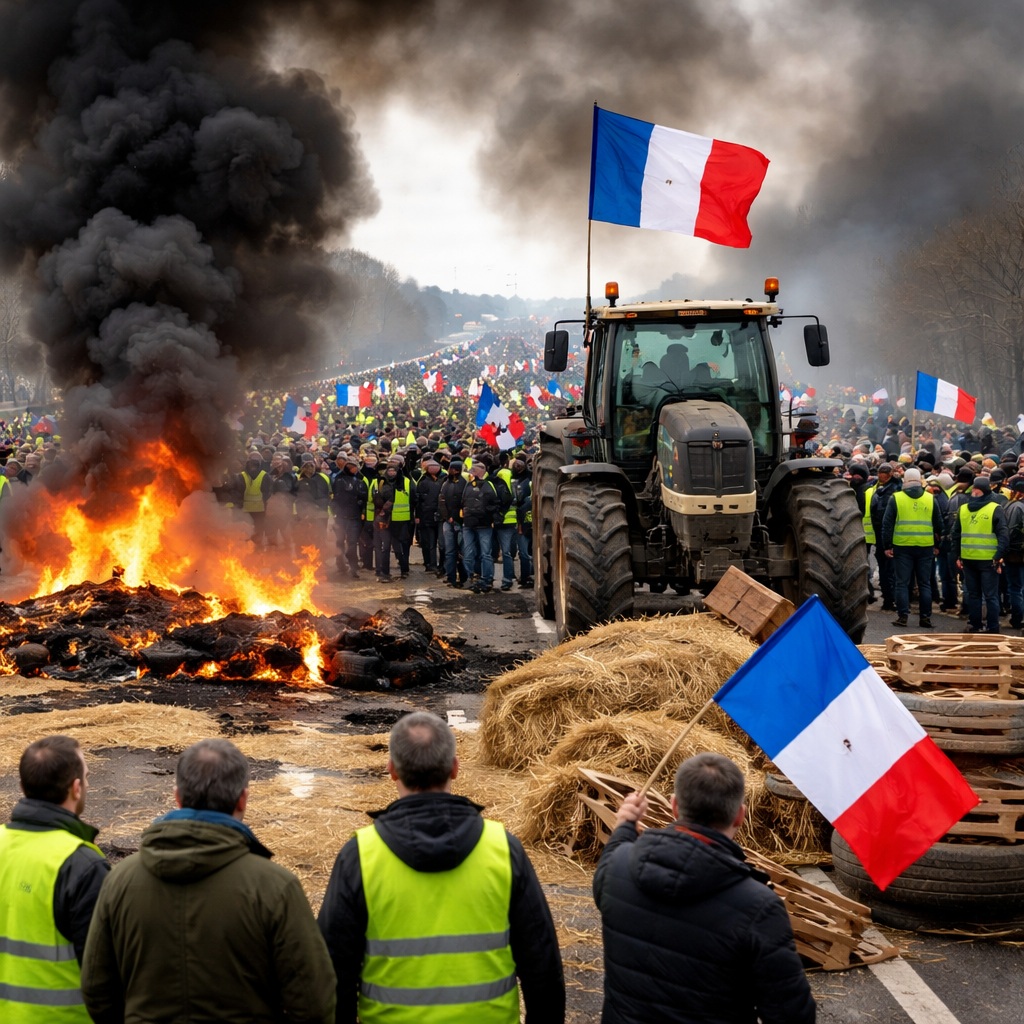
Across France’s countryside and city outskirts, tractors continue to roll, hay bales still block roundabouts, and banners denouncing unfair competition remain tied to farm gates. The protests by French farmers, reignited by the European Union’s push to finalize a sweeping trade agreement with Mercosur countries, show little sign of fading. What began as a sectoral dispute has evolved into a broader political and social moment, drawing attention well beyond France’s borders.
At the heart of the anger lies a familiar fear: that the opening of European markets to agricultural imports from South America will expose French farmers to competition they consider structurally unequal. Beef, poultry, sugar, and ethanol are frequently cited as symbols of this imbalance. Farmers argue that while European producers are bound by strict environmental, sanitary, and animal-welfare standards, their Mercosur counterparts are not held to comparable rules, allowing them to produce at lower costs.
The persistence of the protests reflects more than a reaction to one trade deal. For many farmers, the Mercosur agreement crystallizes years of frustration over declining incomes, rising production costs, and what they describe as a widening gap between political promises and on-the-ground realities. Fuel prices, fertilizer costs, and administrative burdens have all become rallying cries alongside trade concerns.
Roadblocks and demonstrations have been largely peaceful but highly visible. Tractors parked near logistics hubs and border crossings have disrupted supply chains, reminding urban consumers of agriculture’s central role in daily life. In some regions, farmers have staged symbolic actions, dumping soil or farm waste near public buildings to underscore their sense of being unheard.
The French government has sought to strike a delicate balance. Officials have publicly expressed reservations about the Mercosur deal in its current form, emphasizing the need for “mirror clauses” that would require imported products to meet European standards. At the same time, Paris faces pressure from Brussels and other member states eager to secure the agreement, seen as a strategic move in a fragmenting global trade landscape.
Within the European Union, the protests have resonated with farming communities elsewhere. From Belgium to Poland, agricultural unions are watching France closely, viewing the demonstrations as a test case for how far farmers can influence trade policy. Internationally, the images of tractors lining highways have circulated widely, adding a human dimension to what is often perceived as a technical trade negotiation.
Supporters of the Mercosur agreement argue that it would open new export opportunities for European industries and strengthen geopolitical ties with South America. They insist that safeguards can be built into the deal and that fears of market flooding are overstated. Farmers, however, remain skeptical, pointing to past agreements that, in their view, failed to protect domestic production.
As winter conditions weigh on rural areas, the endurance of the protests carries symbolic weight. Farming calendars leave little room for prolonged mobilization, yet many demonstrators say they are prepared to continue as long as necessary. Their determination reflects a belief that this moment could define the future of European agriculture for a generation.
For now, the standoff continues. With negotiations advancing and public attention fixed on the countryside, French farmers have ensured that the Mercosur deal is no longer an abstract policy debate. It has become a visible, contested issue, rooted in fields and farmyards, and emblematic of the broader question facing Europe: how to reconcile open trade with the protection of those who feed the continent.


 The Tower Post