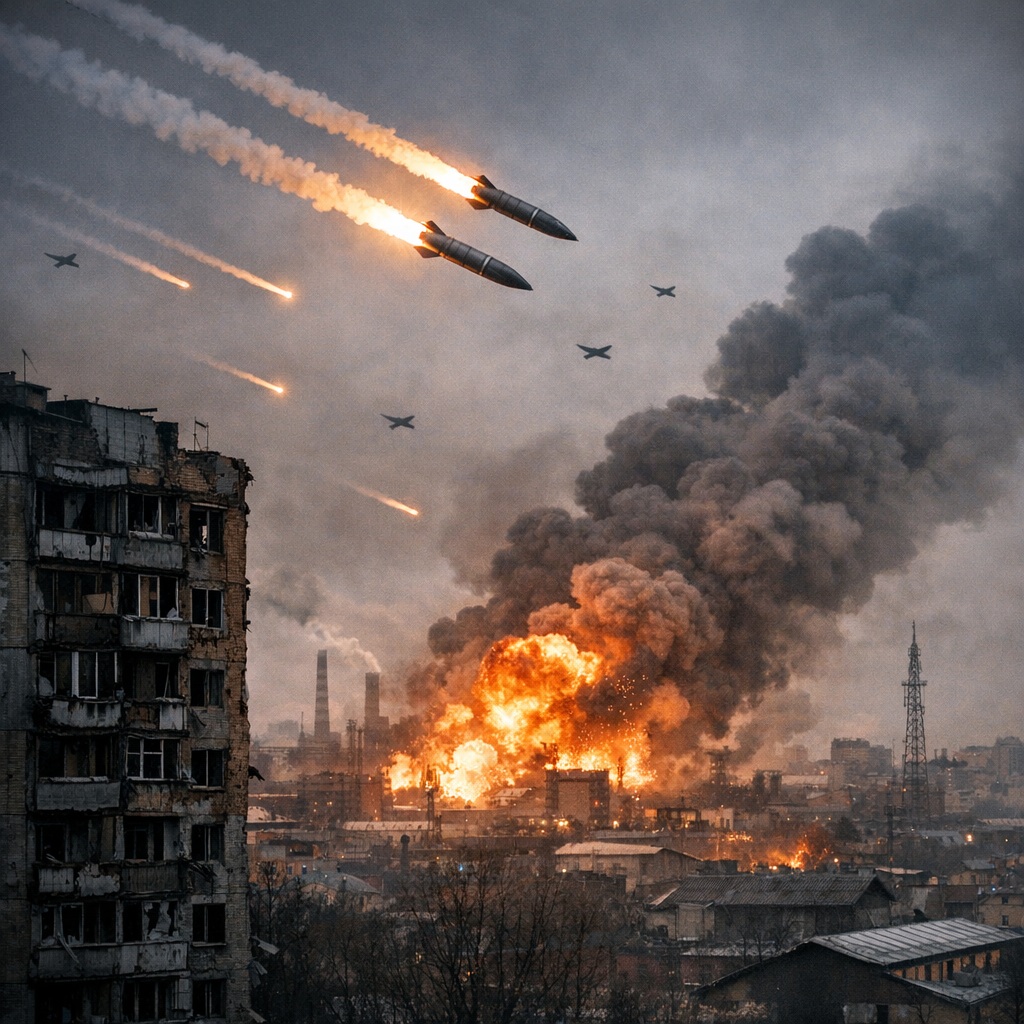
Russia unleashes advanced missiles and massed drones against Ukraine, widening the conflict’s human and strategic toll as winter tightens its grip.
As winter hangs heavily over Eastern Europe, Russia has carried out one of its most intense combined air assaults of recent months, deploying advanced Oreshnik missiles alongside waves of drones and conventional cruise weapons against targets across Ukraine. The barrage, launched in the middle of January, underscored a shift in both scale and intent, signaling Moscow’s determination to press its campaign despite battlefield stalemate and mounting international pressure.
Ukrainian officials described a night dominated by air-raid sirens and interceptions, with air-defense units scrambling to counter dozens of incoming threats from multiple directions. The attacks struck energy infrastructure, logistics hubs, and urban outskirts, adding strain to a civilian population already coping with prolonged power disruptions and winter shortages.
The centerpiece of the assault was Russia’s reported use of Oreshnik missiles, a system officials in Kyiv say represents a newer generation of precision-guided weapons. While details remain closely guarded, Ukrainian military analysts believe the missile is designed to evade existing air defenses through a combination of speed, maneuverability, and advanced guidance.
“This was not simply another drone swarm,” said one senior Ukrainian defense official, speaking on condition of anonymity because of the sensitivity of the matter. “The mix of platforms suggests a deliberate attempt to probe and overwhelm our defenses.”
Russia’s Defense Ministry, in its customary brief statements, said the strikes targeted “military and energy-related facilities” and claimed all objectives were achieved. Independent verification of those claims remains difficult, but local authorities across several regions reported fires, damaged substations, and emergency outages.
A New Phase in the Air Campaign
The use of Oreshnik missiles marks what many observers see as a qualitative escalation. Since the early stages of the invasion, Russia has relied heavily on cruise missiles and Iranian-designed drones to strike deep into Ukrainian territory. Over time, Ukraine’s Western-supplied air defenses have improved interception rates, forcing Moscow to adapt.
Military experts say the latest barrage reflects that adaptation. By launching drones to saturate radar and missile defenses before following up with faster, more sophisticated weapons, Russia appears to be testing whether it can restore the shock effect that characterized earlier phases of the war.
“The objective is attrition,” said a European security analyst based in Brussels. “It’s about exhausting interceptors, draining resources, and keeping the population under constant psychological pressure.”
For Ukraine, the challenge is both tactical and strategic. Each interception consumes valuable missiles, many of which depend on continued Western support. As debates continue in allied capitals over aid packages and production capacity, Kyiv faces the reality that its air-defense umbrella, while effective, is not inexhaustible.
Human Cost Mounts
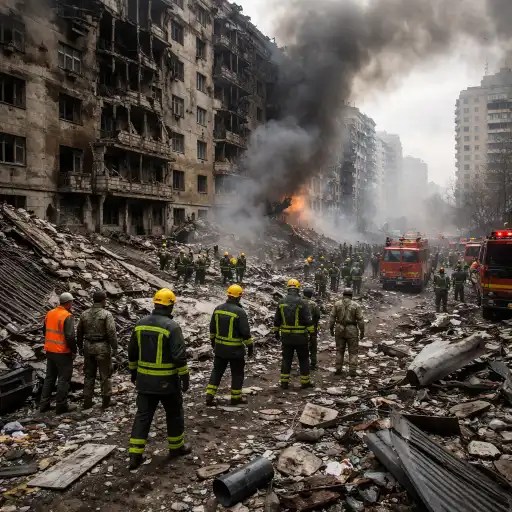
Beyond the military calculus, the human toll continues to rise. Emergency services reported casualties among civilians, including injuries caused by falling debris from intercepted missiles and drones. In several cities, residents spent hours sheltering underground as explosions echoed through the night.
Hospitals, already stretched thin, were forced to rely on backup generators during power cuts. Aid organizations warned that repeated strikes on energy infrastructure risk turning winter into a humanitarian crisis, particularly for the elderly and displaced.
“We are seeing the cumulative impact,” said a representative of an international relief agency operating in Ukraine. “Each attack chips away at resilience—physically, economically, and emotionally.”
Escalation Without Resolution
The timing of the barrage is significant. Diplomatic efforts to freeze or de-escalate the conflict remain stalled, and both sides appear intent on improving their positions rather than seeking compromise. For Moscow, demonstrating the ability to strike at will serves both military and political purposes, projecting strength at home and abroad.
For Kyiv, the attacks reinforce calls for additional air-defense systems and longer-range capabilities. Ukrainian leaders have repeatedly argued that only by denying Russia the ability to terrorize cities can meaningful negotiations begin.
International reaction to the latest strikes was swift but familiar. Western governments condemned the attacks and reiterated support for Ukraine, while urging restraint and adherence to international law. Yet the gap between rhetoric and resolution remains wide.
As the war grinds on into another year, the Oreshnik barrage stands as a stark reminder that technological escalation does not bring clarity or closure—only deeper uncertainty. For civilians on the ground, the hope is not for the next system or counter-system, but for an end to nights defined by sirens, smoke, and fear.



 The Tower Post