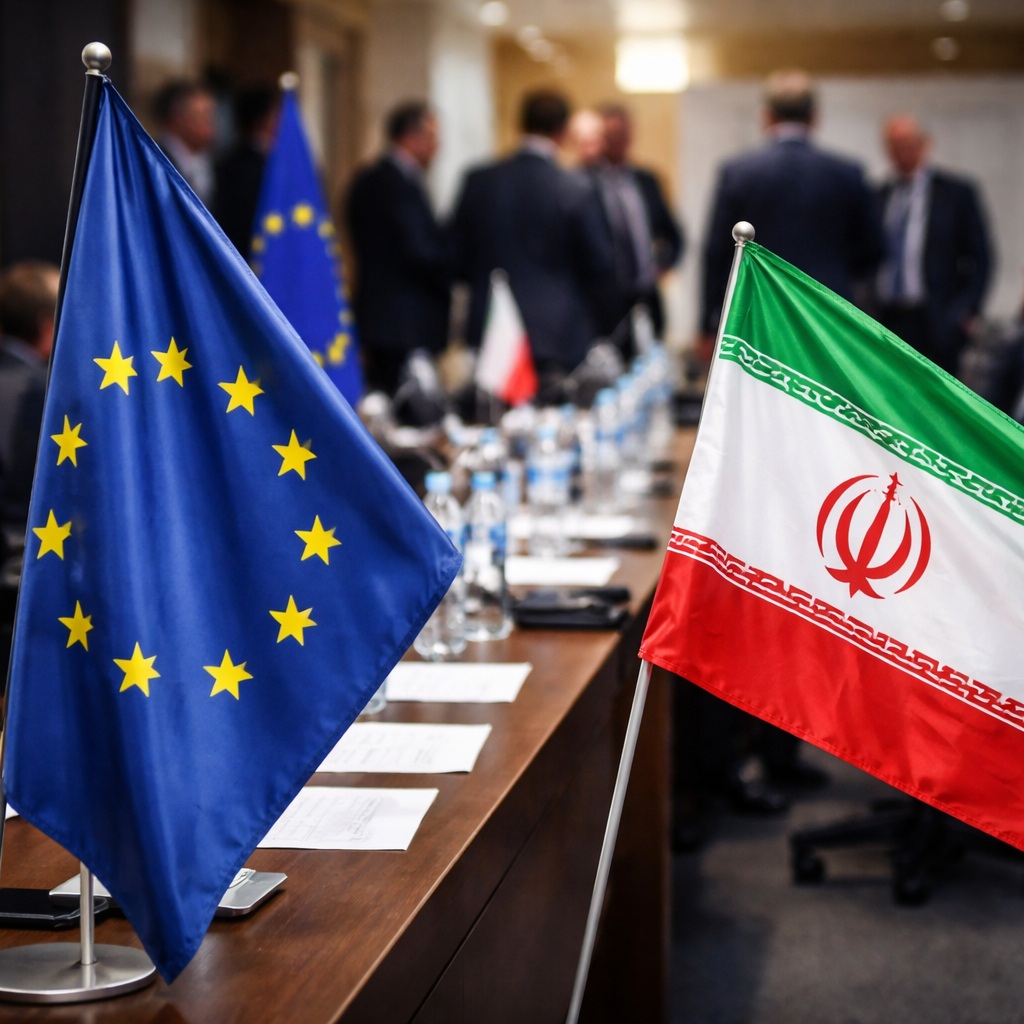
Brussels prepares a rapid, coordinated response over human rights abuses as political tensions test unity among member states
The European Union is preparing to move quickly with a new package of sanctions on Iran, as concerns over human rights abuses intensify and political pressure mounts within the bloc to demonstrate resolve. European Commission President Ursula von der Leyen said the Commission is ready to table further restrictive measures “without delay,” underscoring a tougher diplomatic posture that reflects growing frustration in European capitals.
The planned sanctions would build on existing measures targeting individuals and entities accused of involvement in repression, surveillance, and violence against civilians. According to EU officials, the goal is to broaden the scope of accountability while preserving channels for diplomacy on issues such as nuclear non-proliferation and regional stability.
At the heart of the EU’s approach is speed. Senior diplomats say Brussels wants to avoid the prolonged negotiations that have sometimes blunted the impact of previous sanctions regimes. Coordination with like-minded partners is expected to be central, with the Commission signaling that alignment with allies will be pursued in parallel to internal decision-making.
Human rights have become the defining lens through which the EU now frames its Iran policy. Recent reports from international organizations and non-governmental groups have detailed arbitrary detentions, restrictions on freedom of expression, and the use of force against protesters. These findings have hardened attitudes among many member states, particularly those that have pushed for a more values-driven foreign policy.
Von der Leyen’s remarks come at a moment when the EU is eager to reaffirm its credibility as a geopolitical actor. With conflicts on its periphery and strained relations with several authoritarian governments, Brussels faces pressure to show that its rhetoric on human rights is matched by concrete action. Sanctions, while imperfect, remain one of the bloc’s primary tools.
Yet the politics surrounding further sanctions remain contentious. Some member states caution against measures that could further isolate Iran’s population or undermine prospects for dialogue. Others argue that economic pressure has limits and risks entrenching hardliners in Tehran. These divisions are familiar, but officials insist that consensus is achievable given the gravity of the alleged abuses.
European diplomats also acknowledge the challenge of enforcement. Ensuring that sanctions are effectively implemented across 27 member states requires robust monitoring and legal clarity. Past experience has shown that loopholes and uneven application can weaken impact, a concern that Brussels says it is addressing through tighter coordination and clearer guidance.
Iran, for its part, has consistently rejected EU accusations, framing sanctions as politically motivated and counterproductive. Tehran has warned that additional measures could affect cooperation on broader files, including regional security and nuclear-related discussions. European officials respond that accountability for human rights violations is non-negotiable.
As the Commission prepares its proposal, attention will turn to the European Council, where leaders must balance principle and pragmatism. The coming weeks are expected to test the EU’s ability to act swiftly and cohesively at a time when its foreign policy ambitions are under close scrutiny.
For Brussels, the message is clear: the cost of inaction now outweighs the risks of escalation. Whether expanded sanctions will change behavior on the ground remains uncertain, but the EU appears determined to signal that violations of fundamental rights will not go unanswered.
 The Tower Post