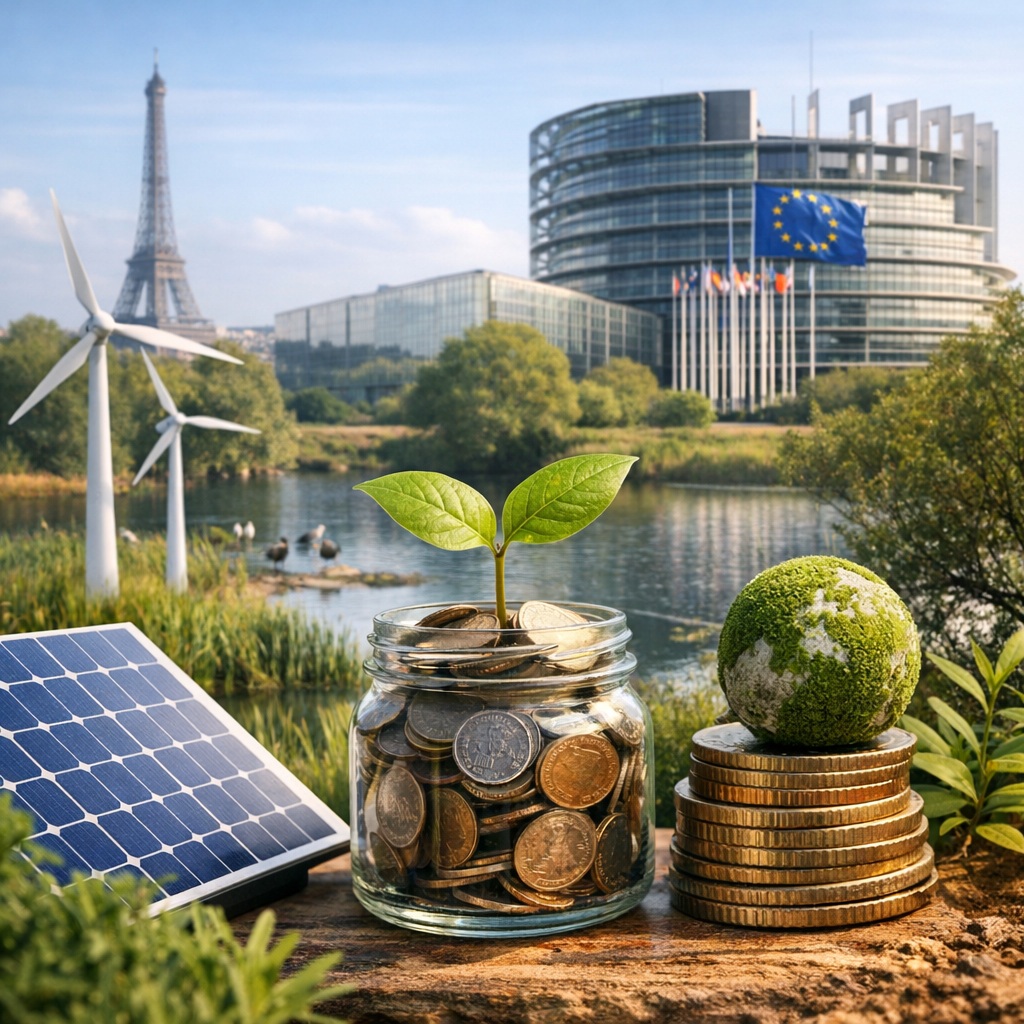
New strategies aim to close the nature financing gap as Europe positions green finance at the core of economic transformation.
Europe is accelerating its efforts to finance nature protection and sustainable investment, placing environmental priorities at the center of its economic strategy. As climate risks intensify and biodiversity loss increasingly threatens food systems, infrastructure, and long-term growth, policymakers and financial institutions across the continent are reshaping how capital flows toward nature-positive outcomes.
A recently released policy report outlines a comprehensive strategy to close what experts describe as the “nature financing gap” — the persistent shortfall between the funding required to protect ecosystems and the capital currently mobilized. The document highlights Europe’s growing leadership in standards, regulatory frameworks, and financial innovation, presenting the region as a testing ground for a new model of sustainable finance.
At the heart of this shift is the idea that investing in nature is no longer a niche environmental concern, but a prerequisite for economic stability. Degraded ecosystems amplify climate risks, disrupt supply chains, and increase public spending on disaster recovery. By contrast, restoring wetlands, forests, and soils can reduce long-term costs while generating jobs and investment opportunities.
European institutions are increasingly aligning environmental finance with broader economic objectives. Rather than treating green investment as a parallel track, policymakers are embedding sustainability into industrial strategy, infrastructure planning, and capital markets. This integrated approach aims to ensure that climate and biodiversity goals reinforce competitiveness, resilience, and innovation.
One of Europe’s key advantages lies in its regulatory architecture. Common standards for sustainability reporting, green bonds, and climate risk disclosure have reduced uncertainty for investors and improved transparency. These tools are designed to make environmental risks visible on balance sheets, encouraging financial actors to redirect capital toward activities that support long-term ecological and economic value.
The report emphasizes that public funding alone will not be sufficient. While European budgets and development banks play a catalytic role, closing the financing gap depends on mobilizing private capital at scale. To achieve this, governments are using public funds strategically — offering guarantees, blending finance, and de-risking early-stage projects to attract institutional investors.
Banks and asset managers are responding with new products that link returns to environmental outcomes. Nature-linked bonds, sustainability-linked loans, and biodiversity funds are emerging as part of a broader effort to translate ecological benefits into financial metrics. While these instruments remain relatively young, they signal a growing appetite for investments that combine profitability with measurable environmental impact.
Innovation is also taking place at the project level. From regenerative agriculture to urban nature restoration, Europe is experimenting with business models that generate revenue while restoring ecosystems. Digital monitoring tools, satellite data, and impact measurement frameworks are improving the credibility of such projects, making them more attractive to cautious investors.
However, challenges remain. Measuring biodiversity outcomes is more complex than tracking carbon emissions, and inconsistent data can still deter large-scale investment. The report calls for further harmonization of metrics and stronger collaboration between scientists, financial institutions, and policymakers to ensure credibility and avoid greenwashing.
Another concern is ensuring that the benefits of nature finance are equitably distributed. Rural communities, farmers, and small landowners often manage ecosystems but lack access to capital. European strategies increasingly stress the importance of inclusive finance, aiming to channel investment toward those on the front lines of environmental stewardship.
Despite these obstacles, momentum is building. The integration of nature into financial decision-making reflects a broader shift in how Europe defines prosperity. Rather than maximizing short-term returns, the emerging model prioritizes resilience, long-term value, and environmental integrity.
As global investors look for stable and credible frameworks for sustainable finance, Europe’s approach could prove influential beyond its borders. By linking nature protection with economic strategy, the region is positioning itself not only as a regulatory leader, but as a laboratory for financing the environmental transition.
The success of this effort will ultimately depend on execution — turning standards and strategies into real-world investment flows. But as the nature financing gap gains political and financial visibility, Europe’s push suggests that protecting ecosystems and strengthening economies are no longer competing goals, but mutually reinforcing ones.


 The Tower Post