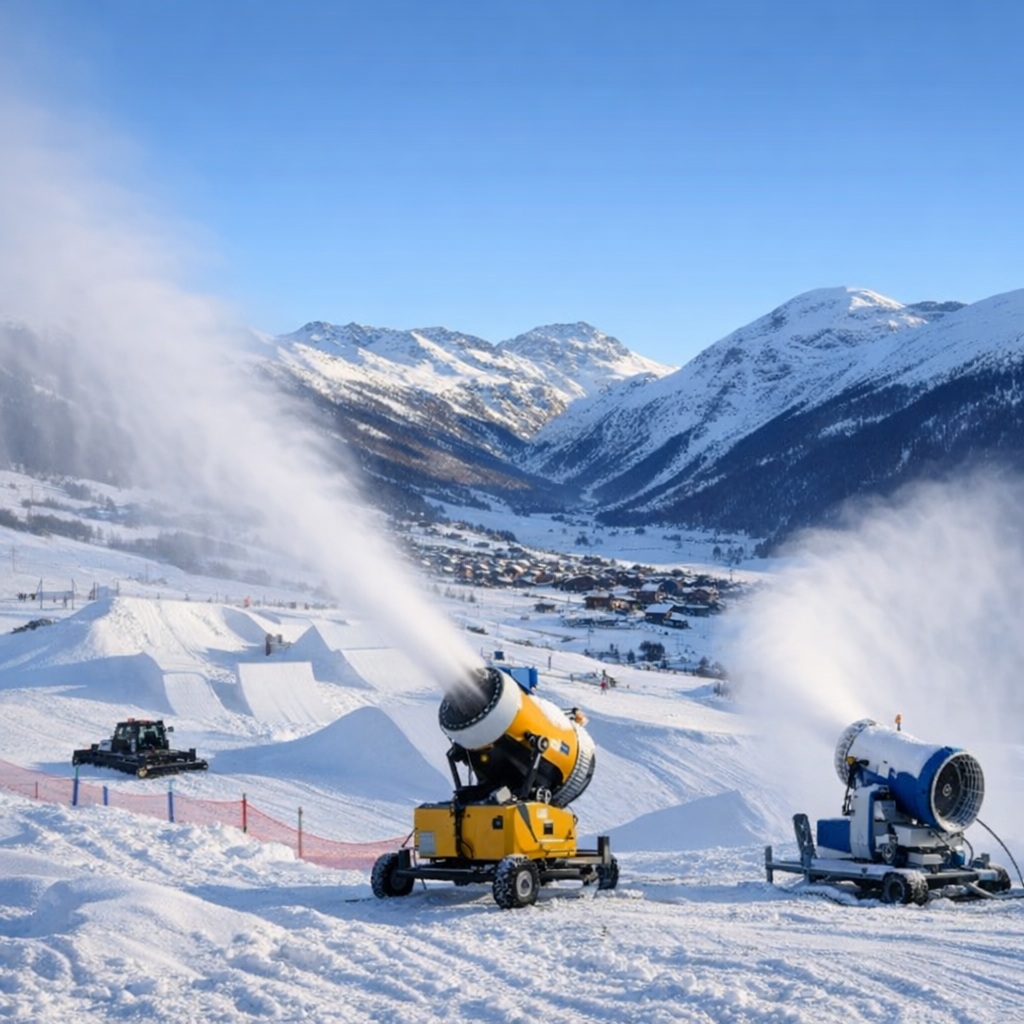
Across the Italian Alps, organisers accelerate preparations as winter disciplines test venues, refine logistics, and bank snow for a Games shaped by innovation and climate realities.
In the high valleys of the Italian Alps, winter has arrived with a sense of urgency and expectation. As the world’s attention gradually shifts toward northern Italy, winter sports are entering a decisive phase of preparation ahead of the Milano–Cortina Olympic Games. From alpine resorts to freestyle parks carved into the mountainside, organisers, athletes, and local communities are converging around a single goal: ensuring that competition venues are ready, resilient, and worthy of the Olympic stage.
Livigno, long regarded as a hub for snowboarding and freestyle skiing, sits at the center of this momentum. Known for its altitude and reliable cold temperatures, the resort has become a strategic cornerstone for organisers planning events that depend heavily on consistent snow conditions. In recent weeks, snowmaking operations have intensified across the area, supported by expanded infrastructure designed to safeguard competition courses even in variable weather.
According to officials involved in venue readiness, snow production is progressing faster than initially anticipated. This early accumulation allows teams to shape and stabilize courses well in advance, offering flexibility should weather patterns shift later in the season. Snow is not only being produced but carefully stored, preserved in shaded and insulated areas so it can be redeployed when final course preparation begins.
This approach reflects a broader evolution in how winter sports are organised at elite level. Rather than relying solely on natural snowfall, modern Games increasingly depend on precise planning, technology, and environmental monitoring. At Livigno, this means a coordinated system of snowmaking units, reservoirs, and energy-efficient equipment designed to balance reliability with sustainability.
Across the Alps, similar scenes are unfolding. Alpine skiing venues are undergoing final testing, with safety installations, timing systems, and spectator access routes being refined. Nordic and sliding sport facilities are hosting training sessions and test events that double as dress rehearsals for the Games. Each run, jump, and descent feeds data back to organisers, helping them fine-tune everything from ice quality to athlete flow.
Athletes, too, are beginning to feel the shift from preparation to anticipation. Many national teams have scheduled training camps in Italy, drawn by the chance to familiarize themselves with Olympic terrain. For snowboarders and freestyle skiers in particular, early access to shaped features and jumps at Livigno offers a competitive advantage, allowing them to adapt their routines to the specific character of the courses.
Beyond sport, the build-up is reshaping mountain communities. Transport links, accommodation facilities, and volunteer programs are all moving from planning to implementation. Local businesses report an uptick in activity as technicians, media crews, and early visitors arrive. The Olympics promise a global spotlight, but they also demand coordination on a scale rarely seen in alpine regions.
Environmental considerations remain a constant presence in these preparations. Organisers have emphasized that snow production and storage systems are being managed with careful attention to water use and energy efficiency. The goal, they say, is not only to deliver world-class competition but to leave behind infrastructure that supports winter sports long after the Olympic flame is extinguished.
As the countdown continues, the Italian Alps project an image of controlled momentum rather than last-minute rush. Courses are taking shape, snow reserves are growing, and confidence is building among those responsible for delivering the Games. While weather will always retain an element of unpredictability, preparation has become the strongest ally of Milano–Cortina’s winter ambitions.
For now, the mountains stand ready — groomed, tested, and waiting. When the world’s best winter athletes arrive, they will find venues forged not only by snow and ice, but by months of careful planning and a renewed vision for the future of winter sport.




 The Tower Post