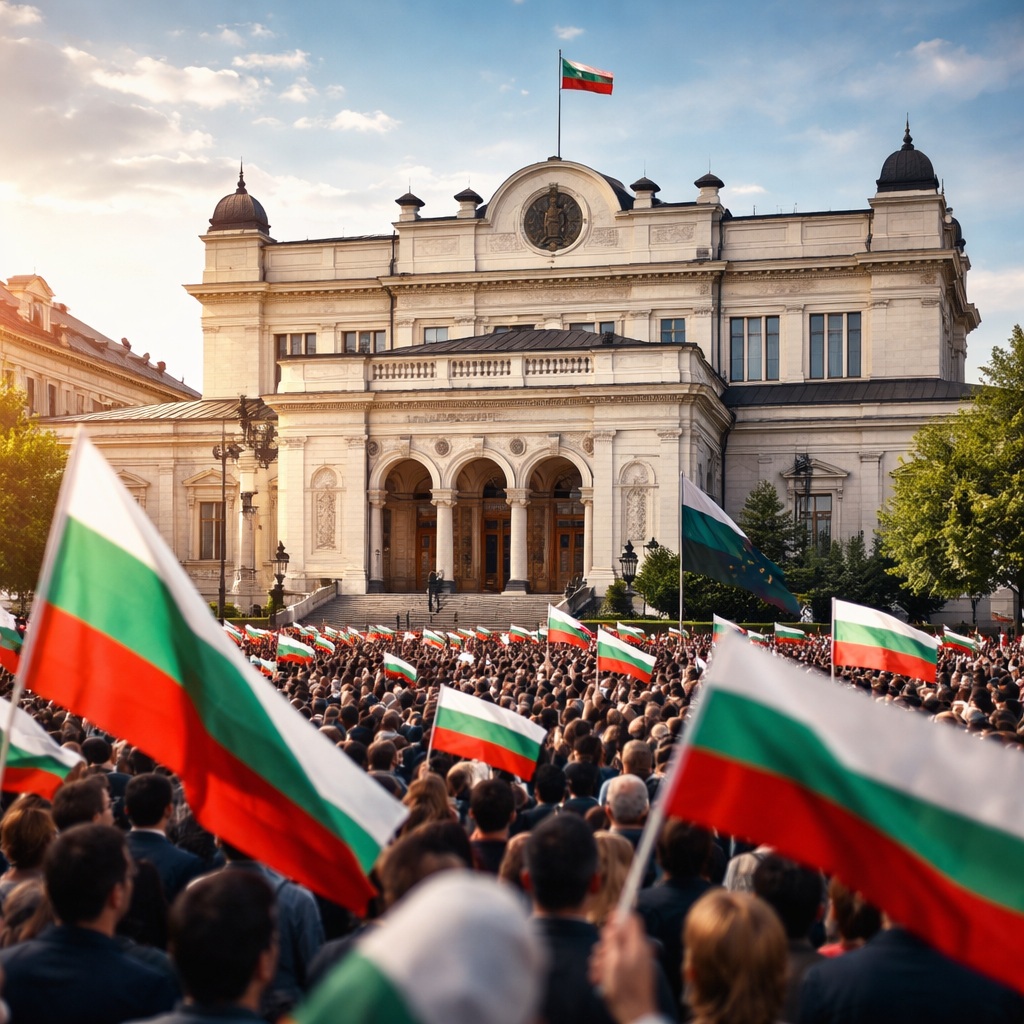
Fragmented parliament fails to produce a governing majority, prompting President Rumen Radev to call new polls as concerns grow over stability and EU funds oversight.
Bulgaria is once again preparing for snap elections after the collapse of its latest governing arrangement, a development that underscores the country’s prolonged struggle with political fragmentation and fragile coalitions. The failure of parties in the National Assembly to agree on a workable majority has pushed the country back into campaign mode, deepening uncertainty about governance at a time of economic and geopolitical pressure.
In recent weeks, negotiations among parliamentary groups stalled amid mutual accusations and hardened red lines. Reformist parties blamed establishment rivals for blocking anti-corruption measures, while traditional power brokers argued that inexperienced newcomers lacked the numbers and discipline to govern. The result was a familiar outcome: no party or alliance was able to secure sustained support for a cabinet capable of surviving a confidence vote.
President Rumen Radev, exercising his constitutional role as arbiter during periods of political impasse, moved to dissolve parliament and initiate the process for new elections. The decision, while widely expected, has done little to reassure a public increasingly weary of repeated trips to the ballot box. Bulgaria has cycled through multiple elections in a short span of time, each producing similar results — a divided legislature and short-lived governments.
Analysts say the current crisis reflects deeper structural problems in Bulgarian politics. “The party system is highly fragmented, and trust between political actors is extremely low,” said a Sofia-based political scientist. “Without a shared vision on key reforms, coalition-building becomes almost impossible.”
The instability carries significant implications beyond domestic politics. Bulgaria remains under close scrutiny from European Union institutions, particularly regarding the management and absorption of EU funds. Delays in forming a stable government risk slowing down reform milestones linked to European financing, including funds earmarked for infrastructure, digitalization, and energy transition.
Business groups have also voiced concern, warning that prolonged uncertainty could deter investment and weaken economic growth. Interim governments, while ensuring basic continuity, have limited mandates and often avoid taking politically sensitive decisions. This can stall long-term projects and complicate negotiations with international partners.
Public frustration is palpable. Voter turnout has trended downward with each successive election, reflecting skepticism that new polls will yield different outcomes. Many Bulgarians express a sense of political fatigue, questioning whether elections alone can resolve what they see as a crisis of leadership and accountability.
Despite the pessimism, some observers argue that repeated electoral tests could eventually reshape the political landscape. Smaller parties may be forced to merge or cooperate more closely, while larger players could rethink their strategies in response to voter apathy. Civil society groups continue to press for judicial reform and stronger anti-corruption safeguards, insisting that these issues remain central regardless of who governs.
As the country heads toward another campaign season, the central question is whether Bulgaria’s political class can break the cycle of deadlock. The coming vote is widely seen not just as a contest for power, but as a referendum on the ability of democratic institutions to deliver stability and effective governance.
For now, Bulgaria enters the new year under an interim administration, with President Radev once again playing a pivotal role in steering the state through uncertainty. Whether the next elections will finally produce a durable majority — or simply reset the stalemate — remains an open question with consequences reaching far beyond Sofia.


 The Tower Post