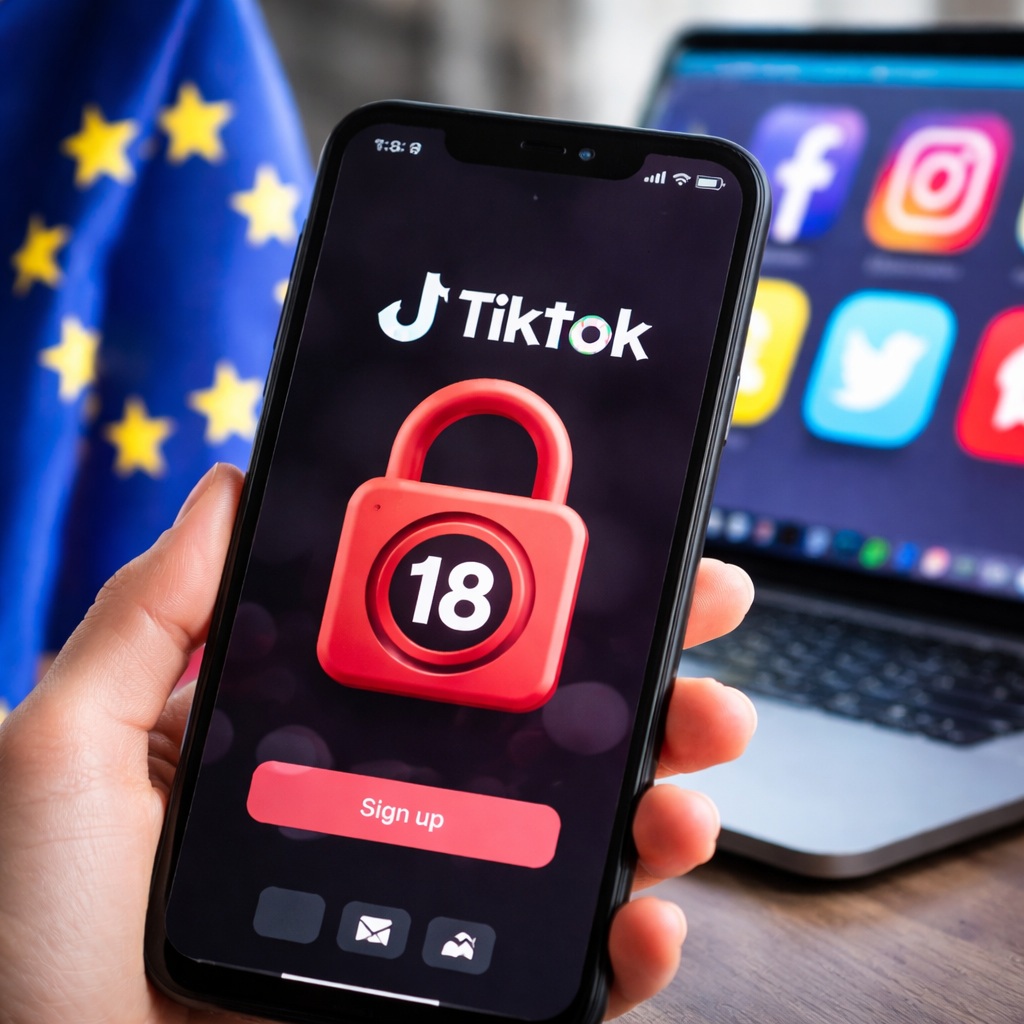
Europe’s regulators push the platform to enforce stricter age verification for teens, reflecting broader scrutiny of social media safety.
As the debate over children’s safety online intensifies across Europe, TikTok is moving to tighten its age verification systems under mounting pressure from European regulators. The short‑form video platform, one of the most popular digital spaces for teenagers, now finds itself at the center of a broader regulatory push aimed at ensuring that social media companies take more responsibility for who accesses their services and how young users are protected.
European authorities have grown increasingly vocal about the limits of self‑declared age checks, the system long relied upon by most social platforms. Under this model, users simply enter a birthdate when signing up, a process regulators argue is too easy to bypass. The concern is not merely theoretical. Studies commissioned by public bodies and consumer groups across the region suggest that significant numbers of underage users access content and features designed for older audiences, exposing them to potential harms ranging from inappropriate material to addictive design practices.
Against this backdrop, TikTok has begun rolling out stricter measures designed to better identify users under the minimum age. The company has signaled that it will expand the use of automated age estimation tools, including artificial intelligence systems that analyze behavioral signals and, in some cases, facial features in uploaded content. Accounts suspected of belonging to underage users may be restricted or removed unless age can be verified through additional steps.
Regulators see these moves as a necessary response to a changing legal environment. The European Union’s digital rulebook has sharpened expectations around child protection, placing explicit obligations on large online platforms to assess and mitigate risks to minors. Enforcement bodies have made clear that age assurance is a cornerstone of these duties, not an optional extra.
“Telling a company to simply do its best is no longer enough,” said one European regulatory official familiar with ongoing oversight of major platforms. “We expect concrete systems that are effective in practice, not just on paper.”
TikTok, owned by China‑based ByteDance, has sought to frame its response as part of a long‑term investment in safety rather than a reluctant concession. Company representatives point to new default settings for teen accounts, tighter controls on direct messaging, and expanded parental tools. The platform has also emphasized partnerships with third‑party age verification providers to reduce reliance on self‑reporting.
Yet the shift raises its own set of questions. Privacy advocates warn that more intrusive age checks could come at the cost of increased data collection. Biometric analysis and identity verification, they argue, must be handled with extreme care to avoid creating new risks for users, especially young people.
European regulators acknowledge the tension but insist that safeguards can be built in. The goal, they say, is proportionality: collecting only what is necessary to establish age, storing it securely, and deleting it as soon as possible. Several national authorities are working together to define what “privacy‑preserving” age assurance should look like in practice.
The pressure on TikTok is part of a wider reckoning for the social media industry. Platforms from video‑sharing apps to messaging services are facing investigations, audits, and, in some cases, fines related to child safety. The message from Brussels and national capitals is consistent: growth and engagement can no longer come at the expense of young users’ wellbeing.
For TikTok, the stakes are particularly high. Its rapid rise among teens has made it a cultural force, but also a lightning rod for criticism. Lawmakers have questioned everything from its content recommendation systems to the amount of time young users spend scrolling. Stricter age checks are seen as a first line of defense, ensuring that protections for minors actually reach the intended audience.
Industry analysts note that compliance in Europe often sets a precedent elsewhere. If TikTok succeeds in deploying robust age verification without alienating users, similar systems could become standard in other markets. Failure, however, could invite tougher sanctions and embolden regulators to demand even more intrusive controls.
As the platform adjusts its policies and technology, the broader conversation about children and social media shows no sign of fading. Parents, educators, and policymakers continue to grapple with how to balance digital opportunity with protection. For regulators, the current push represents a test case: whether the world’s largest platforms can be nudged—or forced—into meaningful change.
For TikTok, tightening age checks is no longer just about compliance. It is a measure of credibility in a region determined to reshape the rules of the online world, with the safety of its youngest users firmly at the center of the debate.




 The Tower Post