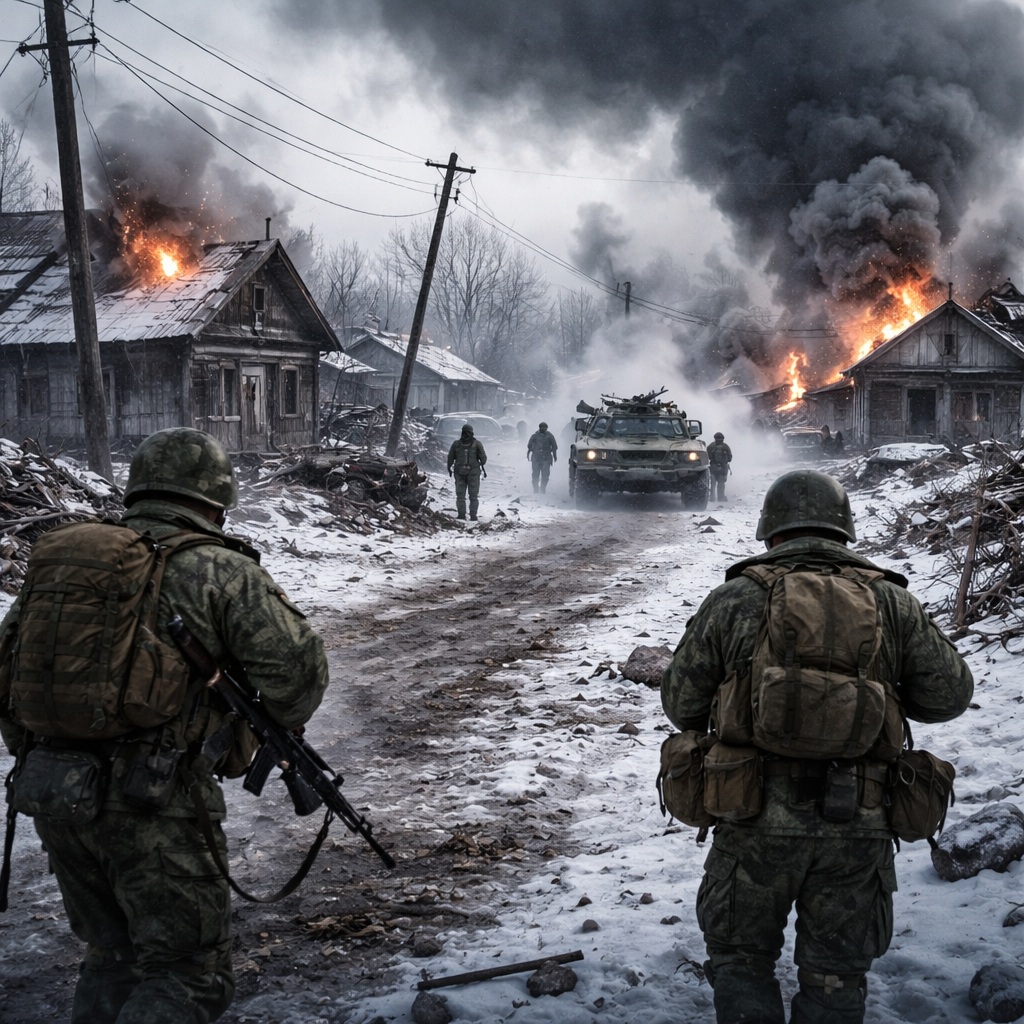
Seizures reported in Donetsk and Zaporizhzhia underscore grinding advances and the human toll of a cold-season campaign.
Russian forces have taken control of two small settlements in eastern Ukraine, according to official statements from Moscow and regional reporting, marking another incremental shift along a front that has hardened under winter conditions. The villages—Zakitne in the Donetsk region and Olenokostiantynivka in the neighboring Zaporizhzhia region—sit astride rural road networks that have become focal points for supply, troop rotation, and artillery coverage as fighting intensifies in the cold.
Ukraine’s military has said that clashes continue in and around both locations, describing a fluid situation shaped by counterattacks, drone strikes, and persistent shelling. Independent verification remains difficult amid restrictions on access and the rapid pace of battlefield claims and counterclaims. Even so, the reported seizures align with a broader pattern of attritional advances that has defined the eastern theater throughout the winter period.
In Donetsk, Zakitne lies near a belt of open fields and sparse tree lines that have repeatedly changed hands since the front stabilized earlier in the conflict. Military analysts note that control of such villages often brings limited immediate gains but can improve observation over adjacent approaches and complicate an opponent’s logistics. Russian units are believed to have pushed forward after sustained artillery preparation, while Ukrainian defenders relied on small-unit maneuver and anti-armor tactics to slow the advance.
Further south, Olenokostiantynivka occupies a similar tactical niche in Zaporizhzhia, where long stretches of open terrain magnify the importance of cover and elevation. Reports from the area describe intensive drone use for reconnaissance and strike missions, with both sides attempting to disrupt resupply efforts under icy conditions. The winter freeze has hardened roads and fields, allowing heavier vehicles to move off paved routes, but it has also increased wear on equipment and heightened risks for personnel.
The fighting reflects a season-long contest of endurance rather than rapid maneuver. Commanders on both sides have adapted to the cold with layered defenses, heated shelters near the front line, and greater emphasis on night operations to offset surveillance. Civilian infrastructure in nearby rural areas has suffered as shelling and power disruptions compound the hardships of winter. Local authorities have urged remaining residents to relocate to safer areas, though evacuations remain uneven.
Strategically, the reported village captures do not point to a decisive breakthrough. Instead, they underscore the incremental nature of the campaign, where progress is measured in short distances rather than sweeping advances. Analysts say Moscow appears focused on consolidating control over contested pockets while applying pressure along multiple axes, forcing Kyiv to stretch reserves and manage mounting fatigue.
Ukrainian officials continue to emphasize that defensive lines remain intact and that countermeasures are underway. They cite strikes on logistics hubs and command posts as evidence that Russian advances come at a cost. Western military assistance remains a critical factor in sustaining Ukraine’s defenses, although winter weather complicates training, deployment, and maintenance.
Diplomatically, the battlefield developments coincide with renewed discussions among Ukraine’s partners over long-term support and security arrangements. While negotiations and consultations continue, the reality on the ground remains decisive. Each village, however small, carries symbolic and operational weight for both sides and shapes the narrative presented to domestic and international audiences.
As winter operations continue, residents near the front brace for further disruption. Aid organizations report growing needs for heating fuel, medical supplies, and emergency repairs. For soldiers, the cold amplifies the dangers of exposure and equipment failure, making even limited engagements costly.
Whether control of Zakitne and Olenokostiantynivka endures will depend on the coming phase of fighting. What is clear is that the eastern front remains active, contested, and defined by the slow grind of winter warfare—where gains are fragile, losses are real, and the line on the map rarely stays still for long.



 The Tower Post